New Ps3 Games - Page 278

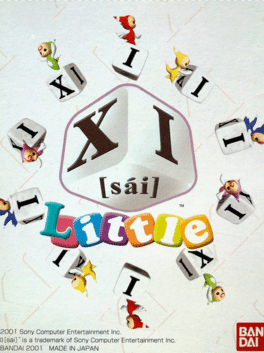
Xi (sai) Little
2001
Xi (sai) Little
2001
XI (sai) Little is a Puzzle game, developed by MBI and published by Bandai, which was released in Japan in 2001.Tiny Toon Adventures: Wacky Stackers
2001
What happens when you take classic puzzle gaming and toss in some of the most lovable characters in cartoon history? You get one undeniably awesome game. Buster Bunny, Plucky Duck, and the rest of the TINY TOONS crew are ready for fun, and you're in the driver's seat. The basic premise of this addicting, original title is to arrange pairs of colored eggs, dropping them onto the screen to create combinations. Of course, there are numerous obstacles and would-be detractors to make things more difficult (UFOs, Tasmanian Devils), and time is never on your side. There are plenty of characters from the animated series along for the adventure including Hampton J. Pig and Fifi La Fume and each is prepared for puzzle-style battle. As many as four players can link up to see who has the quickest reflexes, and there are plenty of single-player modes to keep you busy as well. If you're a TINY TOONS fan, this one is a must-have. If you're not a fan well, you should be.SuperLite 3in1 Series: Crossword Shuu
2001
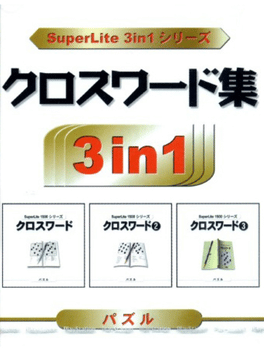
Superlite 3 in 1 Series - Crossword-Syuu is a crossword game that is a compilation of SuperLite 1500 Series - Crossword 1 to 3 that features more than 600 different crossword puzzles with different difficulty levels.Simple 1500 Series Vol. 79: The Shisenshou
2001
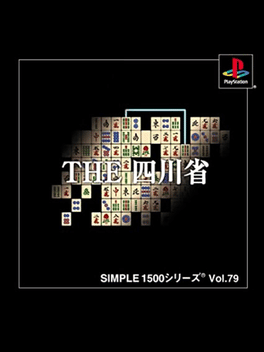
The Shisenshou is a puzzle game similar to the Shanghai series since the player have to find 2 pieces of the same shape & colour that are alone to join them and make them dissappear, the player have to follow an order since he can make 2 pieces dissappear if they are surrounded by other different pieces, except when the 2 equal pieces are one next to the other. To advance to the next stage the player has to clear of the pieces in each stage before the time ends.Panic Bomber
2001
Panic Bomber
2001
Panic Bomber is a puzzle game released for mobile phones in japan only and it is part of the Panic Bomber series.Columns Crown
2001
Columns Crown
2001
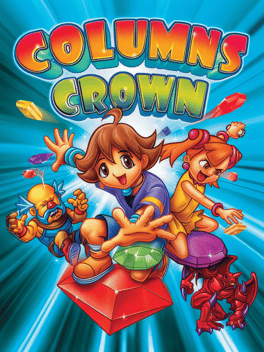
star 6.9Princess Dazzle has searched all over for the missing Magic Gems that fill in the Columns Crown. You must help her recover them from a band of Forest Thieves by beating every puzzle to unlock the hidden Gems! Can you collect them all and complete the crown? Frantic multi-player action full of devastating special moves. Collect Magic Gems to unleash spectacular elemental attacks. New Survival, Versus, and Flash Columns modes.Planet of the Apes
2001
Loppi Puzzle Magazine: Kangaeru Dai-3-gou
2001
Loppi Puzzle Magazine: Kangaeru Dai-3-gou is a Puzzle game, published by Success, which was released in Japan in 2001.Guru Logic Champ
2001
Guru Logic Champ
2001
Guru Logic Champ is a Japanese-only Game Boy Advance puzzle game developed by Champ Team and published by Compile.Rampage Puzzle Attack
2001
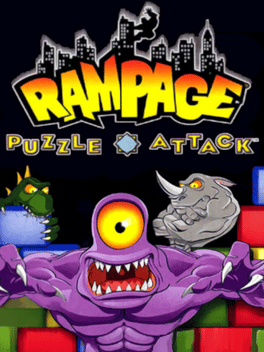
Using a similar game style to the Game Boy classic, Tetris Attack, a line of blocks sits above the play field which you can change the order of and drop two at a time onto the blocks below. Once a Detoblock (a block that is different in appearance to the usual blocks) appears, drop it onto the corresponding colour to clear those blocks from the field. Play modes include Clear (clean the playfield of all blocks), Puzzle (try and clear all blocks within a set number of drops), Marathon (the usual play as far as you can mode) and Rescue Mode, where you must clear the blocks from the top of a cage, in which the many monsters from the arcade hit, Rampage World Tour, are trapped in.Blocks
2001
Super Bust-A-Move
2001
Super Bust-A-Move
2001
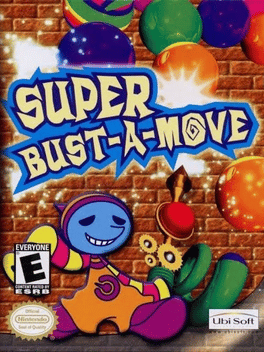
Super Bust-A-Move (also known as Super Puzzle Bobble in Japan) is a 2000 game developed by Taito and published by Acclaim.Pokémon Puzzle Collection
2001
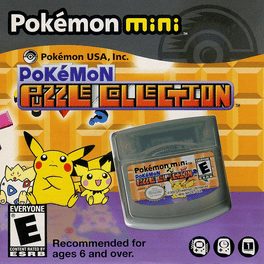
A collection of puzzle mini-games for the Pokémon Mini featuring several Pokémon Characters.Trouballs
2001
Trouballs
2001
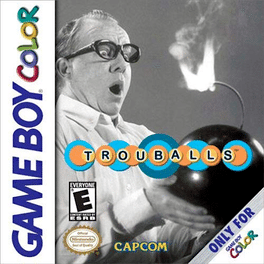
If you're ready for explosive, mind-twisting puzzle-action mayhem then grab a copy of TROUBALLS from Capcom. In this massively addictive game developed exclusively for the Game Boy Color, it's up to you to gain as many points as you can while the clock ticks down. Here's how it works: different colored balls are attached to moving gears; you rotate the gears in an attempt to get four balls of the same color aligned (in a 2x2 square grid at the bottom of the screen), which blows them to smithereens. This clears the stage and advances you to the next level. There's no time to rest though, as each successive round of sphere-blasting fun is more difficult than the last. You'll listen to five original songs in the challenging, pop-and-bop gameplay that confronts you on more than 100 fast-moving levels. If you couldn't get enough of TETRIS or BUST-A-MOVE, then you'll love TROUBALLS to pieces.Russian Square Plus! Edition
2001
A 3D Tetris-like puzzle game. Erase lines or columns by regrouping shapes of the same color. More columns or rows appear at a faster pace as the game progresses resulting in a race against the clock. All of the games use 3D graphics, themes, sound effects and music to take advantage of the operating system's DirectX capabilities.Simple Characters 2000 Series Vol. 02: Afro Ken - The Puzzle
2001
Stay above water and match up the wigs in this Afro Ken-themed puzzle game released by D3.Puyo Pop
2001
Puyo Pop
2001
Puyo Pop for the Game Boy Advance was the first game in the series to be developed by Sonic Team. It combines Puyo Puyo 2's mechanics with an all-new story mode.