New Role Playing Rpg Games - Page 280

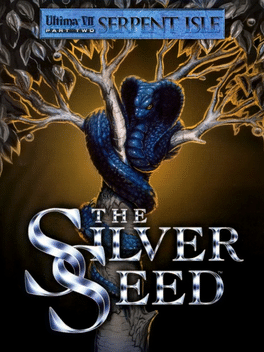
Ultima VII: Part Two - Serpent Isle: The Silver Seed
1993
The Silver Seed is the expansion pack for Ultima VII: Part Two - Serpent Isle.The Witch's Revenge
1993
The Witch's Revenge
1993
The warriors of a cursed land must seek out the stolen Travelling Stones, and defeat the evil witch of the land.Magicoal
1993
Magicoal
1993
The boy Rhun and the girl Melvy live in a quiet forest village, both studying the art of magic. They enjoy a peaceful life, learning the secrets of the spirits and magical creatures populating the area. But on one fateful night, everything changes. A horde of goblins invades the village, burning it down. And it looks like the local church is in cohorts with a powerful demon bent on destruction! Before the heroes can realize what is happening, they are forced to escape into the forest, with only their magical powers at their side... Magicoal is a "pseudo-RPG", i.e. an action-adventure with some minor RPG elements (money, items, etc.), but without an experience system of any kind. It can be played in two-player cooperative mode, controlling Rhun and Melvy, or as a single-player game, choosing one of them and letting the computer AI control the other. The player(s) can switch between the two at any time. Most of the game is dedicated to exploring top-down areas populated by enemies, and dealing with them in action-bWizardry Gaiden III: Scripture of the Dark
1993
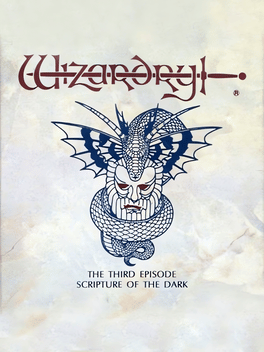
Wizardry Gaiden III: Scripture of the Dark is a Role-Playing game, developed by Sir-Tech Software Inc. and published by ASCII Entertainment, which was released in Japan in 1993. While the first two Gaiden games, Wizardry Gaiden: Suffering of the Queen and Wizardry Gaiden II: Curse of the Ancient Emperor, stuck fairly close to each-other and to Wizardry V: Heart of the Maelstrom, Scripture of the Dark started introducing more radical changes to the formula. This was mostly in the form of incorporating elements of Wizardry VI: Bane of the Cosmic Forge, but retaining the core gameplay derived from Wizardry V.Startling Odyssey
1993
Startling Odyssey
1993
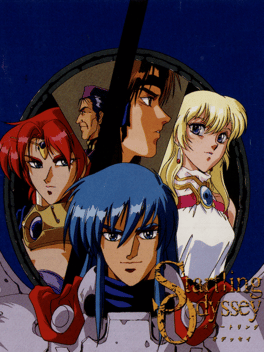
In Startling Odyssey, the player takes the role of a young boy named Leon. One day, his home villages is attacked by monsters. His best friend is killed, and the most powerful magician of the village is turned into stone and abducted by the monsters' leader. Leon receives the blessing of the village elder and begins his quest to avenge the death of his friend and to defeat the demonic forces that threaten the land. The game is a rather traditional Japanese RPG, with all the familiar ingredients: Leon (and his companions who later join the party) roams the world map, entering towns and dungeons, buying equipment and items, and engaging randomly appearing enemies in turn-based combat. The battles are viewed from first-person perspective. Characters can use regular attacks as well as magical spells, and the battles can be also set on Auto.Ranma ½: Aka Neko-dan Teki Hihou
1993
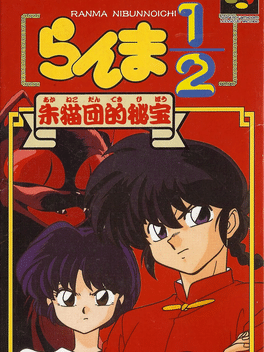
While coming home late one night, the Jusenkyo Guide accidentally wanders into the Gods and Demons Graveyard, and proceeds to knock over the tomb of the dreaded Nekomaou, the Ghost Cat King. The evil spirit, returned from the grave, gathers to him the titular Red Cat Gang and sets out to gather three treasures, the Peach Gem, Sakura Sword and Forest Mirror, in order to recreate the magical Star Crystal and attain his wish of world domination. Ranma Saotome and several of his friends set out to stop this evil from occurring.Vay
1993
Vay
1993
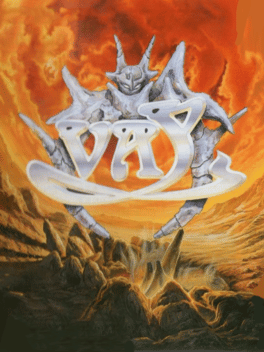
It came from space more than a millenium before. Two-tons of advanced technology, programmed only for destruction. The five mightiest wizards of the land joined forces and drew away the power of the battle machine, dividing the power into 5 orbs and sealing the armor away from humanity. Now, the Danek Empire has partially duplicated the fearsome mechanized technology, creating a deadly army of metal warriors programmed for world domination. The only hope for salvation is to find the legendary orbs and restore power to the armor that nearly destroyed the planet more than 1000 years before. Join Sandor as he begins a quest that will take him from the depths of Magmal Isle to the terrifying heights of Draktyr. Fight over 100 types of monsters, explore towns, and enjoy exciting CD animation scenes as you pursue the orbs that will activate the legendary armor of Vay. But, will the armor save your world, or destroy it forever?Lunatic Dawn
1993
Lunatic Dawn
1993
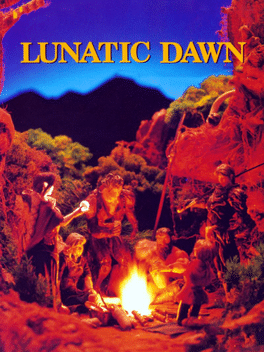
The first title in the Lunatic Dawn series from Artdink, released in 1993 for PC-98 and FM-Towns. The game is dedicated to character creation, RPG-style character development, and exploration. In the beginning, the player creates the playable character, choosing age, gender, and even weaknesses - all of which affect the character's parameters such as stamina, weapon technique, charisma, etc. Afterwards, the player allocates points into the remaining parameters. The player starts in a city and is absolutely free to go wherever he/she wants. There is a day/night cycle in the game. It is necessary to keep an eye on the character's stamina and buy food rations - the character can die of exhaustion and hunger. Random enemies appear on the world map and in dungeons. Battle screen is isometric and allows free movement. It is not necessary to choose a command for each turn: the battles evolve automatically until the player interrupts them with a new command.SWmud
1993
SWmud
1993
Star Wars MUD, or SWmud, is a telnet text-based game set in the Star Wars universe, mostly during A New Hope to the Thrawn (Legends) campaign. Player killing is optional. Great space combat and newbie help! Star Wars mud is a heavily modified LPmud based on the Star Wars Universe. SWmud is not a role-playing MUD, though role-playing is not forbidden as long as it is within the rules.Fushigi no Dungeon: Torneko no Daibouken
1993
Torneko No Daibouken is a overhead view game similar to Hack, what might be called a "dungeon crawl". Torneko must venture into the mysterious dungeon gathering treasure. He may equip any weapons and shields he finds there, as well as gather up items such as spell scrolls, staffs and herbs with a variety of effect. A variety of enemies, familiar to the Dragon Quest series, await him. If Torneko successfully exits the dungeon, he is able to sell any of the items he has collected. This money then goes to improve the quality of his shop and living quarters. As the game progresses, Torneko is able to store special items in the vault, which he is then able to bring with him on subsequent trips to the dungeon.Pumpkin Adventure II
1993
Pumpkin Adventure II
1993
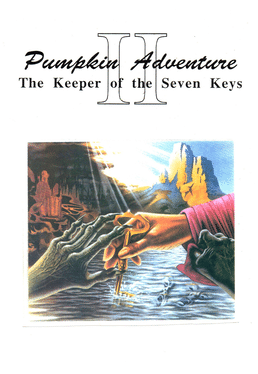
ln 193 AC, two boys, Steve and Damien, turned into pumpkins! Cause: they spelled ’Helloween’ with an ‘a’! In order to be normal again, they had to find the holy grail. And so they started their quest for the holy grail... In their quest they were accompanied by the Bishop. After this adventure, these three men promised to stay together for the rest of their lives. And together they formed a gang, which they called: ’The Gang’. But what they didn't know, was that when they found the holy grail, they accidentally opened one of the seven gates to hell... It’s now ten years later, 203 AC. Lucifer, King of devils, wants to dominate the world... And now only the Keeper of the Seven Keys can resque mankind... With the seven keys, he must lock up the seven seas, which are in reality the seven gates to hell! If he succeeds, then Lucifer will be powerless... Only then it's possible to destroy him, and prevent him from executing his evil plan! But... Lucifer sent seven demons down to earth... Binah, Kether, CSword World SFC
1993
Sword World SFC
1993
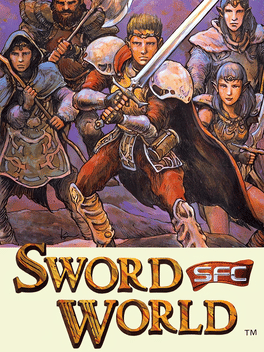
A Super Famicom adaptation of the Japanese table-top RPG Sword World. It faithfully replicates much of the table-top game's ruleset, and was eventually followed by a sequel.Armed Dragon Fantasy Villgust
1993
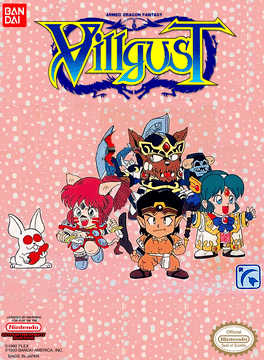
Armed Dragon Fantasy Villgust is a Role-Playing game, developed by TOSE and published by Angel (Bandai), which was released in Japan in 1993. This game is based off the anime of the same name that was released many years ago.God Medicine: Fukkoku-ban
1993
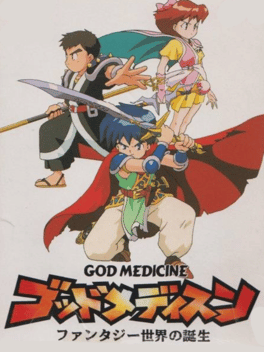
God Medicine: Fukkoku-ban is a turn-based role-playing game that blends a modern setting with a traditional fantasy adventure. Players control a party of characters who explore both the real world and a game-like fantasy realm, engaging in battles, leveling up, and equipping weapons, armor, and magic abilities. This updated version expands on the original release with additional story content, new enemies, and system enhancements such as a monster database and Super Game Boy features. Its progression centers on character growth and the use of customizable weapons enhanced with special gems, adding strategic depth to combat and exploration..Ancient Magic: Bazuu! Mahou Sekai
1993
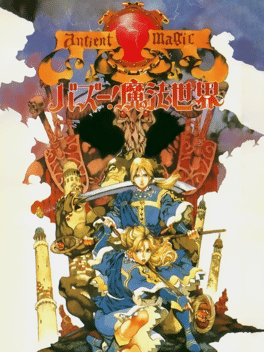
Ancient Magic is a story RPG where you play a young boy or girl whose father, Ricardo, was a powerful mage. Determined to follow in your father's footsteps, you make a vow to your mother to attend the Magic School in Selas. When starting, you can choose the occupation of the character, and you can choose a teacher from among some of the magicians while playing the game. You are joined on your journey by Feyr, a bard, Romal, a knight, Lot, a priest, and many others. As you progress as a mage, you are sent on quests to explore ruins and uncover spells. Meanwhile, a mysterious man named Kuroizel and the evil Veranede Tribe are plotting something, and it's up to you to find out what. This old school RPG is strictly fantasy. It has the nostalgic feel of a Dungeons and Dragons campaign. See if you can spot the advert by developer and publisher Hot-B for another of their products in the game! Despite its rather pedestrian roots, the game takes several surprising twists towards the end, and is generally worth sticking itGod Medicine: Fantasy Sekai no Tanjou
1993
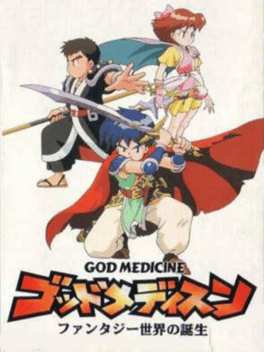
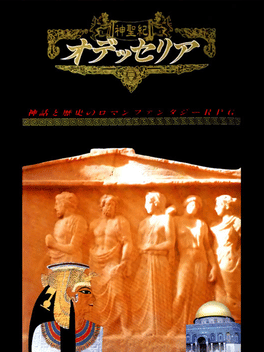
God Medicine: Fantasy Sekai no Tanjou is a fantasy RPG for Game Boy.Shinseiki Odysselya
1993
Shinseiki Odysselya
1993
Shinseiki Odysselya is a Role-Playing game, developed and published by Vic Tokai, which was released in Japan in 1993.Genei Toshi: Illusion City
1993
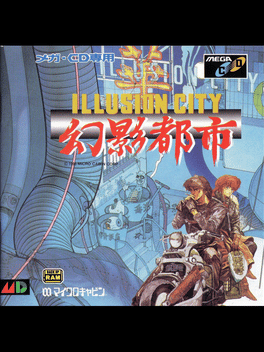
Genei Toshi is an RPG for Japanese computers, later ported to the Sega Mega-CD. It was only released in Japan. Illusion City is a Japanese-style role-playing game with several distinguishing characteristics. Unlike most games of the genre, it has no overworld, and takes place entirely in a vast city divided into several districts. The player advances the story by exploring the city, talking to non-playable characters, gathering information, receiving missions, and eventually heading into large, complex hostile areas. There are no random battles in the game; all enemies are visibly moving on the field, and many of them can be avoided. Combat is turn-based, utilizing an "over-the-shoulder" perspective similar to that of Phantasy Star II. Characters join the party as dictated by the plot; an active party includes three combatants. A wide variety of weapon and armor types can be purchased or found in dungeons. Each character has his or her own weapon proficiencies, which can be increased by repeatedly using the sameGreat Greed
1993
Great Greed
1993
star 5.6This RPG breaks from the normal formula in a few respects. The battle system does not use any menus, switching all commands to simple button pushes. A being attack, B for dodge, Start will run and the D-Pad is shortcuts to certain spells. The combat is also live, in the sense that if you take too long to complete your turn, your opponent will attack again.Shadowrun
1993
Shadowrun
1993
star 8.1Shadowrun, based on the pen-and-paper RPG of the same name, is a futuristic sci-fi/fantasy game, taking inspiration from Neuromancer, Blade Runner, and other cyberpunk stories.