New Games - Page 13232

Doraemon: Meikyuu Daisakusen
1989
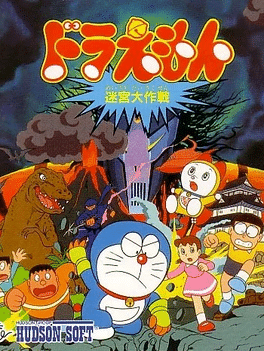
Meikyu Daisakusen is an action puzzle game viewed from an overhead perspective. Each stage consists of a maze filled with various enemies and items. You must collect all of the keys on the stage to open the exit door while avoiding or eliminating enemies. Your primary method of dealing with enemies is to dig holes; if an enemy walks into a hole, they are momentarily trapped and you can then fill the hole to kill the enemy. The game is a conversion of the 1987 Nichibutsu coin-op Kid no Hore Hore Daisakusen, which also saw a modified Famicom version called Booby Kids. An unmodified conversion was released in North America as Cratermaze.Ochin ni Toshi Puzzle Tonjan!?
1989
A block moving puzzle game similar to Sokoban. Okkotoshi Puzzle Tonjan!? ("Drop Down Puzzle Tonjan?!", sometimes known as simply Tonjan) is a puzzle game from NMK that features anthropomorphic pigs pushing mahjong tiles around in a maze, attempting to push entire stacks down one of the many holes in the area. Bonus points are awarded for pushing certain specified tiles into holes first, and there's one tile in particular that will complete the level once pushed down a hole and is the only compulsory target. Future levels increase the number of tiles and the difficulty, adding fish tiles that cause the player to lose a life if they are pushed down a hole. Okkotoshi Puzzle Tonjan!? appears to a sequel to NMK's earlier Arcade multiplayer action game Butasan, which features similar looking pigs. The rights to the Arcade version of Tonjan were sold to a Korean company, Dooyong, which turned it into a game named Yam! Yam?! featuring a tanooki wearing an apron.Kagami no Kuni no Legend
1989
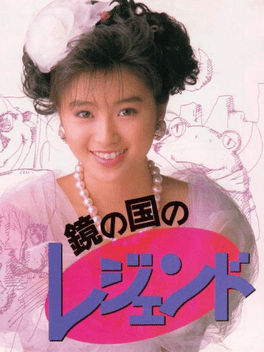
Kagami no Kuni no Legend is a Japanese-style first-person adventure game. The player interacts with the game world by selecting verb commands from a menu and combining them with objects or characters. Commands such as "Examine" or "Talk" appear at most screens; if an object can be taken, an appropriate command is displayed after the player has thoroughly examined a location. There is also an inventory with items that must be used at specific moments; however, there are no real puzzles in the game. Navigation is done by selecting the "Move" command; in a few locations the player navigates the hero with directional buttons in a pseudo-3D environment. Wrong choices may sometimes lead to a Game Over. Most of the background and character graphics is done in anime style, with the exception of Noriko herself, who appears in digital photos, sometimes accompanied by song performances.Major League
1989
Major League
1989
This standard baseball game from Irem has the movie license for Major League, but doesn't actually use it much in-game.Dragon Ball 3: Goku-den
1989
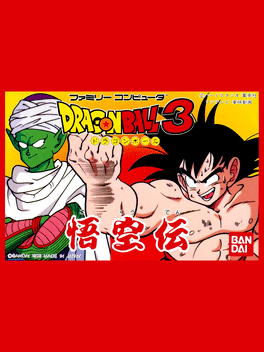
Dragon Ball 3: Goku-den is a role playing video game released only in Japan by Bandai. It is the third Dragon Ball video game for Famicom (its predecessors being Dragon Ball: Shenron no Nazo and Dragon Ball: Daimaou Fukkatsu). Its sequel is Dragon Ball Z: Kyoushuu! Saiyan. You control Son Goku and his friends Krillin and Yamcha in this game. The gameplay is mostly based on training your characters and then taking them to fight enemies, advancing the plot. All the activities in the game (including walking around on the world map) are performed through choosing one of the available cards. Depending on the value of the card, you can move a certain amount of squares on the map, have an advantage in a battle, etc.Baseball Simulator 1.000
1989
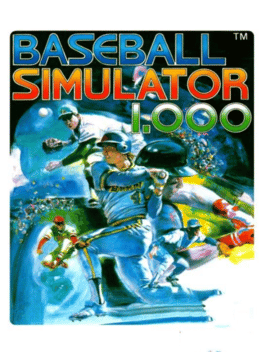
star 8.7Baseball Simulator 1.000 was made by Culture Brain exclusively for the Nintendo Entertainment System. Released in 1989, it was praised by Electronic Gaming Monthly as the "Best Sports-Themed Video Game" of 1989. This was largely due to some unique gameplay features that helped it to set itself apart from the many other baseball games released.Castlevania: The Adventure
1989
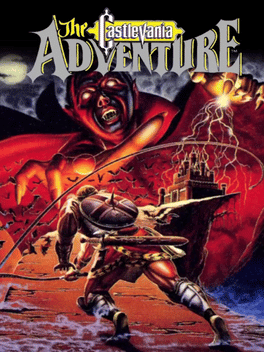
star 4.6Castlevania: The Adventure is a platform game released for the Game Boy in 1989. It is the first Castlevania title for the system. Set a century before the events of the original Castlevania, the player controls an ancestor of Simon Belmont named Christopher Belmont who goes on a quest to defeat Dracula.Mystic Defender
1989
Mystic Defender
1989
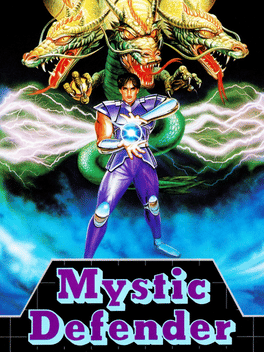
Mystic Defender is a two-dimensional action video game released for the Sega Genesis system. The players only means of defense in the game is the use of magical spells that the player can acquire during game play (by picking the power up). Players start with a single shooting ball of energy that can be charged to fire one powerful shot, but players can also acquire a spiritual flame that can be pointed in straight and diagonal directions and when charged can reach good distances and a spherical power that launches ricocheting spheres around the screen that multiply when fully charged. Aside from these powers, players can also use a screen-clearing power that summons a three-headed dragon that destroys all enemies and fired shots on screen. The game is a port of the Japanese game Kujaku-ou II, removing the anime license.Chuka Taisen
1989
Chuka Taisen
1989
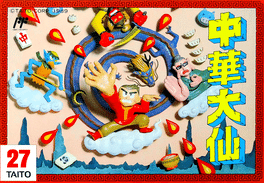
The player controls Mike Chen floating on a cloud, maneuvering around the screen and shooting balls of energy at flying enemies. Powerups can be collected for stronger and faster firepower. Some parts of the game stage have doors that give the player the opportunity to buy special bomb types with collectible credits. Each stage has its own mini-boss and big boss. Throughout the stages, the player restarts at certain checkpoints after losing a life.Rambo III
1989
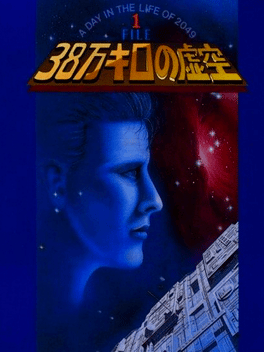
38 Man Kilo no Kokuu File 1: A Day in the Life of 2049
1989
A sci-fi adventure game that is the fifth installment in System Sacom's Novel Ware franchise.Ys: Wanderers from Ys
1989
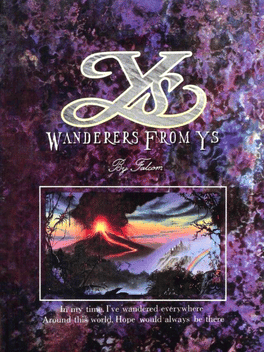
Adol Christin's long-time friend, Dogi, wishes to return to his home town of Redmont after hearing about strange disturbances that are happening there. Always looking for an adventure, Adol joins him and soon finds out the cause of this new evil. Ys: Wanderers from Ys breaks away from the "bumping into enemies" battle system of the first two games, allowing Adol to control his sword in a variety of directions. Beside changing the battle system, the game's perspective switches to a side-scrolling view, as opposed to the top-down one of the previous games. Adol also has the ability to jump now. New to the series is the use of magical rings, which give Adol different powering-up abilities such as healing and shielding. The game also uses various key items found along the way to solve minor puzzles and progress the story.Kattobi! Warabe Ji
1989
Kattobi! Warabe Ji
1989
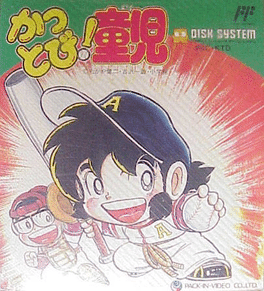
A baseball RPG/sim in which baseball games are played via cards in a turn-based system. It was released by Pack-In-Video in Japan exclusively.Tatsu no Ko Fighter
1989
Tatsu no Ko Fighter
1989
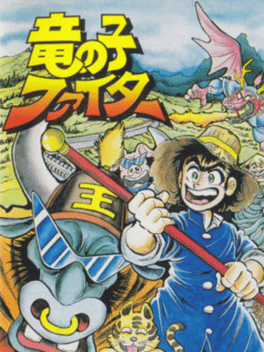
A side-scrolling platformer featuring a bizarre cast of characters created by manga artist Akira Miyashita.Hokuto no Ken 3: Shinseiki Souzou Seiken Retsuden
1989
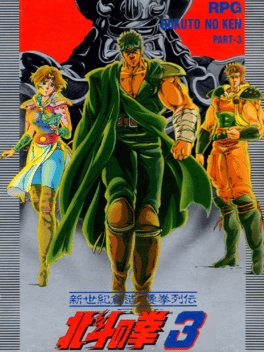
Hokuto no Ken 3: Shinseiki Souzou Seiken Retsuden is the third Hokuto no Ken video game developed by Shouei Systems and released by Toei Animation for the Family Computer (the Japanese version of the Nintendo Entertainment System) on October 19, 1989. Unlike the first two Hokuto no Ken video games for the platform, which were side-scrolling action games, Hokuto no Ken 3 is a role playing game which adapts the storyline of the original manga from the beginning to the Kingdom of Shura story arc. It was the first in a trilogy of RPGs based on the franchise.Revenge of the 'Gator
1989
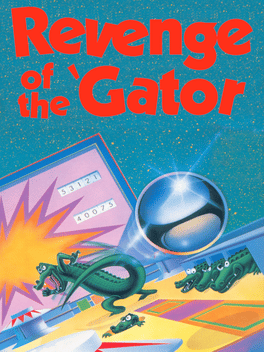
star 6.8It's pinball....with gators! This arcade-style title brings pinball on the go with the Game Boy! Score as many points as possible, but don't let your ball be eaten by the 'Gator!Abunai Tengu Densetsu
1989
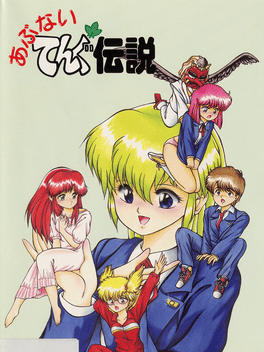
Abunai Tengu Densetsu is an adventure game with menu-based navigation and input. Most screens offer a fairly long list of verb commands, some of which must be combined with objects or persons selected from a sub-menu in order to interact with the environment. The game allows the player to visit many different rooms and other locations in any order; however, certain events must be triggered in order to advance, sometimes by repeatedly selecting commands. Certain situations require the player to find items and use them in a different location.Super Momotaro Dentetsu
1989
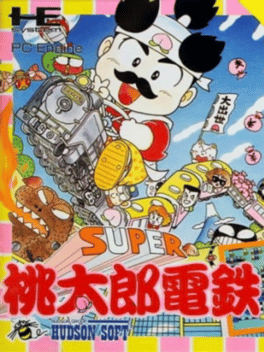
Train themed board game featuring the Peachboy character from Japanese folklore.Famicom Mukashibanashi: Yuuyuuki
1989
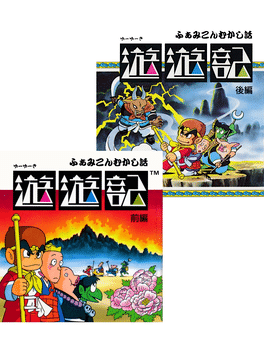
Famicom Mukashibanashi: Yuuyuuki is a 2-part Famicom Disk System game. Yuuyuki is an adventure game played by choosing from several text commands shown on screen. It resembles its predecessor, Shin Onigashima, in its implementation of the "Change Character" command, usage of traditional Japanese fairytales, and general screen layout and appearance. The story-line is a parody of the Chinese novel Journey to the West, where two main characters, Goku and Chao, embark upon separate journeys to find one another. In Yuuyuki, the "Change Character" command can switch between a maximum of five different characters. However, there are very few points in the game where it can actually be used to such extent. Its main use is to switch between Goku and the others accompanying him. Like Shin Onigashima, the character in use can greatly affect the descriptive text shown on screen, and the significant increase in number of characters allowed for more variety in each scene. It is possible to enjoy the game by viewing the reactioFamicom Mukashibanashi: Yuuyuuki - Zenpen
1989
Yuuyuki is an adventure game played by choosing from several text commands shown on screen. It resembles its predecessor, Shin Onigashima, in its implementation of the "Change Character" command, usage of traditional Japanese fairytales, and general screen layout and appearance. The story-line is a parody of the Chinese novel Journey to the West, where two main characters, Goku and Chao, embark upon separate journeys to find one another. In Yuuyuki, the "Change Character" command can switch between a maximum of five different characters. However, there are very few points in the game where it can actually be used to such extent. Its main use is to switch between Goku and the others accompanying him. Like Shin Onigashima, the character in use can greatly affect the descriptive text shown on screen, and the significant increase in number of characters allowed for more variety in each scene. It is possible to enjoy the game by viewing the reactions towards choosing completely unrelated characters or commands in certa