New Games - Page 12740

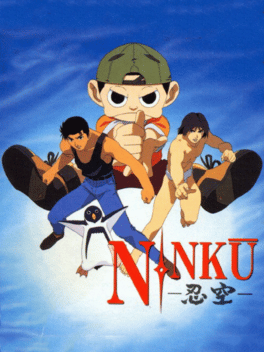
Ninku
1995
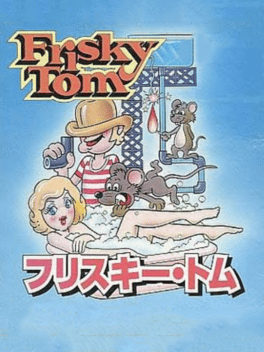
Frisky Tom
1995
Tatakae! Pro Yakyuu Twin League
1995
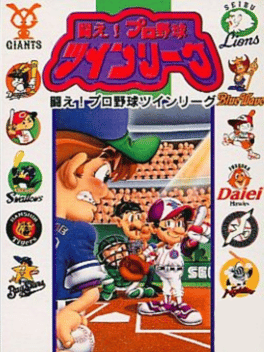
Tatakae! Pro Yakyuu Twin League is an NPB baseball game for the Sega Game Gear. It features all of the teams in the Central and Pacific Leagues of NPB in 1995 and features several game modes.Gakkou no Kaidan
1995
Gakkou no Kaidan
1995
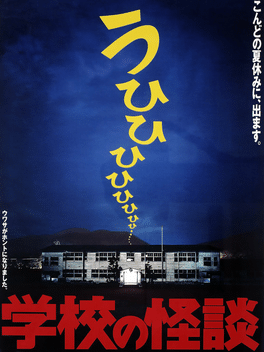
Gakkou no Kaidan is a game for the Sega Saturn console. It was released in 1995 to accompany the live-action movie Gakkou no Kaidan. It was available only in Japan, in Japanese.Jikkyou Pawafuru Puroyakyu '95: Kaimaku-ban
1995
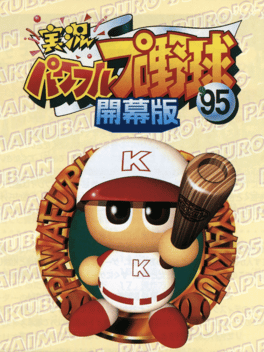
Jikkyou Pawafuru Puroyakyu '95: Kaimaku-ban is a baseball game for the PlayStation and Sega Saturn released as part of Konami's Pawapuro series. It is an expanded version of Jikkyou Pawafuru Puroyakyu '95 on the PlayStation. The roster has been updated to reflect the contemporaneous NPB Season.Horny Sweeper 2
1995
Horny Sweeper 2
1995
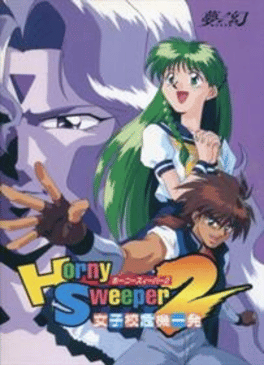
The sequel to Kōshoku Shikakenin (the first Horny Sweeper) tells us what happened to the brave hero Kazuya after he has overthrown the evil regime in the first game. One day Kazuya goes outside, enjoying the good weather, when an unknown girl appears and says she is the sister of Mai, one of the heroines of the first game. It looks like PSYCO, the evil brain-washing power, is back! And not just anywhere, but in a girls high school! Kazuya readily agrees to liberate the poor girls from the curse of PSYCO. Horny Sweeper 2: Joshikō Kiki Ippatsu plays very similarly to the first game. It is a top-down turn-based strategy game in which the player navigates Kazuya and the liberated girls on the large battle fields and attacks when enemies are in range. The difference is that in the sequel, characters gain experience points from each attack, rather than automatically leveling up after large battles, which grants this game a definite role-playing angle. There are more girls (including old acquaintances from the first gaOyaji Hunter Mahjong
1995
Oyaji Hunter Mahjong
1995
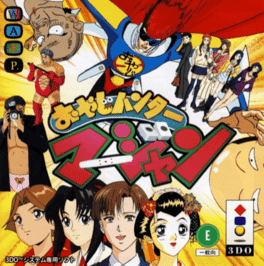
Oyaji Hunter Mahjong is a mahjong game developed and published by Warp for the 3DO platform. Players assume the role of the Oyaji Hunter, a superhero of sorts who protects women in the streets of Japan from lascivious older men who attempt to harass them. The only way the men can be put in their place, however, is through mahjong matches.Mystic Ark
1995
Mystic Ark
1995
Seven heroes from seven different Worlds. Seven heroes who were brought to a mysterious temple on a remote island and transformed into statues. Seven heroes who are chosen to bring harmony back to the universe: Miriene the witch (wizard), Lux the tetsujin (a race of iron people), Reeshina the grappler (monk), Tokio the ninja, Kamio the ogre, and Mesia the priestess. The seventh hero is you, the protagonist of the game - the knight Remeer or the female warrior Ferris. Your first task will be to release your companions from the statues they are locked in. You must travel to the Cat World and to retrieve an important artifact. But your main objective is to visit all the seven Worlds and to find seven mystic arks - the items that will re-unite those Worlds and bring peace to them. "Mystic Ark" is a RPG closely connected to 7th Saga. You travel on overworld map, visit towns, buy equipment, and descend into dungeons. The combat is turn-based and viewed from a third-person "over-the-shoulder" perspective. The battles areKat's Run: Zen-Nippon K-Car Senshuken
1995
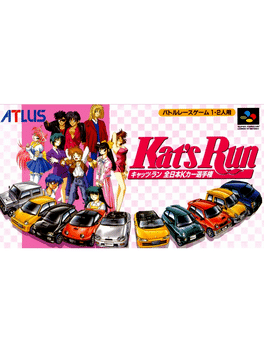
Race to the finish! The cars are connected to the driver. The engine and mind has become one. Race in different modes and experience thrilling rides with personality! A large number of cars are available to you! -Autozam AZ-1 -Honda Today -Suzuki Cappuccino -Suzuki Alto Works -Honda Beat -Mitsubishi Minica Dangan ZZ-4 -Mitsubishi Toppo -Suzuki Jimny -Suzuki Wagon R -Daihatsu Mira TR-XX4-nin Shogi
1995
4-nin Shogi
1995
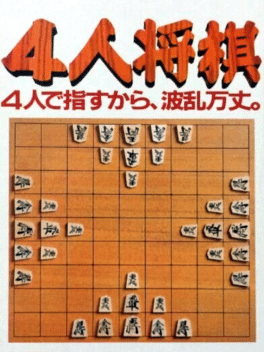
4-nin Shogi is a four-person variant of shogi (Japanese chess). It may be played with a dedicated yonin shogi set or with two sets of standard shogi pieces, and is played on a standard sized shogi board. The objective of the game is to capture your opponents’ kings as an individual or with the option of teaming up with one or two fellow players. Fast matches are common.Kouryaku Casino Bar
1995
Kouryaku Casino Bar
1995
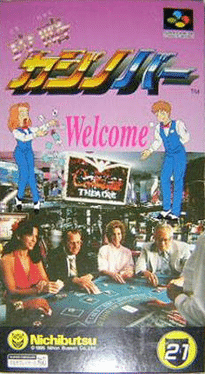
Kouryaku Casino Bar is a Miscellaneous game, published by Nichibutsu, which was released in Japan in 1995.Kohshien 4
1995
Kohshien 4
1995
Kohshien 4 is a Sports game, developed and published by Magical Company (Mahou), which was released in Japan in 1995.Super Keirin
1995
Super Keirin
1995
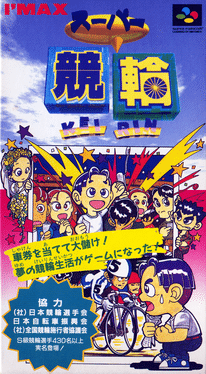
Super Keirin is a Japan-exclusive video game that allows players to become cyclists. Cute anime-style graphics are employed throughout the game; stating that the premise of the game is less serious than other Super NES cycling video games. The game plays like a miniature version of a role-playing video game. Before each race, players has the ability to buy supplies from a drug store, a 24-hour variety store, and a clothing store for a certain amount of yen per purchase. Interaction with non-player characters is possible while at the shopping district. Players can also gamble by placing wagers on other bicycle racing events,[5] buying parimutuel tickets with the chance of winning a respectable sum. Acquiring a newspaper to pick up results from other races can be done within the downtown portion of the game. There are nine competitors and five laps in a typical race. Every track that can be raced on using a bicycle is an velodrome with four superelevated turns that are typical in most velodromes. Riders are not aDangerous Curves
1995
Aqua 1
1995
Flame Dragon 2: Legend of Golden Castle
1995
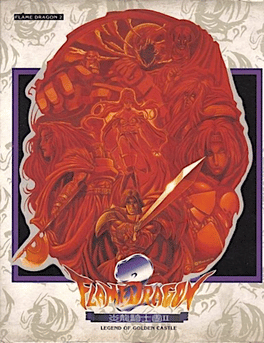
Flame Dragon 2: Legend of Golden Castle is a turn-based tactical role-playing computer game published by Dynasty International Information, a Taiwanese company. It was released in 1995 and is the second game in the series. It is available only in Chinese, but gained some international popularity because of its attractive graphics (in DOS game standard) and excellent game mechanics. The first installment, Flame Dragon: Demon's Seal, is relatively unknown outside of Taiwan/China and the third installment, Flame Dragon Plus: Marks of Wind, never gained the same interest due to a significantly less smooth interface. The game bears some similarity to games such as Final Fantasy Tactics. However, it is distinguished by its combat cut scenes, which are reminiscent of Japanese manga and evoke a comic strip feel. They have caused some people to mistakenly take it for a Japanese game, however it was developed in Taiwan.Ranma 1/2: Ougi Jaanken
1995
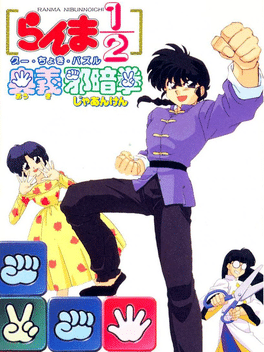
The game involves falling blocks of hands displaying the rock, paper, and scissors signs, which fall three at a time. In a similar manner to Tetris, the player can rotate the blocks to stack them, using pieces that defeat other pieces (e.g. paper over rock) to eliminate stacks. Doing so adds garbage pieces onto the opponent's screen to make it more difficult for them to eliminate their stacks of blocks. The objective is to fill up the opponent's screen up with blocks so that additional ones can no longer fit. Each character has two special attacks which can be used when large combinations are completed. Once in each round each player can also use a bucket of water that can transform a cursed character into their alternate form, which weakens their attacks until the effect wears off. This does not affect Akane or the Gambling King.Ring Out!!
1995
Ring Out!!
1995
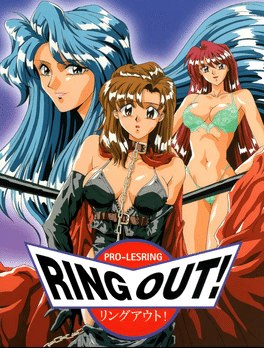
When Aya got up this morning, she was an average 18 year old schoolgirl. Sold to the mob when her parents can't pay off their debts, she is forced into a sordid life of lesbian wrestling, where women wearing very little clothes beat each other up quite a lot. And in this game, whoever comes first, LOSES! Can Aya hang onto her virginity? Well, there's not much chance of that. But you can guide her through her rites of passage in this manga role-playing game. Will Aya be the champion or a slave? At the end of the game, the loser must do whatever she is told, or else...Yokai Buster: Ruka no Daibouken
1995
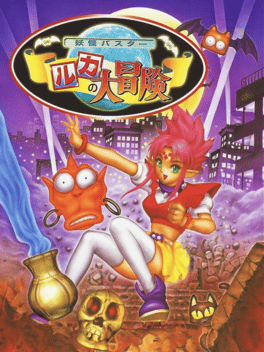
Game developers Sting' were contracted by the publishing comglomerate Kadokawa Shoten for a tie-in game for their gaming magazine Marukatsu Super Famicom, which had recently just started pushing a new mascot named Ruka (with an accompanying mini manga in each issue) to try and help boost sales of the magazine. Rather than create a new game from scratch, Sting opted to re-brand the already existing "The Jetsons: Invasion of the Planet Pirates" game they had released the year before, which had not been released in Japan. The gameplay and level design between the two games is ultimately the same, though the story, sprites, and artwork were completely redone, as well as music.