New Games - Page 12641

Gokuu Densetsu: Magic Beast Warriors
1996
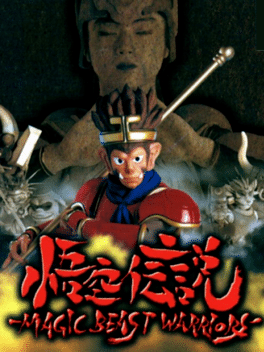
A rare find but an absolute treat for the 2D fight fan: manna from heaven for the Monkey fight fan. Featuring some excellent, cheesy FMV complete with suspicious special effects and costumes introducing the nine characters and also awarded for victory in the versus mode. In story mode you start off playing as Son Goku (Monkey) with additional defeated characters available for selection on your quest to rescue the priestess and prod around the evil multi limbed demon kidnapper. Gameplay is made more enjoyable down to the simple specials which are more suited to the Playstation controller. And aurally its very enjoyable with some appropriate rock riffs and over the top special effects. Japanese title: 'Goku Densetsu.'Galaxian3
1996
Galaxian3
1996
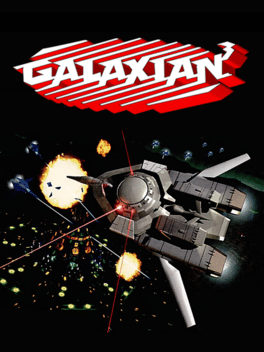
A home version of the arcade game of the same name, Galaxian 3 allows up to four players to blast away at oncoming enemy fighters from a first-person perspective. In a similar vein to Atari's 1983 Star Wars arcade game, the computer is actually flying the ship, and the players are simply gunners given plenty to shoot at. In addition to bringing home the coin-op's "Project Dragoon" scenario, another entire mission, "The Rising Of Gourb," is also included. This mission allows players to follow up their recent rescue of the Earth with a desperate mission to save another world from the alien menace. Galaxian3 has little or no connection to Namco's Galaxian coin-op classic, and the PlayStation edition is only available as a Japanese import, despite the fact that it did make it to some U.S. arcades. Inspired by the "walk-in" theatrical-style arcade game, Galaxian3 is a blast-fest for up to four players. While the computer does the flying in this first-person shooter, the players are trigger-happy gunners with plenty ofDystopia 3: Re-Birth of Anarchy
1996
Dystopia 3: Re-Birth of Anarchy is an 11 level WAD. It was one of the first WADs to exploit editing tricks discovered for the Doom engine, such as deep water and the famous double 3D bridge. While its gameplay was true to Doom II's style, the project's level of detail was revolutionary for its time, with levels containing custom textures, crashed spaceships, and elaborate architecture in varied environments, subtly referring to a self-contained story.The Legend of Heroes IV: Akai Shizuku
1996
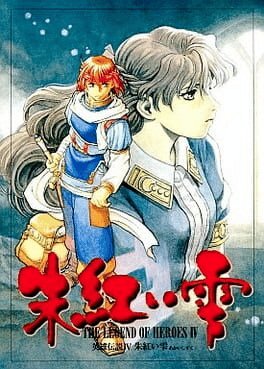
The Legend of Heroes IV: Akai Shizuku is the fourth entry in Falcom's Legend of Heroes RPG series and the second installment in the "Gagharv Trilogy." The game was originally developed and published by Falcom for the NEC PC-98 on March 24, 1996 with a port being released for the PlayStation in 1998.Dezaemon Plus
1996
Dezaemon Plus
1996
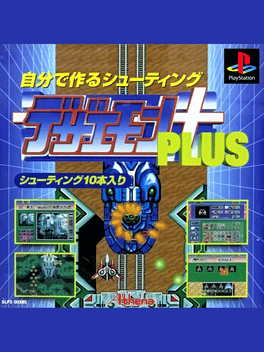
Dezaemon Plus is an updated PlayStation release of Dezaemon on the Super Famicom. Both games allow players to create their own vertical shooters through use of an icon-driven tool set. Players can control enemy placement, behavior, weapons, powerups, boss firing points, and so on. A graphics editor allows players to draw backgrounds, along with sprites for players, enemies, and even explosions. A music editor, very similar to the one in Mario Paint allows players to construct background themes for each level. Players are limited to a maximum of five levels, and a limited amount of shared memory for all graphics.Sega Ages: Puzzle & Action - Shukudai ga Tant-R
1996
Compilation of Quiz Shukudai o Wasuremashita and Puzzle & Action: Tant-R.Motor Toon Grand Prix
1996
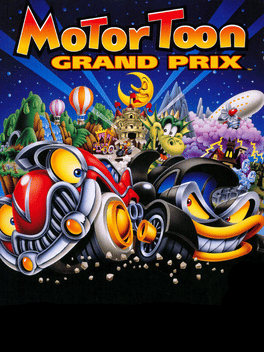
Motor Toon Grand Prix 2 is a racing game whose development is considered a lead-in to the Gran Turismo series. It was developed by a development group within SCE that later formed Polyphony Digital. It was released in the US as Motor Toon Grand Prix, since its predecessor never left Japan. In 2002, the game was re-released in Europe in a Twin Pack with Gran Turismo, Kazunori Yamauchi's following game. In 2010, the game was re-released on PlayStation Network. The game is compatible with Namco's neGcon analogue controller.Gokinjo Boukentai
1996
Gokinjo Boukentai
1996
Gokinjo Boukentai is a role-playing game for the Super Famicom, released on May 24, 1996, by Pioneer LDC in Japan.Super Gussun Oyoyo 2
1996
SimPark
1996
SimPark
1996
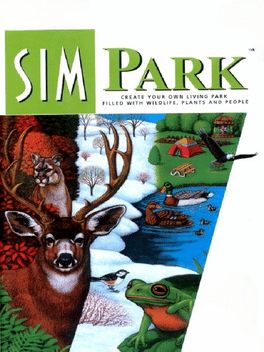
star 6.7Another of the "spin-offs" in the Sim franchise by Maxis. Aimed moreso at children, SimPark's objective is to cultivate and manage a successful park and could be considered a toned down version of SimIsle.Treasure Hunter G
1996
Treasure Hunter G
1996
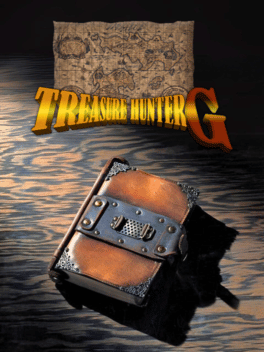
star 7Brothers Red and Blue G. decide to leave their idyllic village in search of their long lost father, who left the kids years ago to go treasure hunting. Unfortunately, as soon as they begin their quest, they become entangled with a mysterious girl on the run from evil monsters who holds the key to the resurrection of a great demon. Now its up to the brothers to save the world if they ever want to find their father. Treasure Hunter G is a top-down RPG in which you control your party of four characters as they explore the fantasy/sci-fi game world in search for quests and grinding their stats while the plot advances. The game is divided in a world-map screen, a top-down "town" mode and a turn-based fight mode in which the characters are taken to generic tiled top-down arenas in which they select each character and move or attack depending on their action points. Enemies can be seen on the map instead of jumping at you at random intervals, and you can freely decide whether to engage them or simply circle them around.The Terminator: SkyNet
1996
SkyNET is Bethesda's last game based on the Terminator franchise. Originally developed as an expansion pack to Terminator: Future Shock, SkyNET eventually became its own standalone product. Its major features are an updated version of the Xngine allowing for play in the sharper 640x480 resolution (and the ability to update Future Shock to the same), a new single-player campaign, and a new multiplayer deathmatch component. In the single-player game, you must stop the machines from launching a recovered nuclear weapon. The story takes place over seven missions broken into various sections and "levels," with night progressing into daylight as the game goes on. The locations are also more varied and interactive than those featured in the first game, with levels like the basement of the Cyberdyne building, and a sinking nuclear submarine. Driving and flying levels return from Future Shock, as do the mission briefings, which are now handled entirely in FMV. The game seems to act as a prequel to Future Shock, with the moBS Dragon Quest: Dai-4-wa
1996
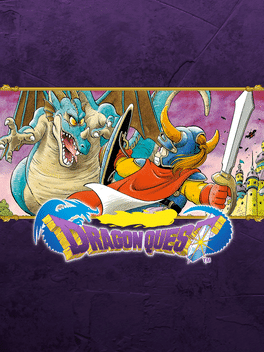
The fourth and final episode of BS Dragon Quest. BS Dragon Quest is a version of Dragon Quest released for the Super Famicom add-on peripheral Satellaview, via broadcast, in Japan. It was divided in chapters, that could be playable only for an hour, and consisted of four one-hour scenarios which players would download on a weekly schedule. Players were tasked with leveling their character, collecting medals and completing scenario-specific conditions with special events designed to occur under specific conditions in real-time. It was compatible with the SoundLink add-on.Brave Battle Saga the Space Fighter
1996
Tim and his friends are on a mission to discover the location of the four plates that can be used to activate an ancient space station buried deep in the Earth that can be used to wipe out the population! The evil Zak Empire is looking for the plates too and they plan to use them for evil, so explore the lands, fight the enemies and save the world from being destroyed by the evil Zak Empire in the brilliant Barver Battle Saga - The Space Fighter! If you loved that awesome and cool game and are on the hunt for other excellent gaming from this adventurous genre then try out Ring King, Gladiator and the amazing Star Trek!Cubic Gallery
1996
Cubic Gallery
1996
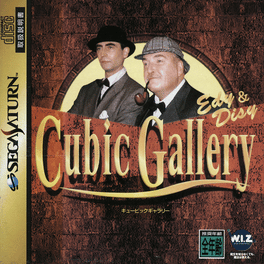
An educational adventure game where detective Edy and his assistant Disy explore the world of fine art to help the Mona Lisa.Voice Paradise
1996
Voice Paradise
1996
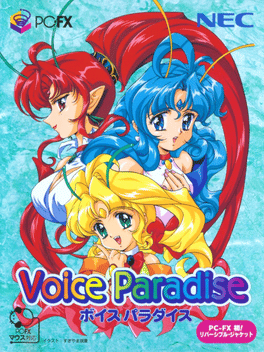
The hero of the game is in his space ship, on the way to his home planet. But the space ship crash-lands on the Earth. The hero is on an important intergalactic mission and has to be on his home planet no later than in one month. He tries to figure out what caused the crash, and discovers that it was a voice that interfered with the ship's radio waves. Suddenly, three anime girls appear in front of him. They are Citron, Jasmine, and Cinnamon, the heroines of a TV anime series called "Elfin Triangle". They explain that the voice that caused the disturbance was that of a famous Japanese voice actress.... they just don't know which one. To get a sample of this voice would be the only hope to repair the ship... so the hero and his three lovely companions have to find out who the voice belongs to! Voice Paradise plays, for the most part, like an adventure game with an internal schedule. A visit to every locations costs one game day, and the hero has only 30 days to find the voice actress. The locations include TV studiKeio Flying Squadron 2
1996
Keio Flying Squadron 2 was released in 1996 for the Sega Saturn in Japan, Europe, and Australia. The second installment of the series continues the story of Rami's adventures as the Keeper of the Secret Treasure (a sphere passed down through generations of Rami's family). Rami races Dr. Pon and a new rival Himiko Yamatai for an ancient treasure that can be unlocked with six spheres. Two of the stages retain the shoot-'em-up style of the first game, but the lesser dragons can be obtained as bonuses only. Mainly the stages consist of sidescroling platformer stages. These scroll from right to left on the Japanese version and left to right on all other versions. Several bonuses can be collected including three weapons (Rami can also bounce on the heads of enemies to defeat them): A large mallet, used only for hitting enemies An umbrella, used to hit enemies, float and deflect overhead obstacles A bow, used to shoot arrows at enemies. Besides the platformer and shoot-'em-up stages, there is vertically scrolling speciaBattle Arena Toshinden
1996
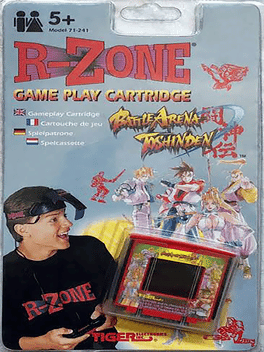
A Tiger Electronics port of Battle Arena Toshinden. In the same year Tiger released two handheld versions, for R-Zone and VRT-X.Dezaemon BS-X Version: Sugoi STG 2 - Crystal Guardian
1996
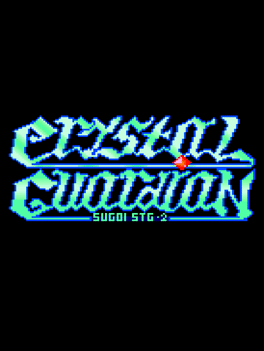
Sugoi STG 2 - Crystal Guardian Is a game made using Dezaemon, released as a downloadable game for the Satellaview.