New Games - Page 12297

Altered Beast
1988
Altered Beast
1988
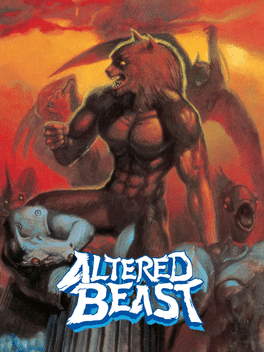
star 4.2The Sega Genesis/Mega Drive has different enemy layouts and input mechanics from the original arcade version.Rimrunner
1988
Rimrunner
1988
An insectoid race travels the galaxy and colonizes uninhabited and long dead planets. Force shields were created to protect their planets from the constant attacks of the arachnoids. The force shield generators need regular recharging, a task for which a group of elite insectoid warriors was created. Riding their reptilian mounts (Runners) they patrol the colonies, recharging the generators and destroying any hostile lifeforms that have penetrated the shield. Players have to guide one of these warriors through horizontally scrolling levels, shooting at hostile lifeforms and seeking out shield generators that need recharging. A radar at the top of the screen shows the players position, as well as the position and status of the shield generators. Green generators are stable, flashing generators are unstable and red generators need to be recharged. Enemy attacks deplete the warriors health and might knock him of his Runner. On foot, the warrior is much slower and can't walk very far (the levels stop scrolling), butDragon Ball: Daimaou Fukkatsu
1988
Dragon Ball: Daimaou Fukkatsu is a role playing video game released only in Japan by Bandai on August 12, 1988. It is the second Dragon Ball video game released for the Nintendo Famicom. Daimaō Fukkatsu is the first role playing game based on the Dragon Ball series. Its gameplay was reused in the Goku-den video game series. Daimaou Fukkatsu is also one of the games included in the game compilation J Legend Retsuden for Nintendo 3DS.Famicom Wars
1988
Famicom Wars
1988
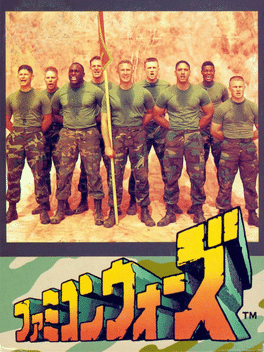
star 7.8Famicom Wars is a Japanese-only video game for the Famicom (the Japanese name for the NES). It was designed by Nintendo R&D1 and programmed by Intelligent Systems and published by Nintendo. It spawned many sequels, five of which were released in America. It is the first game in the Nintendo Wars series. The gameplay can be compared to games in the Fire Emblem series, as both are in the turn based strategy genre, and both have been developed and published by the same companies (the Famicom Wars series was released first, however).Mad City
1988
Soccer League: Winner's Cup
1988
Soccer League - Winner's Cup is a soccer game developed by SAS Sakata for the Famicom, and published by Data East in 1988. During game play, field scrolls horizontally across the screen. Players select one of eight international teams and attempt to win the World Cup. The teams that the player can select include: Japan, Germany, Brazil, France, South Korea, England, Argentina, and the USA. Players may choose to play solo against the computer, or compete head to head with another player. Although the game was never released outside of Japan, most of the options are written in English.Mito Koumon II: Sekai Manyuu Ki
1988
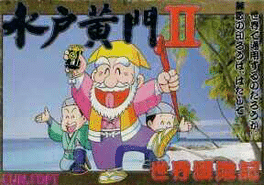
A NES action game developed by SunSoft and the sequel to Mito Koumon. It was never released outside of Japan. Mito Koumon II: Sekai Manyuuki is the sequel to Mito Koumon and is very similar in appearance and gameplay. As in that game, the player controls one of Mitsukini Tokugawa's retainers as they gather clues and evidence of crimes in the area while either avoiding or fighting off hostile NPCs. Unlike the first game, which was set entirely within Japan, Tokugawa is crossing the world solving issues instead. The first stage is America (specifically the Wild West, as would be chronologically accurate for the 17th century) though there are plenty of other locations to visit across the world as well, including even Transylvania.World Court Tennis
1988
World Court Tennis
1988
It's your serve. WHOP! The ball clears the net at 100 MPH and raises a little dust just inside the chalkline. An ace? no. WHOP! Your opponent returns with a powerful backhand that kills your plan of charging the net. No matter how you play - with up to 3 friends, singles, doubles, or against the computer - World Court Tennis will tax your endurance and test your skill with action that's fast and furious. Just don't scream at the line judge. He's never wrong.The Money Game
1988
The Money Game
1988
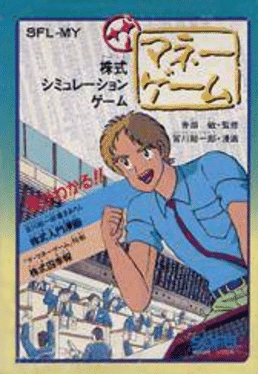
A Stock Market/life-sim game where the player must manage their stocks in order to achieve a happy life. It was developed by SOFEL for the NES and released in Japan only. The Money Game is a stock market simulation game where the goal is to raise money through the wise purchasing and selling of various types of stock. Coupled to this is a life-sim aspect where raising a sufficient amount of money at certain checkpoints allows the player to gain and keep a girlfriend, who later becomes their wife and provides children. As well, the player can upgrade from their initial studio apartment to a terraced house to a mansion with its own Olympic-sized swimming pool. The game is densely packed with Japanese script and requires both literacy in that language and a fairly good understanding of dealing in the stock market itself (though the game does provide tutorials for the latter). It would be followed by a sequel, The Money Game 2: Kabutochou no Kiseki, which in turn would be the basis for SOFEL's Wall Street Kid.Tatakae!! Ramen-Man: Sakuretsu Choujin 102 Gei
1988
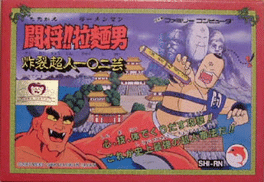
Tatakae!! Ramen-Man: Sakuretsu Choujin 102 Gei is an adventure game developed by Human Entertainment for the Famicom and published by Bandai in 1988. It is based off the Tatakae!! Ramenman series, which itself is a spin-off of the Kinnikuman series, known in the US as M.U.S.C.L.E.. Ramenman is a popular character in the Kinnikuman universe. The game follows the eponymous warrior Ramenman as he attempts to track down his father's killers and bring them to justice with his many years of martial arts training. Notably, this game is the first true point-and-click adventure game for the system. While there had been many adventure games made for the NES, such as Portopia Renzoku Satsujin Jiken or Princess Tomato in the Salad Kingdom, they are largely driven by menus. Ramenman is directed by using the cursor to select an area to walk to or interact with instead much like classic Sierra adventure games such as King's Quest.Sylviana: Ai Ippai no Boukensha
1988
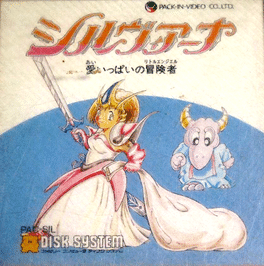
Sylviana lived with her mom in relative peace after her father passed away. One day, her mom came down with a mysterious illness. Despite everything Sylviana tried, her mother's condition only got worse. Then one day, she heard a rumor about a Dr. Doppler, who can create a medicine that will cure any disease. She decides to head out and find this Dr. Doppler, and convince him to give her the medicine. However, she soon finds out that the doctor is unable to help her, due to having had his eight treasures stolen from him by demons. Sylviana vows to return the treasures to him in exchange for the medicine.Big Challenge! Judo Senshuken
1988
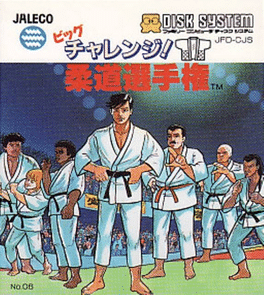
Realistic judo techniques! Win by taking your opponent down! Become a champion!Bases Loaded II: Second Season
1988
Bases Loaded II: Second Season was released by Jaleco in 1988 as the second in the Bases Loaded series. It was only ever released for the Nintendo Entertainment System, and continued where Bases Loaded had finished as a successful baseball game on the NES console.The Scheme
1988
The Scheme
1988
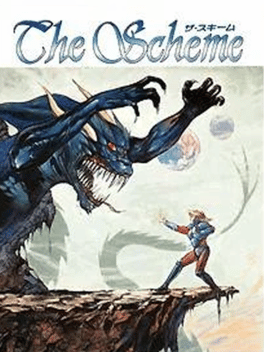
The Scheme is an action RPG released by Bothtec (later known as Quest) for the PC-88 in 1988. It features Metroidvania-style open-world exploration, side-scrolling run & gun shooter combat, and chiptune music by Yuzo Koshiro.Eggerland: Meikyuu no Fukkatsu
1988
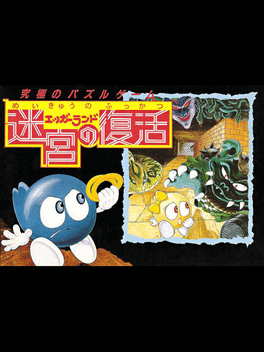
Eggerland: Meikyuu no Fukkatsu is a puzzle video game developed by HAL Laboratory for the Family Computer. It was released in 1988 in Japan as the fourth game in the Eggerland series following Eggerland Mystery, and is the third in the series not counting the port of Eggerland 2 made for the Famicom Disk System. The game contains roughly 162 stages (or maps), which are arranged on an 8-by-16 grid (with some stages hidden).Sengoku Mahjong
1988
Sengoku Mahjong
1988
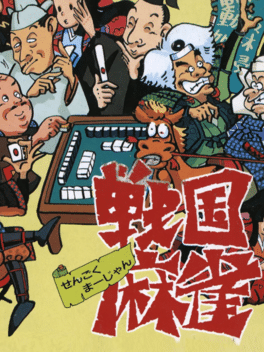
A Sengoku era themed Riichi (Japanese) Mahjong game. It was the first mahjong game released on the PC Engine and has since been rereleased on Wii Virtual Console and PSN. The game features Single mode and Conquest Mode. In single mode you play a single mahjong game against the game cast. In conquest mode you play as a prefecture and try to conquer the entirety of Japan by winning on Mahjong. The game only features 4-Player mahjong and can only be played against the computer. There is no password feature for the conquest mode, so it needs to be beaten in a single sitting.Explosive Fighter Patton
1988
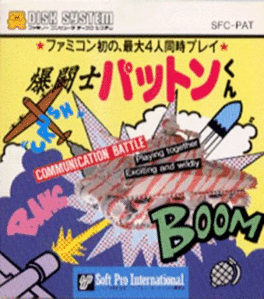
A tank arena combat game, known for its aggressive instructions which stated, "TURN TO SIDE B AND INSERT TO ******* BOX!"Tombs & Treasure
1988
Tombs & Treasure
1988
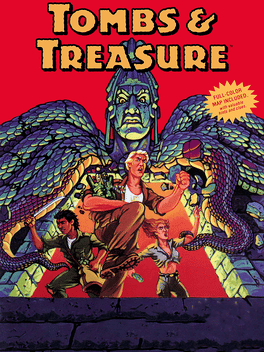
Tombs & Treasure, released in 1988, was altered to be more story-based, and features new music and role-playing elements; an English-language NES version was published by Infocom in 1991.Pac-Mania
1988
Pac-Mania
1988
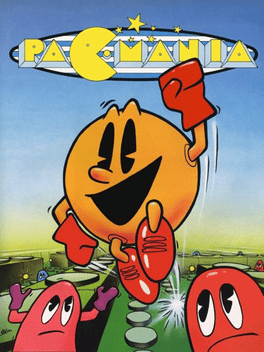
Pac-Mania is a variation on the game Pac-Man. You need to guide Pac-Man around a maze and eat all of the dots on the board to proceed on to the next round. Numerous, multi-colored ghosts also roam the maze trying to stop you. If you eat one of the power pellets in the maze, the ghosts will temporarily turn blue and run from you. Pac-Man can earn bonus points by eating the ghosts when they are in this state. The maze is now shown in isometric perspective and is larger than the screen which will scroll to follow the action. To help get out of tight spots, Pac-Man can now jump. But be careful, because some of the ghosts have learned this trick as well and you could end up in a mid-air collision!Kageki
1988
Kageki
1988
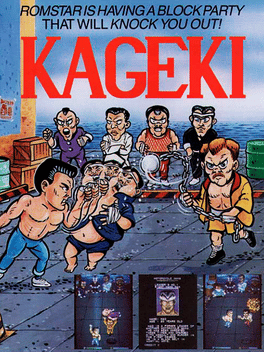
In this game, you play a bandage-fisted street boxer who must fight every member of The Motorcycle Gang Warriors, including their leader. The game has nine rounds where you must face a different opponent. In each round, your opponent must be knocked down three times in order for you to win. After you have defeated the first eight opponents, you will finally meet face to face with the leader, and if you defeat the leader, you have beaten the entire gang and the game ends.