New Games - Page 11950

TNN Bass Tournament of Champions
1993
Starting at 7.30 in the morning, the player has until 4PM to take a boat on the lake and fish for bass to beat competitors. The boat can be steered freely using a top-down view until an appropriate spot has been found by checking the lowrance monitor. The game then switches to a first-person view, also showing the fisher from a side-view on a separate part of the screen, and it is possible to look around in the environment. Casting is done using a power meter to determine the distance. As the bait sinks, a monitor can be checked for nearby fish. There are also visual clues through splashing water. The player can check the depth and reel in when needed. When a fish has been caught, it becomes a sensitive play with the line tension to make sure it does not snap shown through the side-view of the fisher. At the end of the day the boat can go back to the weighing area to determine the results. Money earned in the tournaments can be used to acquire new spin reels, bait reels, boats, lines and lures.Pyramid Adventures
1993
Steel Machine
1993
Steel Machine
1993
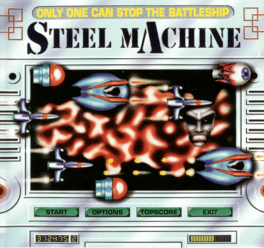
You’re the pilot of the Steel Machine – and it is up to you to fight off an attack by 6 battle cruisers intent on invading your planet. They’ve broken through all defenses now Steel Machines is the last hope. You’ll have to fight your way through 6 levels of deadly combat and battle with fleets of enemy ships sent to destroy you. It’s your toughest challenge ever.Berenstein Bears: On Their Own, and You on Your Own
1993
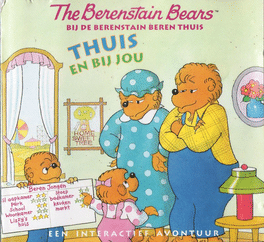
The Berenstain Bears: On Their Own is an interactive story book for children based on the popular children's book series. A yearly fair has come to Bear country, but nobody has the time to accompany brother and sister bear to go to it. Mother bear agrees that they can go on their own if they prove they can be responsible. The game includes 29 educational games for children. With each successful completion the player can win stars. Games include cleaning their virtual room, catching the bus to school, matching the alphabet, reading the clock and others. Initially all the games are around the house, but once the player has shown his responsibility, more games at the fair are unlocked.The Joker's Wild
1993
The Joker's Wild
1993
The Joker's Wild was a gameshow style game on the Philips CD-I. It was developed by Accent and released in 1994.The Joy of Sex
1993
The Joy of Sex
1993
Welcome to the Joy of Sex on Interactive Compact Disc. You will discover a wise, entertaining, uninhibited guide to lovemaking, containing sparking combination of video, illustration, commentary and music made easily and instantly accessible. Sexual techniques and positions, as well as ideas about love and relationship, are explored through intimate video sequences, hundreds of candid and tender drawings and over three hours of commentary. Exactly what you choose to view next is your decision, but to help you, the disc's interactive features include: Introduction Guides Insights Questionnaire Game BookmarkJack Nicklaus' Power Challenge Golf
1993
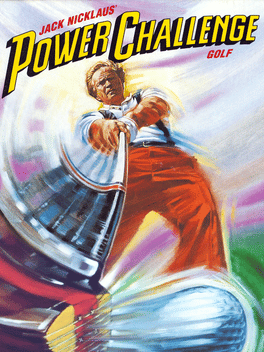
Power Challenge Golf is a golf simulation game, based on Accolade's own Golf & Course Design from the year prior, and featuring both of the courses from that title (Sherwood and English Turn) as well as one additional new course (Baltusrol). The game offers stroke and skins play for up to four players, as well as a driving range and a practice mode. The course editor from the PC version, however, has been removed.Joe Montana's NFL Football
1993
This enhanced version of the Joe Montana series features 3D models and even full-motion video of Joe Montana himself. It sports a full NFL license with all 28 teams of the time with their respective nicknames and logos, along with 10 of the all-time greatest Super Bowl teams including '85 Bears, the '72 Dolphins, just to name a few, that the player can compete against if they win the biggest game of the year.My Paint: The Animated Paint Program
1993
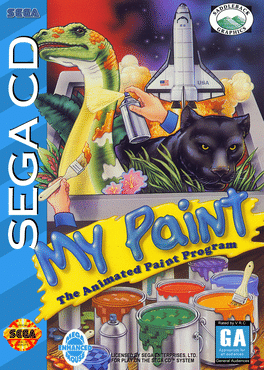
My Paint, the world's first animated paint program gives you the power to push your creativity to new heights! It's a full featured paint program you not only see, but hear! Freehand draw your own masterpiece or choose from any of the over 200 built-in drawings. Everything from Planes, Trains and Automobiles to Velociraptors, Bats and Panthers are included. Use any of the many patterns like dinosaur skins, moving water, stripes, dots, or the cool animated stickers to bring your drawings to life!NFL Football Trivia Challenge
1993
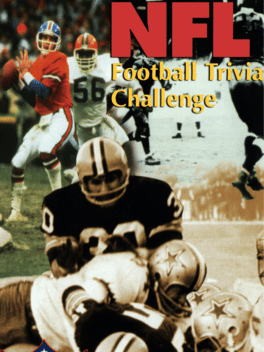
NFL Football Trivia Challenge is a trivia game with an National Football League license. Either player can pick his favourite team to play with. TV commentators Pat Summerall and Tom Bookshier describe various situations in play accompanied by 1200 images and 300 Full Motion Video clips. 1500 multiple choice questions are waiting to be answered in the game. For each correct answer the player gains yardage in the game and increases his chances of scoring a point. The player with most points after 60 questions wins the game. There are three different difficulty levels to play at.NFL's Greatest: San Francisco vs. Dallas 1978-1993
1993
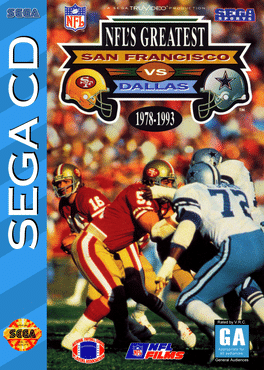
Top stars for the Cowboys and 49ers from the 70's, 80's, and 90's in one game. Staubach, Dorsett, "Too Tall" Jones, Aikman, Irvin, Smith - take the field against Montana, Lott, Clark, Rice, Watters, Young - just to name a few! You choose the quarterback, you call the plays - then watch the action unfold in full color TruVideo! Imagine Tony Dorsett and Troy Aikman in the same backfield, or Steve Young hitting Dwight Clark with a TD pass, or "Too Tall" Jones chasing down Young - it can happen! 15 years of real football footage from the NFL Films Library and the latest Sega CD sound and technology make your dream game come to life!The Ottifants
1993
The Ottifants
1993
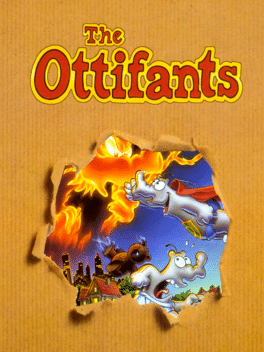
The Ottifants is a 2D platformer released for the Sega Genesis, Master System and Game Gear in 1993. It was only released in Europe and Brazil. The Ottifant is a creation of German comedian and actor Otto Waalkes. The name is a portmanteau of Waalkes' nickname Otti and the German word for elephant. Game description: "All is not well for Bruno, the baby Ottifant. A father captured by Aliens! Or so our Otti-infant imagines as he follows the trail of sweets that will lead him to his abducted parent. It's a trail of peril and adventure--- terrifying toys, a blood-chilling basement and an office of hi-tech horror."Poker Face Paul's Blackjack
1993
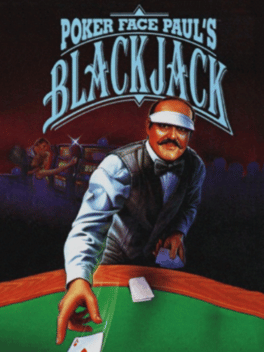
Poker Face Paul's Blackjack is a card game where the player starts out with a certain amount of money on the Las Vegas Strip and play in a series of blackjacks games to either win big or bust. The player can choose to play in four different casinos and can select options on how they play including how much bets are worth and how many decks are used. The game will also help the player out with the rules and regulations of blackjack.Tengen World Cup Soccer
1993
The game has an unusual naming scheme. In Japan there were no issues, as the game was published by SIMS themselves. In North America and PAL regions however, publishing rights were given to Tengen, who altered many of the in-game banners and renamed the game Tengen World Cup Soccer, even though the majority of the work was done by SIMS. The game offers 24 different national teams from across the world, although the choices aren't based on any official tournament from the era. For 1993 the list is quite out of date; the Federal Republic of Germany (more commonly known as West Germany) had not existed since 1990 after the fall of the Berlin Wall, Russia is represented with the flag of the Soviet Union which dissolved in late 1991, and Yugoslavia had ceased to exist by mid-1992.Street Hero
1993
Street Hero
1993
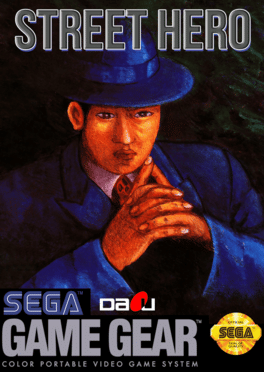
Street Hero is a Streets of Rage style side scrolling beat-em-up, offering plenty of action for Sega's handheld. Although the Sega Master System version of the game saw release in Korea, it is one considerable rarity that very few have actually seen. This fact is only strengthened by the knowledge that until February 2012, no ROM of the game existed online in any form. A real shame given the high level of quality of gameplay which has come from the usually disappointing array of 8-bit Korean developers.Funny World & Balloon Boy
1993
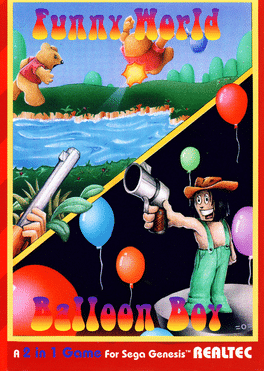
Funny World is an action game where the player must shoot strange animals as they move across the screen. On each stage a set number of "funnys" will cross the screen, and the player must shoot a certain number of them before they can safely reach the other side. To make things harder, some will walk, some will run, and some will move erratically; from time to time a female funny will cross the screen, which if shot will cause the player to lose a life. They player also has a certain number of boulders they can drop, which will hit any funny on the screen that may be out of the player's range. If enough funnys are hit, the player moves on to the next stage. Balloon Boy is an action game where the player controls a boy at the bottom of the screen who must shoot at balloons floating across the top. When shot, the balloons will release either a trap or an item, and the boy must collect the items while avoiding the traps. If all the balloons are destroyed before the time runs out, the player moves on to the next staLotus II
1993
Lotus II
1993
Licensed by the classic British car company, this game featured 2 modes of play - one has you racing against 19 computer rivals (with witty names such as Alain Phosphate and Crash-Hard Banger), and the other pits you against the clock. There are 13 different types of races, ranging from Motorways to night-time to sections punctuated by roadworks, and some are lap-based with others being simple A-B. 2 players could play on a split screen mode. The game's crowning glory, however, was the RECS editor, which allowed you to create courses of your own, with theoretically millions possible.Rolling Thunder 3
1993
Rolling Thunder 3
1993
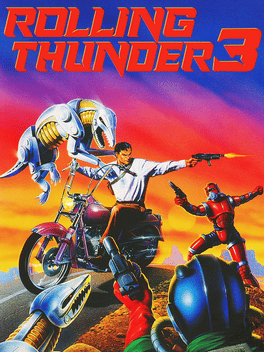
The events in the third game in the series are synchronous with RT2. At the end of the twentieth century, satellites around the globe are being shot down, disrupting communications. Secret agency Rolling Thunder discovers the organization behind the terror: Geldra. While agents Leila and Albatross are fighting the leader Gimdo (RT2), agent Jay is instructed to bring down Dread, the second-in-command.