New Games - Page 11865

Dimo's Quest
1994
Dimo's Quest
1994
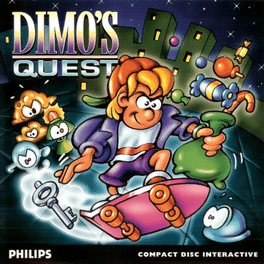
Dimo very much likes candy and invites you to join him. Together you will go to the different worlds looking for candy!PGA Tour Golf III
1994
PGA Tour Golf III
1994
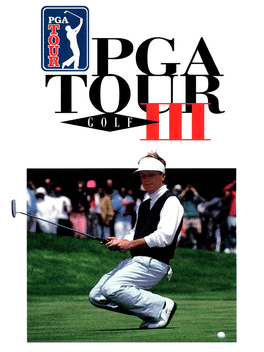
The team at Polygames make some small improvements to the latest PGA title. It has a US setting in terms of the courses and players, unlike PGA European Tour, with 8 courses in total. Control is via the standard method of setting the shot up, then pressing the button once to start a swing, a second time to set the pace, and a third time to set draw/fade. Before taking a shot the club choice, direction and intended draw/fade (spin on the ball) are selected. You can play a 72-hole tournament against 60 other PGA pros, or practice the holes at your leisure.No Escape
1994
No Escape
1994
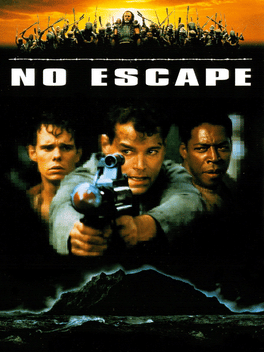
Based on the 1994 movie of the same name starring Ray Liotta, the player takes control of Liotta's character, Capt. J.T. Robbins, whose only objective of the game is to escape an island. After shooting his commanding officer, Robbins is imprisoned and eventually sent to the island Absolom as a war criminal, from where there is no escape possible. To do this still, the player must explore the island with side-scrolling platform gameplay for clues, finding items and combining them to make weapons and traps.Normy's Beach Babe-O-Rama
1994
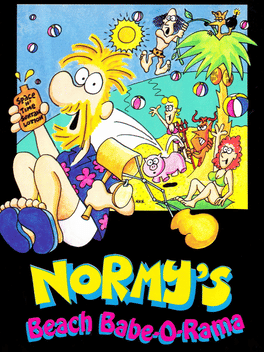
Normy is one popular surfer, especially with the ladies on the beach, however one day a UFO appears and kidnaps all the ladies on the beach and it is up to Normy to travel to 29 different alien worlds to bring them back to Earth. The gameplay is a side-scrolling action game, controlling Normy and fighting off various bad guys scattered throughout the stage using weapons such as glove extending hammers or beaver mallets. There are also puzzles that need to be solved at times to advance on, various pitfalls and traps to avoid, and six different bosses to fight.Rap Jam: Volume One
1994
Rap Jam: Volume One
1994
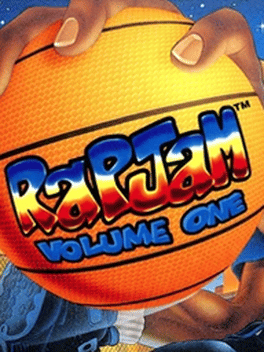
This game combines basketball with some of the most popular rappers of the time as choose-able players. Some of the artists included are: Public Enemy, LL Cool J, Naughty By Nature, Queen Latifah (!), Yo-Yo, House of Pain, Onyx, Warren G. and Coolio. The gameplay is modeled after the fast-paced NBA Jam and takes place on various outdoor courts in 5 different U.S. cities. Up to four players can compete, and the "Xtra" button works similar to turbo. There's a shot meter that enables you to sink jumpers and rattle the rim. No 3-point shots exist and there are no fouls in the game.Brett Hull Hockey
1994
Brett Hull Hockey
1994
The Golden Brett returns to the SNES in the improved and updated BRETT HULL HOCKEY ’95. The second game in this series also features a full NHLPA license, so you’re sure to find your favorite players ready to hit the ice. Use every little trick in the book to get the job done: one-timers, fake shots, drop passes, and even dekes. There are several gameplay options to satisfy any hockey fan: Full Season, Half Season, Playoffs, All-Star Game, and Exhibition. You make all the decisions in the course of a game, whether it’s shuffling your lines, pulling the goalie, or calling the offensive strategy. Choose wisely, because each option could mean the difference between glorious victory and bitter defeat. And with the stellar play-by-play of Al Michaels, you’ll forget that you’re not just watching a game on TV, you’re playing one!Cannondale Cup
1994
Cannondale Cup
1994
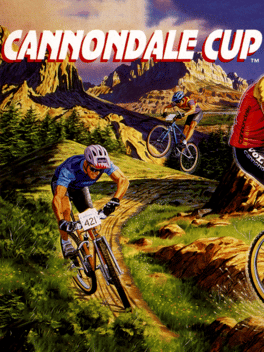
Choose from 1 of 8 different racers who compete on 8 different bicycle race courses. The game splits the courses into different stages, with each stage having a requirement to move on to the next stage. The requirements are based on completing a set number of laps or attaining a certain score, except for the final race where the player must come in 1st place in 30 laps. There are also a number of selectable mountain bikes which are rated in the categories of turning, speed, tires, acceleration, and shocks. During a race, players can punch opposing cyclists and also jump ramps. The higher the position the player comes in at the end of a race, the higher the score the player will receive. It was also re-released as a part of the SNES game Exertainment Mountain Bike Rally / Speed Racer as the Mountain Bike part of it, along with another game. It contains the same gameplay with only a few minor graphical changes.Full Throttle Racing
1994
Full Throttle Racing
1994
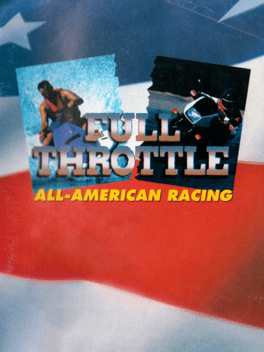
Full Throttle Racing takes in chaotic, violent and no-holds-barred racing across America. The racing takes place on both land and water, with motorbikes and boats featured. There are 6 racers in the game, each with their own short profile, including a guy newly out of jail, a token woman and a token African-American. You can race one or both disciplines, racing either an individual weekend or a full championship. As you play the game you can upgrade your vehicle, with faster engines, better tyres and more nitros. As in Road Rash, throwing your legs out at the other riders is potentially advantageous.Snow White in Happily Ever After
1994
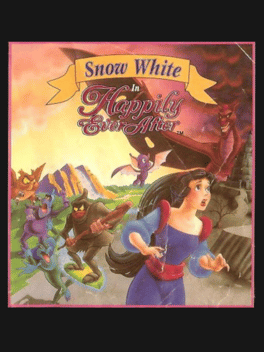
You collect fruit and stars through each level and can jump on some enemies or throw apples at them (which are also used to break through blocks). Be careful as you jump on platforms as going to close to the edge can cause you to lose balance and fall. On the screen, your health is shown by a heart. If you get hit by an enemy, fall down a pit, or fall from too high, it will decrease by one. If it reaches zero, you lose one of three lives. Some special attacks can be used, if possessed, like apple bombs. Eventually a sign "Find The Exit" will appear and you can exit to the next level. If you make it to the end, you must fight Maliss in dragon form. You can change the difficulty level or choose a continuous play option as well.The Jetsons: Invasion of the Planet Pirates
1994
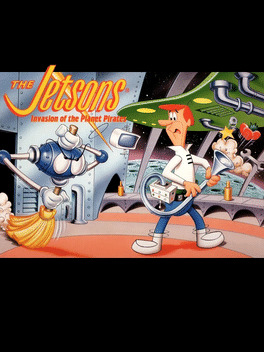
George Jetson was about to run out to work when his pal Captain Zoom appears out of thin air. Zoom tells him that Zora, the leader of SPREE ("Space Pirates Revelling in Evil Enterprises"), is planning on looting this solar system of all its resource! Unfortunately, in his last encounter with Zora, Zoom has used up all his strength and now he is powerless so he asks George to take over. He gives George his Pneumo Osmatic Precipitator (or P.O.P.) and bids him good luck. Can George save his family and this galaxy? Guide George through 9 stages of intergalactic action armed with only his wits and the P.O.P....which is like a super vacuum. The P.O.P. can be used as a traveling tool by sucking onto walls and ceilings, it will enable George to climb up and across platforms. As a weapon, the P.O.P. can be used to suck up blocks or enemies and spit out at other enemies. George can also use the P.O.P. to breathe under water! Talk about multi-functional! George's conditions are indicated by the number of hearts he has at thLester the Unlikely
1994
Lester the Unlikely
1994
star 5.6One day Lester was walking through Seaport City's loading docks reading the new issue of his favorite comic, "Super Duper Hero Squad." Feeling a little tired from playing video games late the night before, he looked around for a comfortable place to finish his comic. Just before reaching the beach Lester passed out from sheer exhaustion. Now, his real adventure begins... It is up to you to help Lester get back home.Packy & Marlon
1994
Packy & Marlon
1994
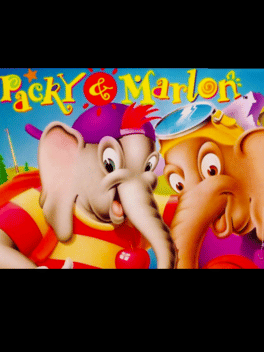
Packy and Marlon is a platform video game for the Super Nintendo Entertainment System released in 1995. It was designed to improve self-care behavior in children with juvenile diabetes. The game achieved some success with treatment groups.Speed Racer in My Most Dangerous Adventures
1994
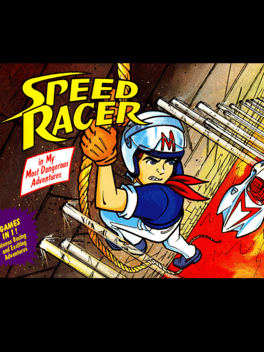
This game is a take on the classic Anime cartoon series, Speed Racer. You play as Speed, an aspiring race car driver with his trusty car, The Mach 5, along with his GO team, out to travel the world and win every international grand prix on the circuit. Along the way, you fight off the infamous villains of the series, out to stop Speed by any means necessary, even capturing his girlfriend, Trixie. There are seven levels in all and in between racing levels you'll be on foot in a side-scroll style adventure, fighting off thugs and gangsters, collecting power ups to help you out, including green flags in order to keep your health up (not kidding about that).Super International Cricket
1994
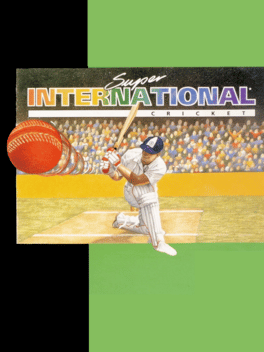
The sequel to International Cricket on the NES, it was developed by Melbourne House (as Beam Software) and published by Nintendo. It features much improved graphics over International Cricket and gameplay superior to all modern cricket games. However, Super International Cricket also suffered like its predecessor by missing official team and player licensing, has a one-track sound loop and one stadium. Eight teams are included: Sri Lanka, Australia, England, South Africa, New Zealand, India, Pakistan and the West Indies.Ultima: The Black Gate
1994
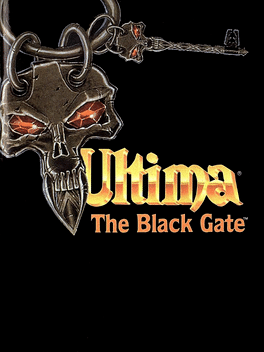
The Avatar is once again summoned to the land of Britannia and this time he has to investigate ritual murders that have occurred in the town of Trinsic. Meanwhile, a new philosophical/social doctrine is spreading through Britannia, promoted by the mysterious Fellowship. The story of this version of Ultima VII is essentially the same as in the original PC version. However, the dialogues have been greatly reduced and/or simplified. This applies also to the size of the game's cities and other locations, the amount of items to pick up, interior details, etc. Combat also underwent significant changes. The battles in this version are action-based; the player has to click on the enemy repeatedly to win. Unlike the PC version with its party management, the Avatar is traveling and fighting solo in this release.Blade Lords
1994
Blade Lords
1994
Blade Lords is a one or two-player platform game in the tradition of Bubble Bobble ... but far more violent. 60 stages await the player, and you might defeat the evil wizard Ayraa. Cute enemies just ask to be destroyed, and bonusses are everywhere for the taking. Oh, and the other player would love to be stunned...Quadpawn
1994
Quadpawn
1994
Quadpawn is a short chess-like puzzle game where you and your opponent both control four pawns. These pawns move with the same rules as chess pawns. Multiple rounds can be played and tally of the score is kept for all rounds played. The goal of the game is to try to get one of your pawns to the starting row of your opponent's pawns. The player loses a round if a black pawn reaches the player's starting row or if the pawns are locked up in such a way that doesn't allow anyone to move.Zunzunkyou No Yabou
1994
Zunzunkyou No Yabou
1994
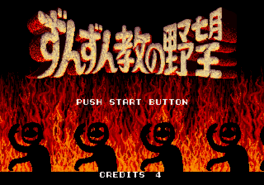
ZnY is basically Parodius meets Space Invaders (a premise also done by Taito themselves with Space Invaders '95: Attack of the Lunar Loonies), except you control a statue instead of a spaceship and you fight within an enclosed arena instead of vertical space. It would be more akin to an arena shooter like Robotron: 2084, except your statue can only shoot straight upward. The stages themselves all seem to be themed around different parts of the world: The kabuki boss on the far-left represents Japan, the chef represents China and mainland Asia, the crusader knight stands for Europe, and the superhero on the far-right stands for America. Yet even outside of the Japanese stages, there's a distinctly goofy flair about the game that emphasizes screwy cultural stereotypes from a Japanese game company. The game's actual developer, Minato Giken, also helped work on the Game Gear version of Dynamite Headdy, one of the most fantastically insane Genesis platformers ever, and that same sort of unhinged design can also be seenEvolution: Dino Dudes
1994
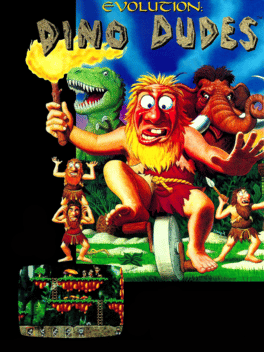
The gameplay of The Humans has similarities to Lode Runner and Lemmings. Your job in this action puzzler is to help prehistoric man to evolve by helping them discover tools, the wheel, weapons, or even fire. Each level in the game will have a given task to help in this, and you are allotted a number of characters who must accomplish the task. The player can switch from person to person while moving the characters around each scrolling puzzle, and teamwork is essential to success.