New Games - Page 11259

Tales of Destiny
1997
Tales of Destiny
1997
star 7.9Tales of Destiny is a follow-up to Tales of Phantasia. Like its predecessor, it has the structure of traditional Japanese role-playing games, but substitutes turn-based combat for action-oriented one. Battles take place on separate side-scrolling screens and resemble those of a fighting game. The player controls the main hero, navigating him on the battle screen and performing various attacks and combos. Other party members are controlled by the game's AI, but it is possible to pause the battle at any time and assign new combat style to any one of them.Chocobo no Fushigi na Dungeon
1997
star 7This is the first game in the Chocobo's Dungeon series. You take on the character of Chocobo and adventure through a randomly created dungeon.Fantasy Quake: Rise of the Phoenix
1997
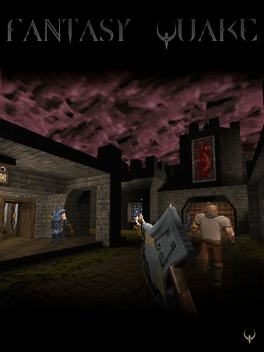
This map pack was an early bird in 1997, very early for single-player modding. Not without its merit, Fantasy Quake was one the biggest Quake modification of its time, at a whopping 24223 Kilobytes, roughly fifteen times as much as the average map pack. Rise of the Phoenix is a Total Conversion (TC) with almost new everything. Around 20 single-player maps in varying medieval/ fantasy themes and 4 deathmatch maps; multiple player classes to choose from, new weapons, new enemies, etc. The mod was made by Team Phoenix, an all-star team of curated mappers and modders. Years later, it was featured in Rock, Paper, Shotgun's "Quake Renaissance: a short history of 25 years of Quake modding" article.Yoshi's Story
1997
Yoshi's Story
1997
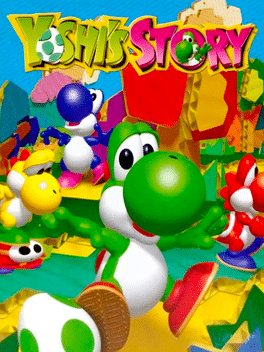
star 7.2Baby Bowser has taken the Super Happy Tree and cast a spell on Yoshi's world, turning it into the pages of a picture book. The only Yoshis not affected by the spell were six hatchlings that were still protected by their shells. It's up to them to reclaim the Super Happy Tree and restore happiness to the world. That is the only thing that can break Baby Bowser's Spell!Dragon's Dream
1997
Dragon's Dream
1997
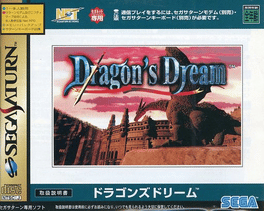
Dragon's Dream (ドラゴンズドリーム) is a Sega Saturn Online RPG released exclusively in Japan. It was distributed in very low numbers for free in order to promote the Saturn's online capabilities in Japan. Sega had planned a PC version, but this never materialised. For a short time, there were also mentions of the XBAND version.Konami Antiques: MSX Collection Vol. 1
1997
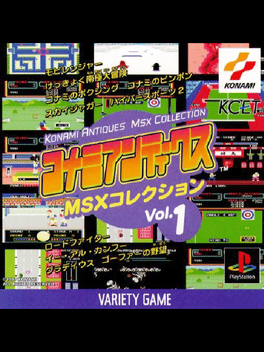
This game is the first volume of a series of compilations of MSX computer games released by Konami only in Japan. It was also released on the Sega Saturn. This compilation includes the classic games: - Konami's Boxing (1984): A boxing game with a couple of moves, with the standard jabs complimented by body punches and the ability to dodge, duck or raise your guard. Each punch weakens your opponent's strength, although going long enough without being hit can see this begin to recover. A rain of blows can produce a quick knockout, but in general you must hit him many times, and then with a knockout blow, to see him go down. There is a referee. The game has a two player option. - Konami's Ping-Pong (1985): From Konami's coin-op, Ping Pong recreates the fast-paced sport of table tennis. To win each match you must get to 10 points with a 2 point lead - if the scores reach 10-9 the game goes on until someone has a 2 point lead or reaches 15, in a similar manner to tennis. There are nine skill levels to beat, with incrStar Sweep
1997
Bugs Bunny Collection
1997
An Asian only release containing "The Bugs Bunny Crazy Castle" and "The Bugs Bunny Crazy Castle 2".Rurouni Kenshin: Juuyuushi Inbou Hen
1997
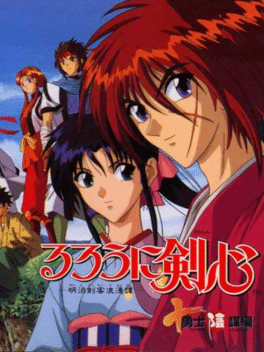
This game takes place after the 10 Katanas and the Shi-Shi-O story. You choose to follow the story of either Hijiri or Hikaru as they try to remember their past.Ucchan Nanchan no Honoo no Challenger: Denryuu Iraira Bou
1997
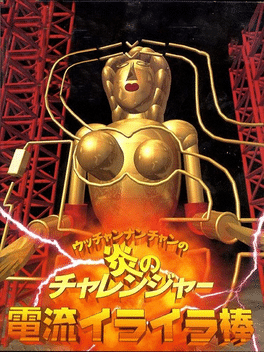
Ucchannanchan no Honoo no Challenger: Denryuu Iraira Bou follows the same playing principle as the mechanical wire loop game. In this variant, the player has to guide a ball through six courses which basically consist of narrow ways with curves and obstacles. Later levels introduce moving obstacles and parts in which the screen slightly tilts. The player is not allowed to touch anything and has to solve the course within a time limit. This all is commentated by an enthusiastic announcer. Multiplayer is a simple split-screen race.Bakukyuu Renpatsu!! Super B-Daman
1997
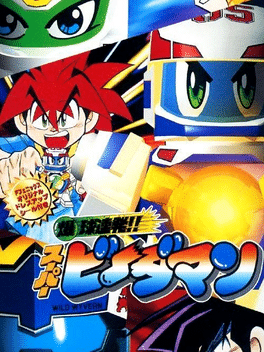
Bakukyuu Renpatsu!! Super B-Daman is an Action game, developed by Amble and published by Hudson, which was released in Japan in 1997.Samurai Shodown 64
1997
Samurai Shodown 64
1997
Samurai Shodown 64 is a 3D fighting game produced by SNK for the Hyper Neo Geo 64 system in 1997. It is the fifth game in Samurai Shodown series and the seventh of the official chronology. It was SNK's first attempt to bring one of their franchises into the 3D realm. It received relatively no distribution outside of Japan, and is thus not very well known. After having released two semi-prequels in the Samurai Shodown series on the 16-bit Neo Geo, SNK announced that they would be producing a new arcade hardware platform, this one 64-bit and with extensive 3D capabilities.Virtual Pro Wrestling 64
1997
Over 78 wrestlers ready to rumble! The no.1 wrestling promotion in the world, WCW, takes on the world and combines talents from around the world to settle their scores, and take on the nWo led by Hollywood Hogan. Hundreds of moves, 4 player action, this is wrestling!Tamagotchi 64: Minna de Tamagotchi World
1997
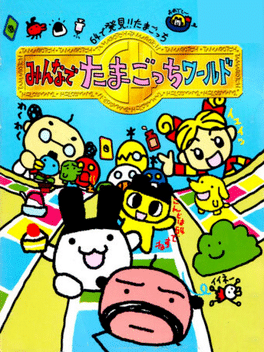
Tamagotchi 64: Minna de Tamagotchi World is a Nintendo 64 game released only in Japan in 1997. It is a virtual board game based on the Tamagotchi toy.Harvest Moon GB
1997
Harvest Moon GB
1997
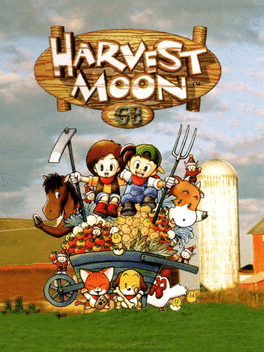
star 7.9Harvest Moon GB is the second game in the Harvest Moon series of video games, and was developed by Victor Interactive Software. Harvest Moon GB is the first portable Harvest Moon game, developed for the Game Boy. A Game Boy Color version was released later under the name Harvest Moon GBC.AeroGauge
1997
AeroGauge
1997
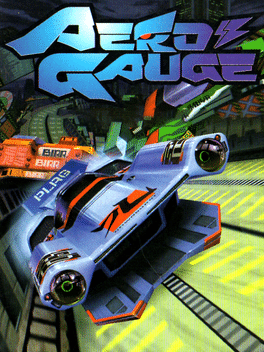
star 6.7In the tradition of F-Zero and Wipeout, AeroGauge is a sci-fi racer that pits you and a friend in a fast paced race to the finish through futuristic tracks and among detailed craft, acting more like planes than racers as they skim many metres above the ground. Play solo through the grand prix and compete against the AI enemy, or beat down your best time in the time trial mode. Each track features a number of twists and turns, whether it be racing upside down or vertically, with a number of obstacles in your path. There's no weapons, though, it's just you and the open road ahead.Gakkou wo Tsukurou!! Let's Make a School!!
1997
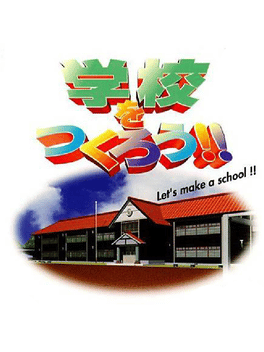
The Gakkou o Tsukurou series places the player as the principal of a school, placing him in charge of management and renovating the school grounds. The player decides everything: The place and the new buildings, the professors, the new places of the school, etc. The game features 3 different grounds to build the school (plain, mountain & river), and 4 different kinds of principal (male & female ones) characters to choose one at the beginning of the game.