New Games - Page 11258

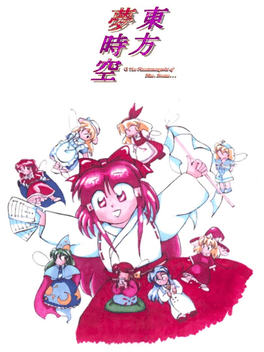
Touhou Yumejikuu: Phantasmagoria of Dim. Dream
1997
star 6.8This game is a vertical danmaku shooting game, where two characters engage in danmaku gameplay within individual and separate play areas (aka. split-screen). Upon meeting certain conditions, players are able to unleash a variety of character-specific Spell Attacks upon their opponents in an attempt to whittle down their remaining health points. In Story Mode, the player will face nine opponents, each more capable than the previous. Phantasmagoria of Dim.Dream also features a Match Play Mode where the player may face off against AI opponents or compete against other players, as well as watch AI vs. AI matches.BS Super Mario Collection: Dai-1-shuu
1997
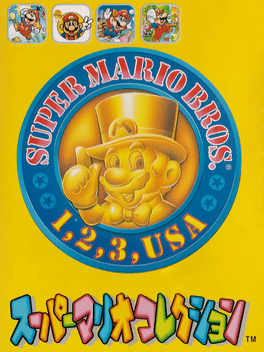
The first part (week) of BS Super Mario Collection. BS Super Mario Collection is an altered version of Super Mario All-Stars. It was only released via broadcast on the Satellaview add-on for Super Famicom. It consists of levels from the Super Mario All-Stars versions of Super Mario Bros. and Super Mario Bros. 3. Using the Soundlink feature, radio-quality music was streamed during the broadcast, including music from Mario-related CDs of the time as well as licensed music. There was also some narration, as well as added cutscenes. Some minor changes were also made to gameplay.Mario Paint BS Ban: Yuushou Sakuhin Naizou Version
1997
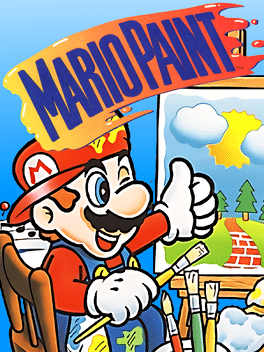
Mario Paint BS Ban - Yuushou Sakuhin Naizou Version (also known as Mario Paint Yuushou Naizou Ban is a Downloadable Game for the Satellaview that ran between December 28, 1997 and January 31, 1998. It is a modified version of the original Mario Paint BS Ban that includes the winning design from the associated "Mario Paint Contest". The winning picture was designed by a Tokyo-based gamer named Hiroko Mizota, and it is entitled "Dreaming of the Moon.Panel de Pon Event '98
1997
Panel de Pon Event '98 is a modified special event version of Panel de Pon that was broadcast between December 28, 1997 and January 31, 1998 for the Satellaview Super Famicom peripheral. This game only has 1P Stage Clear mode (five stages only, which only skips Lip's Stage) and the 2P Vs. mode with no background characters.BS Super Mario Collection
1997
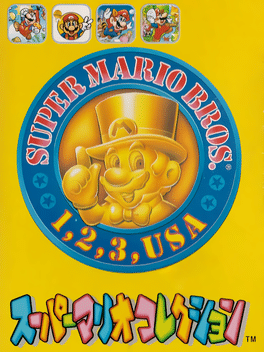
BS Super Mario Collection is an altered version of Super Mario All-Stars. It was only released via broadcast on the Satellaview add-on for Super Famicom. It consists of levels from the Super Mario All-Stars versions of Super Mario Bros. and Super Mario Bros. 3. Using the Soundlink feature, radio-quality music was streamed during the broadcast, including music from Mario-related CDs of the time as well as licensed music. There was also some narration, as well as added cutscenes. Some minor changes were also made to gameplay.Trivial Pursuit: Millennium Edition
1997
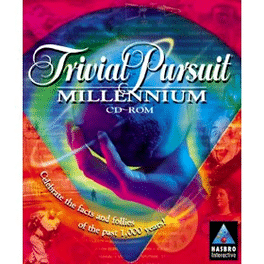
Quiz game. The game features over 2000 questions, all of them accompanied by a video or picture.Monkey Magic
1997
Monkey Magic
1997
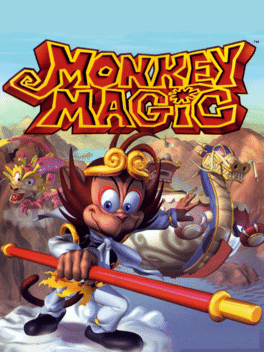
star 5Based on the cartoon series, this 2D side-scrolling action game (with 3D elements) has you seeking out Master Subodye to learn the four magic spells: fire, freeze, shrink and strength. Use these powers in over 30 worlds (five levels featuring 28 scenes and 16 opponents) to gain items like the Power Rod in order to survive the game. Then travel the world to gain other magical items and defend your monkey friends from, well, everybody. With a playful spin on one of the great Asian folk tales, Sunsoft's Monkey Magic is filled with martial arts moves, environments and exotic, Eastern melodies. Can you set a world right when it doesn't want to be corrected? Are you "monkey" enough to survive the attacks of gods and monsters? You bet your prehensile tail you are!Puyo Puyo SUN Ketteiban
1997
This game is a Japan-only port of the third game in the Puyo Puyo series originally made for the Arcades by Sega. The name of Puyo Puyo Sun comes from a Japanese pun on "san", and also indicates a new Ojama brought into the game. As Sun Puyos were used in this game, and the game itself is not only set on a tropical beach, but is the third in the series (三, "san" is the Japanese word for the number 3), the name suited the game. The Ketteiban (Definitive) edition of the game introduces a nazo puyo puzzle mode. Rerecorded audio tracks and voice acting, using higher quality audio tracks from the arcade version as a source. Just like the predecessors, Puyos fall from the top of the screen in pairs, can be moved left and right, and can be rotated clockwise and anti-clockwise by 90°. The rule of Sousai and Zenkesei still remained, but every time you countered, special garbage would fall on the screen in a preset pattern. Every time you cleared the screen however, Sun Puyos would fall on the screen, and the All ClearNBA Fastbreak '98
1997
NBA Fastbreak '98
1997
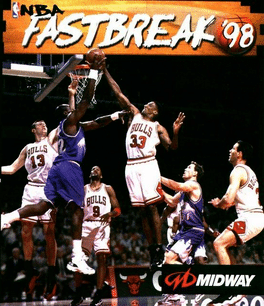
Pick your favorite team and take it to the championship in NBA Fastbreak 98. Play either a full season an exhibition game or fine tune your skills in practice mode. Run 27 different offensive sets and 16 plays. Watch the action from 11 different camera angles. You can even create players and then place them on the Free Agent List.Masters '98: Harukanaru Augusta
1997
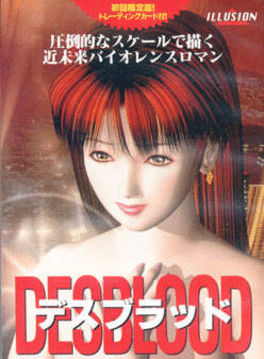
A golf game for the N64, released in 1997 and licensed by the Augusta National Golf Club, based in Georgia, USA.Des Blood
1997
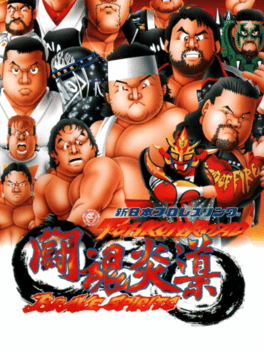
Shin Nippon Pro Wrestling: Toukon Road - Brave Spirits
1997
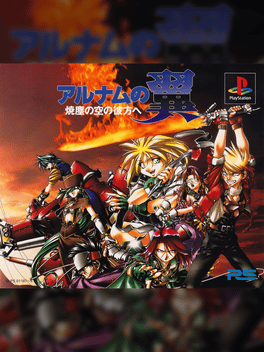
Step into the ring with the bravest fighting souls of the New Japan Pro Wrestling league and fight your way to the top! With incredible 3D graphics and an intuitive control system, Toukon Road brings the most realistic wrestling action ever presented in video games!Wing of Alnam: Shouchiri no Sora no Achira he
1997
Alnam no Tsubasa is a sequel to Alnam no Kiba. Like its predecessor, it is a Japanese-style role-playing game with a character-driven story, linear advancement, and simple leveling-up. Combat is turn based, with up to four player-controlled characters forming a party. Characters can attack physically, cast spells, or execute special attacks that take up a part of a corresponding gauge. Magic is learned by receiving magic points for winning battles and using them to create various spells. The game features 3D background graphics with 2D sprites representing characters.Blue Breaker: Egao no Yakusoku
1997
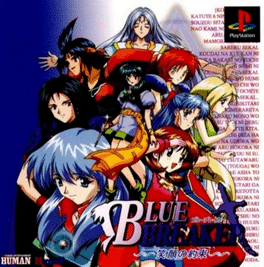
Blue Breaker: Egao no Yakusoku is a Role-Playing game, developed and published by Human Entertainment, which was released in Japan in 1997.Tomba!
1997
Tomba!
1997
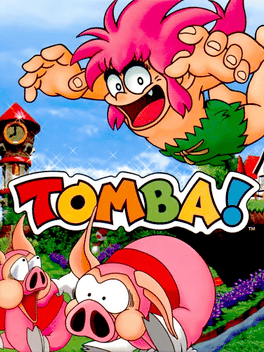
star 7.4Tomba! is a side-scrolling platformer in which players control Tomba, a wild boy on the search for his grandfather's bangle that was stolen by some evil pigs. Although Tomba is normally restricted to a two-dimensional plane, there are certain points where he can jump or climb onto a new plane. Tomba's main method of attack is to jump on top of enemies to grab them, allowing him to hop around on them before throwing them away. This can also be used to open other objects such as eggs or treasure chests. Tomba is also able to use various projectile weapons such as maces and boomerangs and can swing on branches and poles. The game is based around a mission system, where the main character's (Tomba's) skills are employed to complete various tasks. Completion of a mission gives a certain amount of adventure points (AP) which are required for AP boxes which contain food (which gives you AP and restores 1 space of vitality) or items, and you may for example need 50,000 AP to open one. AP is also used to gain access to speDevil Summoner: Soul Hackers - Akuma Zensho
1997
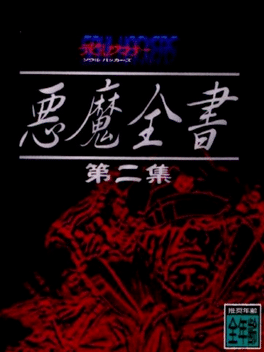
Supplementary content to Devil Summoner: Soul Hackers in the vein of the previous Akuma Zensho release for the original Devil Summoner. Players can view high quality artwork, stats and backstory of the 300+ demons found in Soul Hackers. Two new modes have been added, including a visual novel segment taking place before the game and a music mode in which a Jack Frost can dance to over 30 different tracks. Purchasers could also send in a form to Atlus in order to receive the extra dungeon disc to the original Soul Hackers game.Hansha de Spark!
1997
Hansha de Spark!
1997
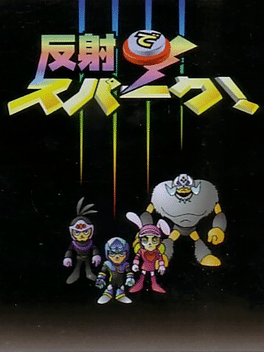
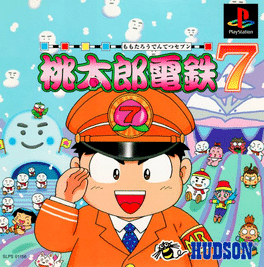
Hansha de Spark! is a 2D top-down arcade game, similar in style to Bomberman, but instead of using bombs, players can shoot energy balls that receive power by bouncing off the special walls. They can collect bonuses to gain advantage. Game features both single-player mode where the player fights against zombie-like regular enemies and bosses, and a multi-player mode where you fights against other players or bots.Momotaro Dentetsu 7
1997
Momotaro Dentetsu 7
1997
Momotaro Dentetsu 7 is a video game in the Momotaro Dentetsu series of board game-style video games, genre released in 1997 by Hudson Soft for the PlayStation. The game was only released in Japan.Gran Turismo
1997
Gran Turismo
1997
star 7.7Gran Turismo is a racing game designed by Kazunori Yamauchi and is the first entry in the critically acclaimed simulator racing series bearing the same name. After five years of development time, it was well-received publicly and critically, shipping a total of 10.85 million copies worldwide as of March 2013, making it the best-selling PlayStation game. The game uses two different modes: Arcade Mode and Gran Turismo Mode. In the arcade mode, the player can freely choose the courses and vehicles they wish to use. Winning races unlocks additional cars and courses. However, Gran Turismo Mode requires the player to earn different levels of driver's licenses in order to qualify for events, and earn credits, trophies and prize cars by winning race championships. Gran Turismo features 140 cars and 11 race tracks (as well as their reversed versions).