New Games - Page 10991

SimCity 3000 Unlimited
2000
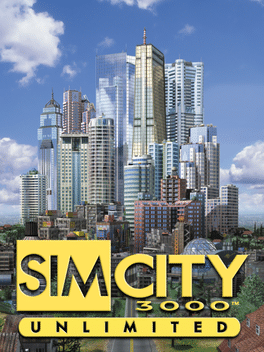
star 8.5In 2000, SimCity 3000 was re-released under different names in different regions, such as SimCity 3000 Unlimited (in North America and Oceania), SimCity 3000 Deutschland (Germany), SimCity 3000 UK Edition (UK & Ireland) and SimCity 3000 World Edition (other countries), among others. This added, among other things, East Asian and European building sets, additional terrain colors and vegetation types, a snapshot feature, additional music, an improved version of the Building Architect Tool (a pseudo-3D design tool based on cubes), four additional disasters (such as locusts and space junk), additional landmarks (like the Seoul Tower and Helsinki Cathedral), new reward buildings, thirteen scenarios (along with an editor based on Microsoft Access) and a new FMV intro. Premade cities are also available, including (London and Liverpool for the UK), Berlin (with the Berlin Wall), Madison, Madrid, Moscow and Seoul. The game also includes city terrains based on the geography of real cities, including Hong Kong and Chicago. AtDriver
2000
Snake
2000
Artus Against the Demon of the Museum
2000
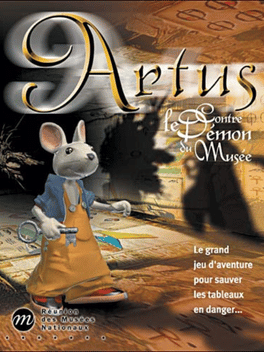
Artus Against the Demon of the Museum is a point-and-click adventure game designed as an educational game to teach children about classical paintings, their history and creators with its main character Artus de mouse.Kids Station: Asobou! Hanasou! Guru-guru Town Hanamaru-kun
2000
Kids Station: Asobou! Hanasou! Guru-guru Town Hanamaru-kun is based on the anime and features a big collection of different kind of mini-games in which the young players can learn about maths, animals, shapes, etc. There are also some mini-games about coordination, timing character movement etc.Phantasmal Garrison
2000
Phantasmal Garrison
2000
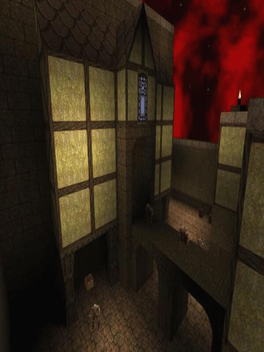
A four level wizard/medieval episode with a start map. Features exploding barrels, cutscenes and a few new monsters (dragons and boss).Elan Plus
2000
Elan Plus
2000
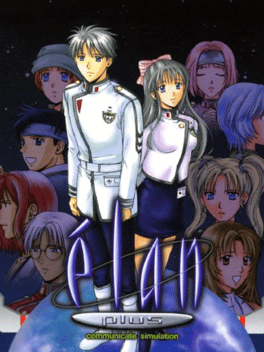
Élan plus is a renewed version of Élan, a simulation game in which the player 's objective is to be chosen as a crew on a crew exploration vehicle heading to Planet Elan. New features include scenarios and a Gallery Mode which allows you to view event graphics after clearing stages. But it all depends on you whether you can make it to Planet Elan. It adds scenario corrections, new graphics, gallery mode, in game load, and reset functions.Option Tuning Car Battle Spec-R
2000
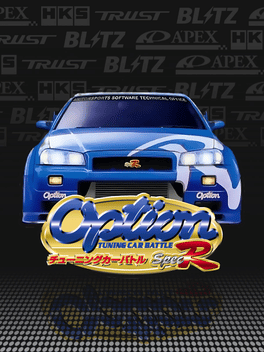
Option Tuning Car Battle Spec-R is the third in a series of PlayStation racing games sponsored by the Japanese magazine Option.Donkey Kong
2000
Aces High
2000
Aces High
2000
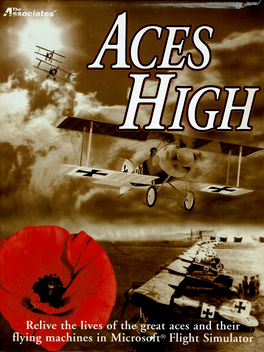
Aces High is a multiplayer game in which three teams fight over domination of the map. The success is measured in ground targets: a team loses when they only have their headquarters left. To capture a target (some have to be simply destroyed), the team has to bring its defenses down and then bring in troops (for example with a C-47). However, this is not enough because - depending on the damage taken - it first has to be built up again. The time this takes depend on various factors, e.g. what other near targets are available, and can be sped up with supply drops by transport aircraft. Available ground installments also have other effects, e.g. the availability of ammo or troops. The majority of of the action is fought in the air with World War II aircraft, but there are also ground (e.g. tanks) and naval vehicles available. The matches itself are of a grand scale and can take multiple hours; afterwards the map is reset. Overall the controls are somewhere between simulation and action. Depending on the arena, whichHalf-Life: Edge of Darkness
2000
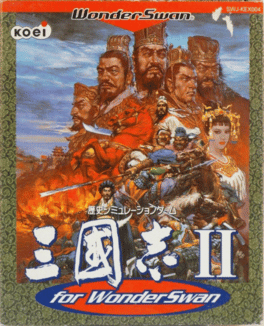
A 2000 campaign mod for Half-Life with a brand new storyline for Half-Life.Sangokushi II for WonderSwan
2000
Sangokushi II for WonderSwan is a Strategy game, developed by Koei/Inis and published by Koei, which was released in Japan in 2000.Taygeta
2000
Brigandine: Grand Edition
2000
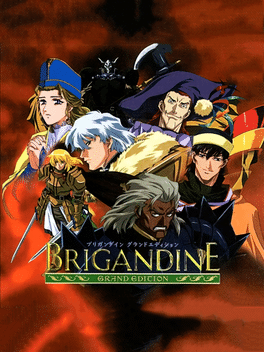
star 8.5In 2000, Hearty Robin released a remake of the game called Brigandine: Grand Edition, which included multiplayer support, along other new features. - Multiplayer game mode: allowing up to 6 players, each controlling a nation. - The Esgares Empire became a fully playable nation, and gained plot cut scenes. - Changes on battle mode gameplay: Like on the Fire Emblem series, elements became based on the Rock, Paper, Scissors rule: red is effective against green, green is effective against blue, and blue is effective against red. White and black still oppose each other. - If, after 13 turns of battle, the attacking side has a unit over the defending side's castle, the attacking side now wins. - Monsters became able to equip items. - The player is redirected to a final boss, when the continent is successfully conquered. - The original 3D opening was replaced by an anime opening. - Many dialog-only cut scenes where replaced by anime cut scenes. - 3D battle animations replaced by simpler and faster 2D animations. - MajorUltima Online: Renaissance
2000
Ultima Online: Renaissance is the second expansion to the popular Ultima Online MMORPG. Released on May 4, 2000, it added content, fixed bugs, and made gameplay changes in response to common player complaints. Prior to its release, the expansion was said to double the amount of room in the game, but that it would not use a duplicate of the map, rather it would be adding new content. It was later found in the previews that Renaissance simply added a mirror world under different rules. The current map became Felucca and Trammel was created, the first one with "player vs. player killing" allowed, and the second with only consensual combat.Tang Tang
2000
Tang Tang
2000
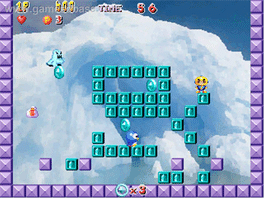
This GBA game mimics the gameplay of Solomon's Key. Players are tasked with creating and destroying blocks to collect items and reach stage exits.Martian Gothic: Unification
2000
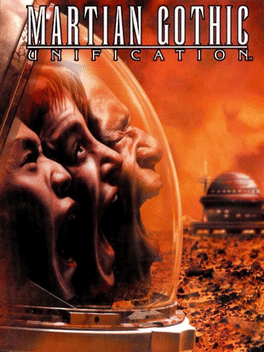
star 7.4Martian Gothic : Unification is one of the numerous titles which came out at the end of the PlayStation lifespan. At first glance, it looks like a typical Resident Evil rip-off with a futuristic paint, a disturbing cover and bad voice-acting. Of course, the game ended up selling very poorly. But it's so much more than that. Incidentally, it is also Creative Reality's last game. Sharing the same team and the same writer than Dreamweb, it comes as no surprise that the game heavily relies on writing and puzzles. This reliance (and a few more things) makes Martian Gothic: Unification a title to look back at.4 Wheel Thunder
2000
4 Wheel Thunder
2000
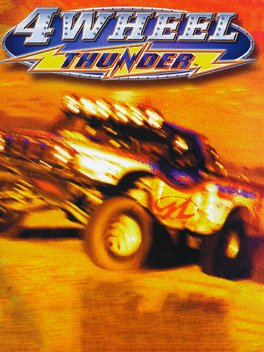
4 Wheel Thunder is a racing game developed by Kalisto Entertainment and published by Midway Games. While the game had been in development for some time prior as a separate title, it was eventually decided to rebrand the game into Midway's Thunder series.The Blue Marlin
2000
The Blue Marlin
2000
The Blue Marlin is a Sports game, developed by Hot-B and published by Starfish, which was released in Japan in 2000.