Most Popular Games - Page 441

Bust-a-Move 4
1998
Bust-a-Move 4
1998
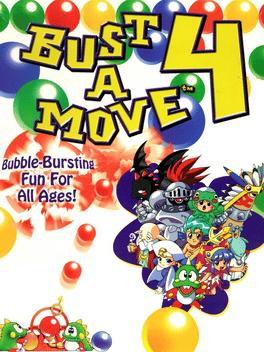
Arcade Game Boy Color PlayStation 3 PC (Microsoft Windows) PlayStation PlayStation Portable Dreamcaststar 7.3Puzzle Bobble 4 (also known as Bust-a-Move 4 in North America and Europe) is the third sequel to the video game Puzzle Bobble and is the final appearance of the series on the Arcade, PlayStation and Dreamcast. The game is also the final title to be recognizably similar in presentation to the original. Building upon the success of Puzzle Bobble 3, the game adds a pulley system that requires two sets of bubbles, attached to either side of a rope hanging across two pulleys. The game contains a story mode for single player play. In total, the game features 640 levels. The console version features a level editor to either create and save a level, set a succession of levels, or to create an unlimited amount of extra levels and stages. It also has an alternative "story mode".Etrian Odyssey Untold: The Millennium Girl
2013
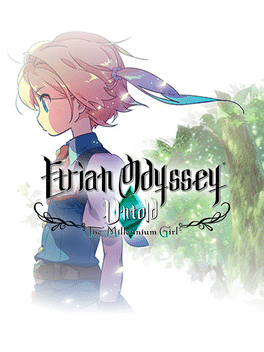
star 7.8Etrian Odyssey Untold: The Millennium Girl is the first in the Untold series which are to be remakes of the original Etrian Odyssey games. The games are first person RPG dungeon crawlers where you create a map of the labyrinth as you explore and complete quests. The game features two game modes. The new story mode, has a pre-made party with a more in-depth story that has voice acting and animated cutscenes, and an enhanced classic mode, customize a party of 5 from 9 classes to explore the Yggdrasil labyrinth. The game allows for the save data from story mode to be carried over to the classic mode once completed.Code of Princess
2012
Code of Princess
2012
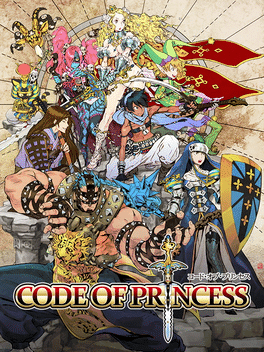
star 7.1Code of Princess offers players an exciting yet unconventional experience, deftly blending the combo-heavy fighting gameplay of beat ‘em ups with the stat-boosting character customization of RPGs.Midnight Club: Street Racing
2000
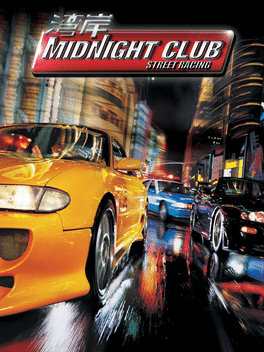
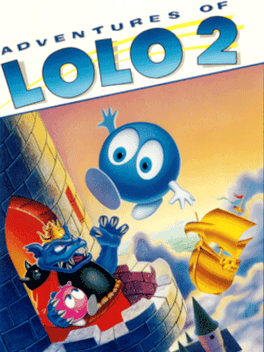
star 7.4Midnight Club brings the action of high speed driving and adventure to the Game Boy Advance. The concept behind this game derives from the illegal races of real-world Midnight Clubs. The core gameplay consists of races of high-speed maneuvering through completely open city streets. Live life in the insane lane, escape the law and accumulate an arsenal of vehicles.Adventures of Lolo 2
1990
Adventures of Lolo 2
1990
star 7.9Our hero Lolo has charmed and enchanted puzzle-loving game players around the world with his unfailing courage and plucky persistence - and now he's off for his second quest! Join forces with Lolo and his faithful sidekick Lala for another journey full of puzzles and pitfalls. The whole crew is back - Snakey, Leeper, Medusa, Gol, Don Medusa, Rocky, and of course our favorite, Alma. Improved graphics, increased difficulty, and a few new tricks and techniques will keep you guessing through every fun-filled moment. A game for mental giants of all ages!Superman Returns: The Videogame
2006
star 5.4Superman Returns is a video game based on the movie of the same name, It was developed by EA Tiburon and published by Electronic Arts in conjunction with Warner Bros. Interactive Entertainment and DC Comics. It features a story arc from the movie, which was released on June 28, 2006, and more than 60 years of comic book content. EA Tiburon, known for its Madden NFL game series, has claimed that the game combines strong creative vision and compelling new technology to deliver a powerful and emotional gaming experience to their consumers, and they will experience a real sense of flying while mastering Superman's superhero powers to save Metropolis. In the game, Superman combats Bizarro, who does not appear in the movie, as well as other classic villains (including Mongul) as well as being able to play as Bizarro for a short period of time in one of the many minigames inserted into the game. The game was produced for the Xbox 360 as well as the Playstation 2 and Nintendo DS. A port for the PlayStation Portable was plFlicky
1984
Flicky
1984
star 5.1Flicky is an arcade game made by Sega. First released in arcades in 1984, Flicky was also released at the time for the SG-1000, and then ported to the MSX and Japanese computers Sharp X1, Fujitsu FM-7 and NEC PC-8801. It was later ported to the Sega Mega Drive/Genesis in 1991. Flicky was designed by Yoji Ishii, who was with Sonic Team until August 1999, when he formed Artoon, his own company.Samurai Warriors
2004
Samurai Warriors
2004
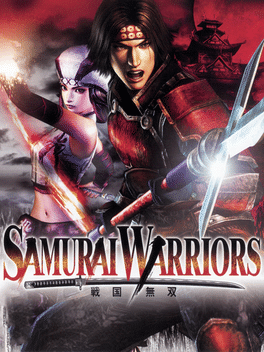
star 7.3Samurai Warriors is the first title in the series of hack and slash video games created by Koei's Omega Force team based loosely around the Sengoku ("Warring States") period of Japanese history and it is a sister series of the Dynasty Warriors series. In the basic gameplay of Samurai Warriors, the player takes the role of a single officer in battle and must fend off hordes of enemy soldiers and defeat the enemy commander. The player has at their disposal a range of combo attacks and crowd-clearing special moves known as Musou attacks. The variety of attacks available increase as the character levels up and acquires more superior weapons. The game features a total of 15 characters based on historical figures during the Warring States period of Japan.Midtown Madness 3
2003
Midtown Madness 3
2003
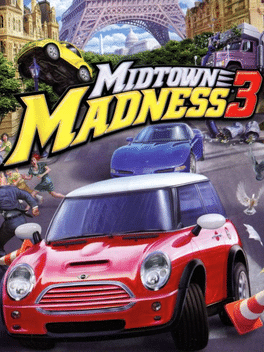
star 8Midtown Madness 3 is an open world racing/arcade sequel, part of the Midtown Madness series. For the first time in the series, the game was released only on the Xbox, with a Windows version rumoured for later release, but ultimately scrapped.[citation needed] The game was developed by DICE (of Battlefield 1942 fame) and published by Microsoft Game Studios. This marked a change from the developer of the first two games, Angel Studios (now Rockstar San Diego). Coincidentally, Midtown Madness 3 was released in 2003 against Midnight Club II, created by the developer of the first two games, Rockstar San Diego. The Xbox-only release and change of developer heralded a significant graphical improvement to maintain the console's graphical standards.MechAssault
2002
MechAssault
2002
star 8.4MechAssault was the first BattleMech video game published for the Xbox. Developed by Day 1 Studios and published by Microsoft, MechAssault was initiated when Denny Thorley of Day 1 Studios approached Jon Kimmich of Microsoft about developing an original BattleTech game built from the ground up to support console play.[1] "MechAssault" was released in November of 2002. A sequel, MechAssault 2: Lone Wolf, was released on December 28, 2004. Both games are set in the BattleTech fictional universeMadden NFL 06
2005
Madden NFL 06
2005
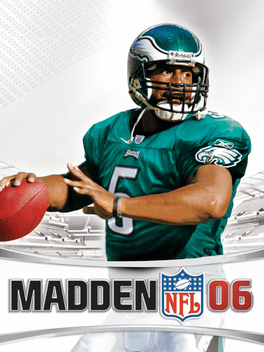
star 7.8Play and manage football matches between real NFL teams, featuring the latest player lineups of 2006!L.A. Rush
2005
L.A. Rush
2005
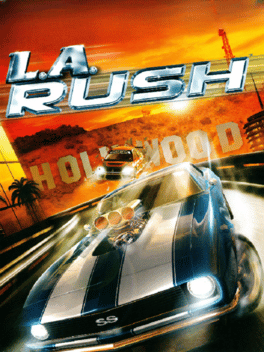
star 5.8L.A. Rush is the 4th installment in the Rush series of video games. It was released in North America for the PlayStation 2 and Xbox consoles on October 10, 2005 and on October 21 in Europe. The PC version was released on November 4 in Europe. PlayStation Portable version was released on October 30, 2006 named Rush. Many details were revealed at E3 in May 2005. The game is free-roaming with races similar to those in Need for Speed: Underground 2. The GPS map can have a point assigned to a certain location and then the point shows up on the radar during gameplay. The game features voice talent from Orlando Jones, Bill Bellamy, and Twista. In addition to the console versions and PC version it was to be available on Gizmondo.Grabbed by the Ghoulies
2003
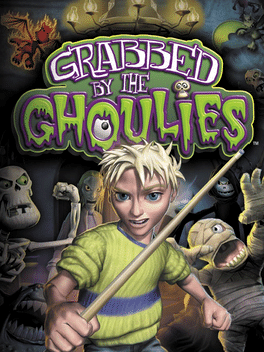
star 6.8Grabbed by the Ghoulies follows a young man named Cooper Chance who sets out to rescue his girlfriend, Amber, from Ghoulhaven Hall. This mansion is full of supernatural creatures, and Cooper will receive help along the way from the many hired hands that work there.Fuzion Frenzy
2001
Fuzion Frenzy
2001
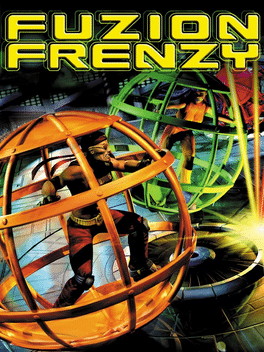
star 6.1Fuzion Frenzy is a launch title for the Microsoft Xbox. At its core, Fuzion Frenzy is a four-player party game featuring 45 different mini-games (not including the titular Fuzion Frenzy). A demo of the game was included with some other launch titles in the US, including Halo, Munch's Oddysee, the first Project Gotham Racing game and Amped. The title was among the first to be released as a part of the Xbox Originals program. A sequel was later released for the Xbox 360, entitled Fuzion Frenzy 2.Forgotten Realms: Demon Stone
2004
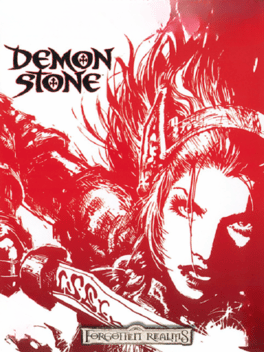
star 6.2Centuries ago two unspeakably evil forces were entrapped in a Demon Stone while battling each other. Now three adventurers happen to meet by chance and discover the Demon Stone just as it breaks and releases the two spirits: a Githyanki general and a Slaad lord. Now only these three can prevent a war that will sweep over all Faerun. Forgotten Realms: Demon Stone is an action RPG set in the world of Dungeons & Dragons: Forgotten Realms. Take control of three heroes, Rannek the fighter, Illius the sorcerer, and Zhai the rogue, as they try to destroy the evil unleashed by the breaking of the Demon Stone. The player only controls one character at a time but can switch between them on the fly with the direction pad. Each character has his/her own attack and can perform combos by pressing certain button combinations, e.g. B + B or A + B + A, and even perform team attacks and a team super attack. As they gain experience they will gain levels and can purchase new moves (combos) or upgrade old ones with experience points. TThe Da Vinci Code
2006
The Da Vinci Code
2006
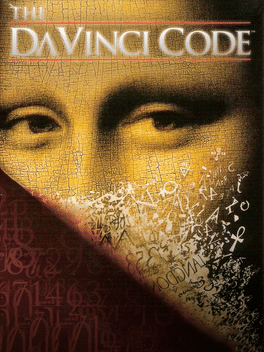
star 6.2The Da Vinci Code is an action-adventure game that combines puzzle-solving with fighting and stealth elements, the choice between the latter two is mostly left to the player. The game alternates between controlling main characters of the novel, Robert Langdon and Sophie Neveu, and offers a storyline that diverses from the plot of the novel in many respects.Conflict: Vietnam
2004
Conflict: Vietnam
2004
star 6.3Conflict: Vietnam is the third installment in the Conflict series of video games for the PlayStation 2, Xbox and Microsoft WindowsPixel Piracy
2013
Pixel Piracy
2013
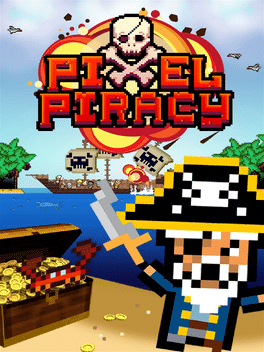
star 6.3Pixel Piracy is a side-scrolling 2d, real time strategy/sandbox/simulation game created by indie developer Vitali Kirpu and produced by Alexander Poysky. In the game, the player leads the life of a pirate captain. Recruit a crew, outfit and customize your ship and set sail on the open seas. There you’ll use any combination of aggression, diversion and trade to become the most infamous pirate crew of the seven seas! You can raid, pillage and plunder everything in your path, divert and lie to get what you want or trade for a quick buck. Remember to be careful though, death is everywhere and quite permanent! Adventure awaits…Super Time Force
2014
Super Time Force
2014
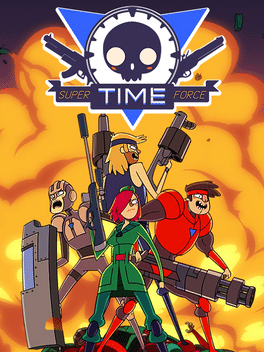
star 8Super Time Force is an action-packed platformer with a time-travelling twist! You’re in control of time itself, bending and stretching it to your advantage on the battlefield. Rewind time and choose when to jump back into the action, teaming-up with your past selves in a unique single-player co-op experience! Take control of up to 16 unique characters, and battle across 6 different time periods, from the long-ago past to the far-away future.X-Men: Destiny
2011
X-Men: Destiny
2011
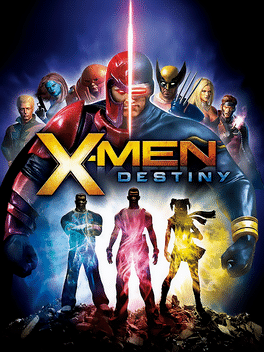
star 5.7X-Men: Destiny is an action role-playing video game based on the X-Men comic book series. It was developed by Silicon Knights. Written by Mike Carey, the writer of the X-Men: Legacy comic book series, it was first published and released by Activision for the Nintendo DS, PlayStation 3, Xbox 360 and Wii consoles. Along with many other games published by Activision that had used a Marvel license, X-Men: Destiny was de-listed and subsequently removed from all digital storefronts on January 1, 2014. The game and another game, Too Human, were recalled, and had their unsold copies destroyed due to legal issues between Silicon Knights and Epic Games over the games' use of Unreal Engine 3 code.