New Famicom Games - Page 29

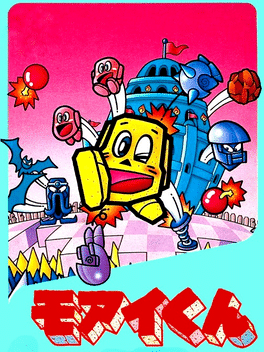
Moai-kun
1990
Moai-kun
1990
Moai-kun is a puzzle video game developed and published by Konami for the Family Computer in Japan in March 1990. The game derives its themes from Easter Island; the player controls a sentient moai statue that must rescue other moai and escape each stage via a door before the timer expires. Although platforming elements are present, the primary challenge is to find a way to manipulate the objects in each stage to reach the distressed moai and rescue them while still leaving an avenue of escape to the exit door.Mottomo Abunai Deka
1990
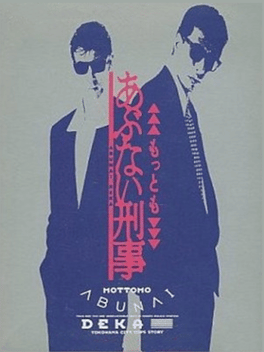
Mottomo Abunai Deka
1990
Mottomo Abunai Deka is an Action game, developed by Micronics and published by Toei Animation, which was released in Japan in 1990. It is based on a Japanese movie released in 1989 with the same name. This game and the movie are both related to the late 1980s detective TV show, Abunai Deka.Cadillac
1990
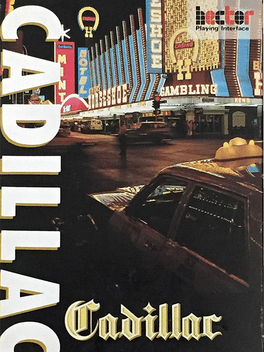
Cadillac
1990
Cadillac is a match-three card/puzzle game hybrid released by Hect first for the Japanese Famicom and later for the PlayStation. It uses a five by five grid in which the player must position playing cards in order to create sets of three, which are then removed. The game uses a casino theme, with the game grid resembling a green felt poker table.Magical Jewelry
1990
Magical Jewelry
1990
The point of this game is to match a line of three or more gems, using columns of three pieces falling into the playing field, similar in mechanics to the Sega game Columns. Its background design is strongly inspired by New York City and has a depiction of the Statue of Liberty appearing on the right side of the screen.TM Network: Live in Power Bowl
1990
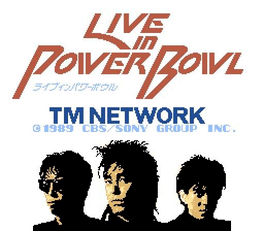
TM Network: Live in Power Bowl is a Japanese-only Nintendo Family Computer game featuring the J-Pop group TM Network. The song used as the background music is "Come On Everybody" from their album Carol - A Day In a Girl's Life 1991Quarter Back Scramble: American Football Game
1990
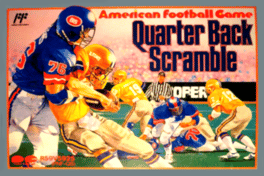
Quarter Back Scramble: American Football Game is a Sports game, developed by Natsume and published by Pony Canyon, which was released in Japan in 1989.Emoyan no 10-bai Pro Yakyuu
1990
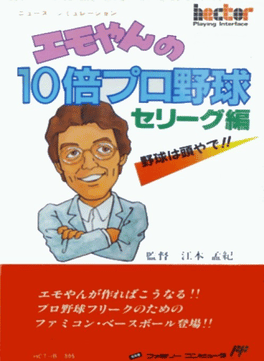
Emoyan no 10-bai Pro Yakyuu is a Sports game, published by Hect, which was released in Japan in 1989.Famicom Yakyuuban
1990
Famicom Yakyuuban
1990
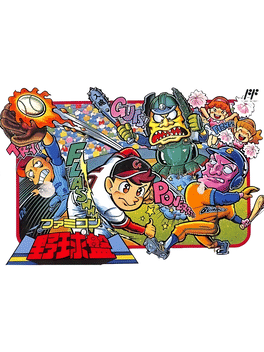
Famicom Yakyuuban is a Sports game, developed by SAS Sakata and published by Epoch, which was released in Japan in 1989.Famicom Doubutsu Seitai Zukan! Katte ni Shirokuma: Mori wo Sukue no Maki!
1990
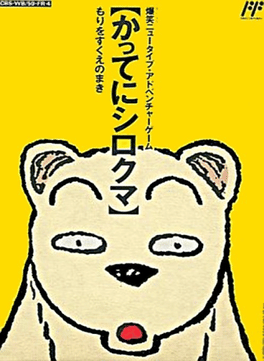
Famicom Doubutsu Seitai Zukan! Katte ni Shirokuma: Mori wo Sukue no Maki! is an Adventure game, published by CBS Sony Group, which was released in Japan in 1989.Igo Meikan
1990
Igo Meikan
1990
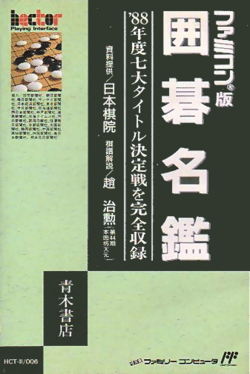
Igo Meikan ("Go Directory") is a go game for the Famicom released by Hect, a developer that specialized in board game to video game adaptations. It is primarily focused on teaching the player to play go like the pros, with the meikan (or directory) in this case being a list of techniques and tactics. As with all versions of go, the goal is to surround the opposing player's pieces, thereby capturing them and removing them from the board. The winner is whoever has the most pieces on the board left when both players have stopped taking turns (usually because there's no more legal moves).Super Star Pro Wrestling
1990
Super Star Pro Wrestling is a 1989 Japanese professional wrestling, or puroresu, game made by Nihon Bussan and published by Pony Canyon for the Nintendo Famicom system. Released December 9, 1989, the game features play for both one- and two-player modes. It was released a year later in the United States as WCW Wrestling on the Nintendo Entertainment System, with different wrestlers. The game featured several puroresu legends of the era, including Giant Baba, Antonio Inoki, and Stan Hansen. There are some inaccuracies in the game, mainly with the birthdates of some of the wrestlers, and Big Van Vader's hometown and date of birth are not listed in order to protect his gimmick. The only two wrestlers to appear in both Super Star Pro Wrestling and WCW Wrestling are Road Warrior Hawk and Road Warrior Animal.Shin Satomi Hakkenden: Hikari to Yami no Tatakai
1990
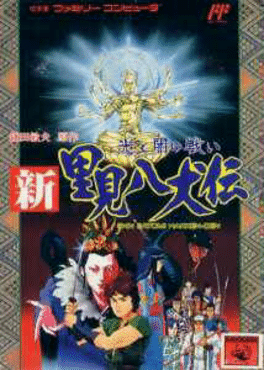
Shin Satomi Hakkenden: Hikari to Yami no Tatakai is a Role-Playing game, developed by Micronics and published by Toei Animation, which was released in Japan in 1989.Super Mogura Tataki!! Pokkun Mogura
1990
Super Mogura Tataki!! Pokkun Mogura is a Miscellaneous game, published by IGS, which was released in Japan in 1989.Meimon! Tako Nishi Ouendan
1990
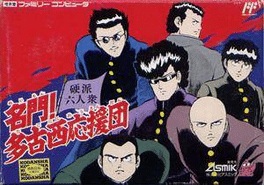
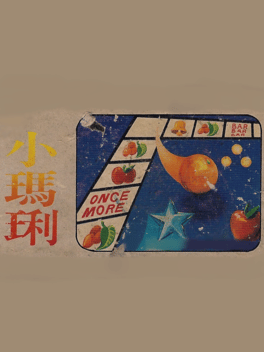
Meimon! Tako Nishi Ouendan is a strategy game released exclusively in Japan for the NES (Famicom) in 1989, and is based on Juzo Tokoro's 1984 manga series of the same name (which was also adapted into a anime motion picture in 1987). Players control a gang of "ouedan" who must battle their way back to their turf after being ambushed on an island.Xiao Ma Li
1989
777 Lucky Bingo
1989
777 Lucky Bingo
1989
777 Lucky Bingo (777 幸運輪盤) is a simple slot machine simulator made by Sachen in 1989.Twin Eagle
1989
Twin Eagle
1989
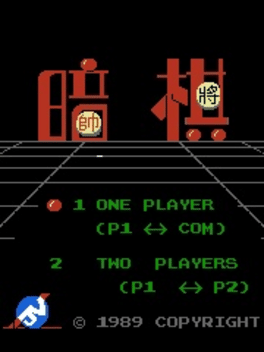
Twin Eagle (雙鷹 in Chinese) is a horizontal shooter developed by Joy Van in 1989. Despite the name, this game has nothing to do with the Seta game Twin Eagle (which actually received an official port to the system from Romstar).Hidden Chinese Chess
1989
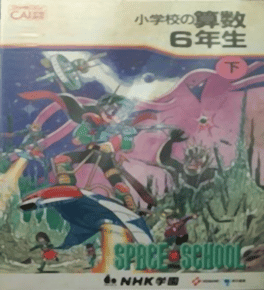
NHK Academy: Space School - Math 6th Grade Part 2
1989
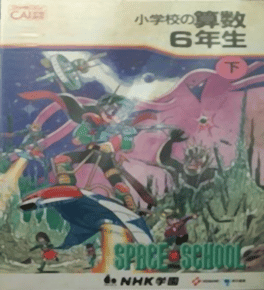
Educational software released in Japan on the Family Computer with a custom cartridge that needs the Konami QTài, Q太, adapter to function. 1 of 7 games known to use the adapter. It is supposed to be used alongside a textbook to answer the questions given in parts of the game.NHK Academy: Space School - Math 6th Grade Part 1
1989
Educational software released in Japan on the Family Computer with a custom cartridge that needs the Konami QTài, Q太, adapter to function. 1 of 7 games known to use the adapter. It is supposed to be used alongside a textbook to answer the questions given in parts of the game.