New Atari 2600 Games - Page 12

Super Cobra
1983
Popeye
1983
Tank Mission
1983
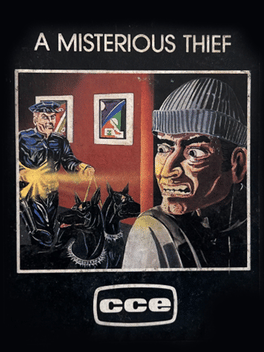
Misterious Thief
1983
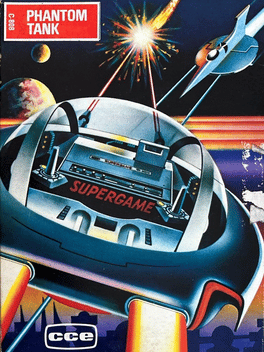
Phantom Tank
1983
Pole Position
1983
Pole Position
1983
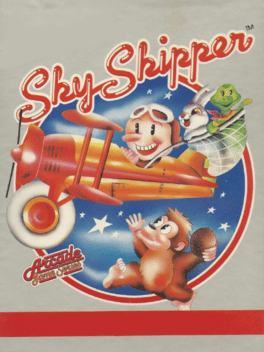
A port of the arcade game to the Atari 2600 that reduces the graphical fidelity and removes the speech, fitting the game into only 8 Kilobytes.Sky Skipper
1983
The Music Machine
1983
The Music Machine
1983
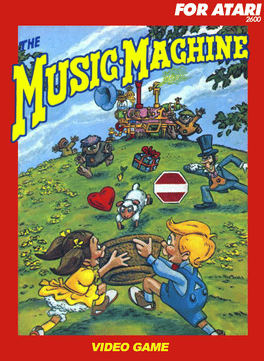
In this game, you play as Stevie and Nancy. The Music Machine moves back and forth at the top of the screen, dropping symbols that represent good qualities (Fruits of the Spirit). You have to catch these in you basket. Once you have caught one of each of the other symbols, then the heart (representing love) comes down. You MUST catch the heart to end the round and go to the next round. If you miss the heart, you lose a life. Just under the Music Machine is Mr. Pims. He tries to mess you up by dropping down his assistants, the Pudgeons. If you catch a Pudgeon, you lose a life.I.Q. 180
1983
I.Q. 180
1983
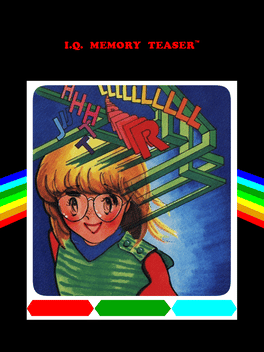
The title screen shows us 25 letters of the alphabet (where did the Z go?) and 5 symbols, representing little figures. If you press F1 to start, you will see the first screen with all the letters and symbols randomly presented and numbered from 1 to 30. If you move the blinking cursor with your joystick down (in the direction of the red arrows), the second screen will appear with the same letters and symbols also numbered 1 to 30, but in a different order. You will also be confronted by a horrible tune. While the tune is playing, you will have to memorize the positions of the letters and symbols of both the screens by looking at their corresponding number (use your joystick to move the cursor in the direction of the arrows to let the other screen appear) or just write down the thirty letters and symbols of one screen on a piece of paper. When the tune stops, all the letters and symbols of both screens will change into little squares and a timer will count down from 1000 to 0. You have to memory match the same letteMole Hunter
1983
Mole Hunter
1983
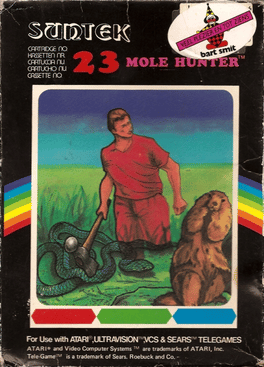
Mole Hunter is a whack-a-mole-style game for the Atari 2600. You control a man with a hammer, who seems to be in the desert, and is surrounded by holes. Periodically the holes will light up and then some sort of rodent appears popping out of it, and you need to smash him back down to his burrow. If you don’t hit him in time, then he will escape and run around the screen trying to bite you. Hitting a rodent gives you 100 points and if he touches you then you will lose points. You also have to be careful not to fall down a hole as you run around the screen, if you do, then you will lose one of your 3 lives. You are given 20 minutes to get the highest score possible. When the times run out, or you lose all 3 lives, it’s game over.Spinning Fireball
1983
Spinning Fireball
1983
The goal of the game is to have your wizard create and shoot a fireball at the catapult that movies across the top of the screen. The controls for Spinning Fireball are bit difficult to master, which is just as well as you probably won't want to play this game very long. To create your fireball, simply push and hold the joystick forward. Once the fireball starts to spin, press the fire button to shoot it. The direction the fireball flies is based on the direction it was spinning when the button was pressed (sort of like the hammer throw in Track and Field). If you are facing right the fireball will rotate clockwise, otherwise if you left the fireball will rotate counterclockwise. If your shot actually manages to hit the catapult, then you will be taken to the second level. If your fireball hits the sides of the screen it will bounce back at you. Likewise if you shoot your fireball straight up, it will come back down. If you manage to get hit by your wayward fireball, you will lose a life. Also, the catapult at theWalker
1983
Walker
1983
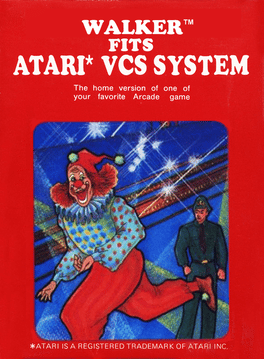
Walker (also known as 'Clown Downtown' or 'Schussel, der Polizistenschreck') is an action game, developed by Starsoft and published by Quelle, which was released in Europe in 1983. The game is similar to another Atari 2600 game: Bobby is going home.Treasure Island
1983
Treasure Island
1983
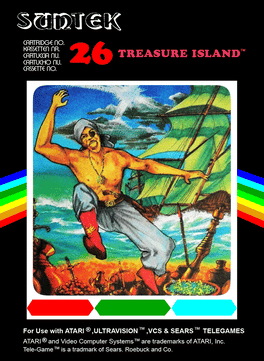
Explore the Island, treasures are hidden there in unbelievable abundance. Your boat trip there is full of dangers: whales and sharks will attack you. The natives are tirelessly bombarding you. And of course rivals have also started looking for the treasures for themselves. You have an unlimited supply of bumps to use against them but only 6 lives to wager!Treasure Below
1983
Treasure Below
1983
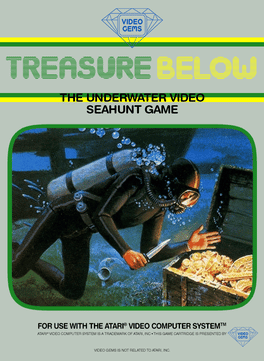
There's fabulous golden treasure down there, just waiting to be taken. There's also much danger with jelly fish, octopus, sharks and other undersea creatures patrolling the deep. You've got your trusty knife and speargun for protection. Be careful, sometimes these sea monsters will surround you and you have to fight your way to the top to keep your golden treasure along with your quest. The action gets faster and faster. You test every video skill you know, plus invent a few new ones, but get that treasure you will.Frogger
1983
Frogger
1983
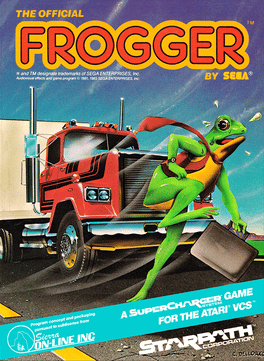
star 5This version of Frogger is different than the Parker Brothers cartridge-based release in 1982. The 1983 Starpath version of Frogger utilized the Starpath Supercharger expansion peripheral created by Starpath for playing cassette-based proprietary games on the Atari 2600. Although Parker Brothers owned exclusive rights to cartridges of Frogger, they did not own the magnetic media rights, opening the door for Starpath to create their own version. The game is one of a few cassette based games ever released for the Starpath Supercharger. Unlike the first two games Landrum designed for Starpath, this one does not contain a secret way to see the designer’s initials.Gauntlet
1983
Gauntlet
1983
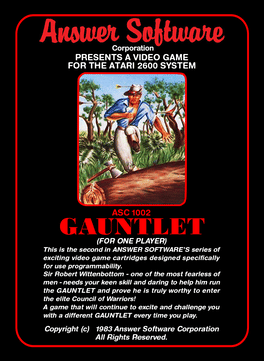
This game has nothing to do with the Atari arcade game or any of the home-ported versions. You are the great explorer, Sir Robert Wittenbottom. You have discovered an ancient civilization deep within the forest of a mysterious island. Since you're a likable old fellow, they have decided to induct you into their council of warriors. But first you must prove your worthiness by running the gauntlet. You are given three glasses of water. You must run through the gauntlet to the ceremonial fires and use your water to put them out. You current glass of water will then be refilled then it is off to the next fire. Of course, it is not that easy. You must jump over rocks and logs, duck under stones, arrows and tomahawks, and avoid hitting trees or touching the sides of the gauntlet.You can ease the thirst of the old men you come across for points but it will cost you water. The game is over when you run out of your third glass of water. To jump, just press the fire button. To duck, pull back then press the fire button.Stone Age
1983
Stone Age
1983
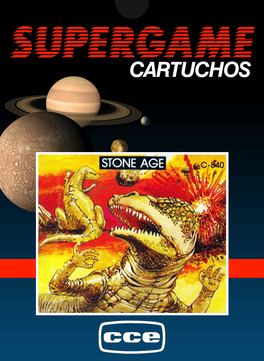
The player controls a caveman whose mission over a 75 second time clock is to kill dinosaurs by throwing rocks and gaining game points. If the player misses the target the rock turns to dust. Stone Age was released in Brazil by CCE. A planned North America version by TechnoVision was never released.Confrontation
1983
Confrontation
1983
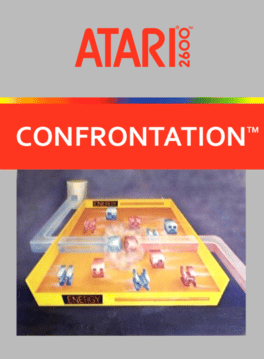
Confrontation is a strange strategy game which was never commercially released, but was available directly from Answer for a short time. Only people who saw it on display at the 1983 CES show would have know about it and ordered it so while it's not technically a prototype, it's close enough. I've racked my brain on how to best describe the gameplay of this game, and after much searching I've determined the best description is in Leonard Herman's "ABC's to the VCS" (pick up a copy today!). Since Confrontation uses a programming trick to display so many objects on the screen at once, screenshots will only show one players pieces at a time. Take my word for it, they're really all there.Radar
1983
Radar
1983
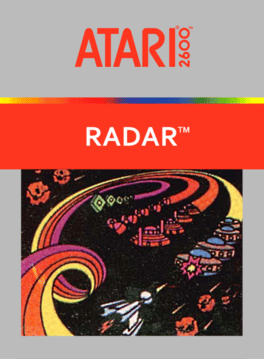
Radar is an Action game, published by Zellers, which was released in 1983. Released by Sancho in Europe as Exocet.Nuts
1983
Nuts
1983
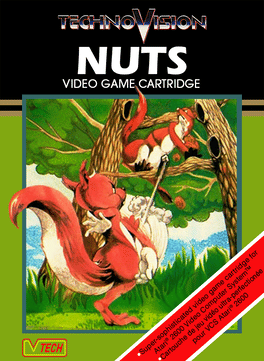
You’re a hard working Squirrel. All year you’ve been storing food in your treetop home. Suddenly, when you’re away, the Wily Weasel steals it all. Don’t let him get away with it! Throw nuts at him!. Knock him off the branch! Recover your goodies! It’s exciting! It’s crazy! It’s NUTS! It’ll drive you right out of your tree!