New Arcade Games - Page 28

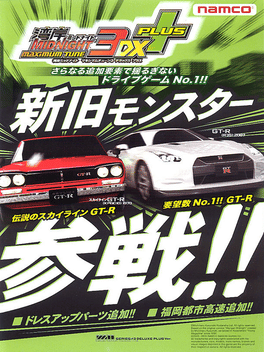
Wangan Midnight Maximum Tune 3DX+
2010
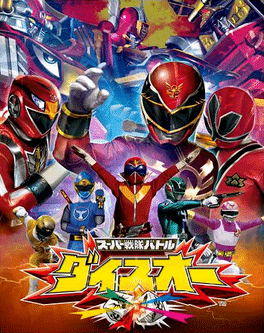
Wangan Midnight Maximum Tune 3DX+ is an arcade video game inspired by the Wangan Midnight manga. Serving as the second upgrade to the Wangan Midnight Maximum Tune 3 arcade series, following Wangan Midnight Maximum Tune 3DX, it is the fifth installment in the overall Wangan Midnight Maximum Tune series.Super Sentai Battle: Dice-O
2010
An arcade game that interfaces with a real-world collectable card game.World Soccer: Winning Eleven 2010 - Arcade Championship
2010
An arcade game in the World Soccer: Winning Eleven (Pro Evolution Soccer) franchise.Cho Chabudai Gaeshi! 2
2010
A sequel to Cho Chabudai Gaeshi, which again sees the player flipping a table.Cho Chabudai Gaeshi
2010
Cho Chabudai Gaeshi
2010
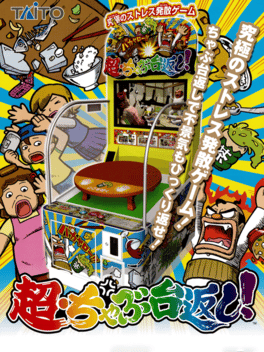
Cho Chabudai Gaeshi is an arcade game equipped with a plastic table peripheral. The player has to hit the table with their hands and flip it to score points.Hatsune Miku: Project Diva Arcade
2010
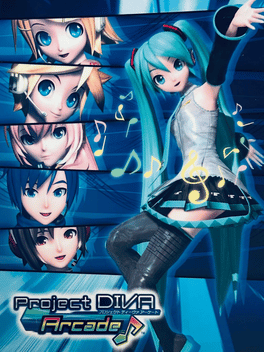
Hatsune Miku: Project DIVA Arcade is an arcade rhythm game. The game is a port of the 2009 video game, Hatsune Miku: Project DIVA, with updated visuals. The gameplay is relatively the same as the original. The signature PlayStation buttons, cross, circle, square and triangle are now the 4 large buttons on the machine's panel, and players push those buttons to play the games. Unlike the handheld versions of the game, players can hold a button or buttons for an unlimited time when the game indicates to hold a certain note. This will allow players to receive a bonus which continuely increases the score until the player releases one of the held button or a "Max Hold Bonus" is granted. Another difference is that multiple buttons can be hit at the same time up to all four buttons. The arcade version features songs from both Hatsune Miku: Project DIVA series and Hatsune Miku and Future Stars: Project Mirai, along with a variety of original songs not included in either of the handheld versions. The Promotional Videos for tBuster Bubbles
2009
Buster Bubbles
2009
Buster Bubbles is a ticket redemption game from ICE aimed at young children, and is the companies first ever touchscreen video redemption title.Trouble Witches AC
2009
Trouble Witches AC
2009
Trouble Witches AC is an arcade-exclusive update to the original Trouble Witches. It features streamlined gameplay, removing the non-arcade oriented gameplay from the original PC game along with some balance and gameplay refinements. It also adds several new characters and integrates them into the plot.Hummer Extreme Edition
2009
Hummer Extreme Edition is an update to Hummer, and was released by Sega for Sega Lindbergh arcade hardware in 2009.Cyber Diver
2009
Cyber Diver
2009
Cyber Diver is an Action game, developed and published by Taito Corporation, which was released in Japan in 2009.Go Ballistic
2009
Go Ballistic
2009
Go Ballistic is a video redemption game requiring the players to physically move around by tossing soft play balls at an interactive touch screen. It includes five mini-games to choose from, each with distinct themes and missions. There is no restriction on the number of balls per game, so players can toss as many balls as they like within the time limit.Dragon Hunter
2009
H2Overdrive
2009
H2Overdrive
2009
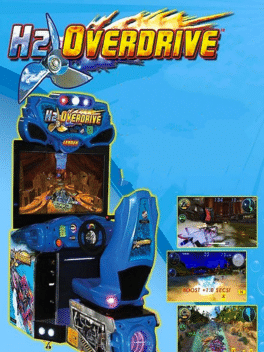
H2Overdrive delivers stunning “in-your-face” Next-Gen graphics with its 42” Hi-Def LCD panel. Players are directly immersed in action with force feedback steering, a beefed-up throttle and a powerful seat subwoofer. There are plenty of jumps and secret paths to explore while cruising 7 watery tracks from around the world. Choose from 9 different powerful boats and collect boosters and super boosters to enhance performance. H2Overdrive promotes replay and higher earning capacity with the option to create profiles and save players’ accomplishments for future play. H2Overdrive is powered by a Dell Computer with a 1-year warranty, and can link up to 8 cabinets for the ultimate tournament experience!Dragon Ball Z: Dragon Battlers
2009
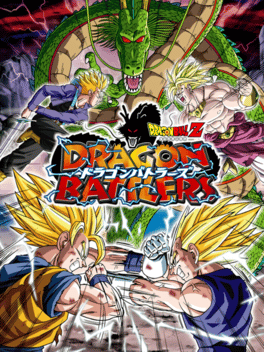
Data Carddass Dragon Ball Kai Dragon Battlers was released in 2009 only in Japan, in arcade. It was the first game to have Super Saiyan 3 Broly as well as Super Saiyan 3 Vegeta. This game is based off of characters from Dragon Ball Z. The game's main feature is having two characters use a team attack such as Gotenks and Gogeta or Cell and Frieza. The graphics are similar to Dragon Ball Z: Budokai 3 and Dragon Ball Z: Infinite World.Mario Party: Fushigi no Koro-koro Catcher
2009
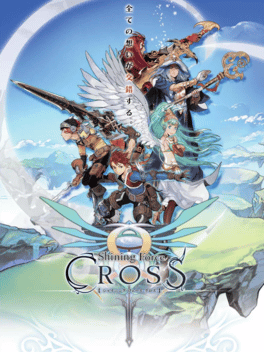
Mario Party: Fushigi no Koro-koro Catcher is an arcade medal game based on Mario Party 8. Up to 16 players can play at once. It includes some boards and minigames from the aforementioned Nintendo Wii title, although some are modified. Gameplay also revolves around a rotating carousel in the middle containing balls, which the player must try to grab with a crane at certain points in the game.Shining Force Cross
2009
Shining Force Cross
2009
Is an arcade entry in the Shining series of games. It is a spiritual sequel to Quest of D. It is an action RPG for arcades, but has no trading card elements.Taiko no Tatsujin 13
2009
Taiko no Tatsujin 13
2009
The 13th Taiko no Tatsujin, released on December 2009 just five months after the wildly successful Taiko 12.5. Taiko 13 takes the game to new heights, being the first version to be used in a nationwide (Japan, of course) official Taiko no Tatsujin tournament in April 2010. In terms of new features, again it doesn't introduce many new things, except a slight change in the Children/Folk genre name from Kanji to hiragana.Tetris Giant
2009
Tetris Giant
2009
Tetris Giant, known as Tetris Dekaris in Japan, is a Tetris arcade game developed and published by Sega. The game can be played with up to two players on a large 70" DLP Projection Monitor, running on Sega System SP. It is controlled using giant joysticks, the right joystick being slightly lower than the left one, with a built-in shaker "rumble" motor, a device that Sega refers to as "Deka Lever" (deka is Japanese for large). The playing field is 6 cells wide by 7 cells high as opposed to almost universal 10 cells wide by 20 high.