New Arcade Games - Page 24

World Club Champion Football: Intercontinental Clubs 2011-2012
2012
World Club Champion Football: Intercontinental Clubs 2011-2012 is a soccer arcade game developed by Panini and Sega R&D1 in 2012.Aikatsu!
2012
Jubeat Saucer
2012
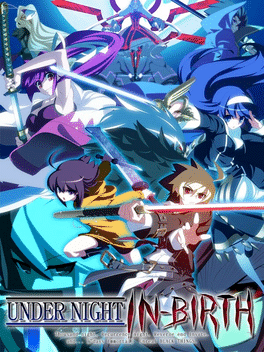
Under Night In-Birth
2012
Under Night In-Birth
2012
Under Night In-Birth is a 2D fighting game co-developed by Ecole Software and French-Bread. It received many updates for adjustments and characters.Let's Go Safari
2012
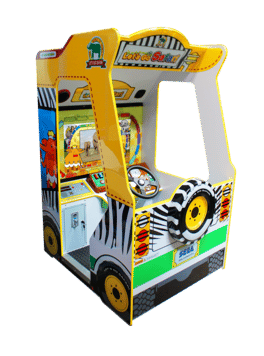
Let's Go Safari
2012
Let's Go Safari, is an educational arcade game which teaches young children about wildlife. It is part of the Let's Go! series.Dark Escape 4D
2012
Dark Escape 4D
2012
Dark Escape 4D is a fixed-gun arcade game for 2-players with a closed booth setup that has multiple built-in elements connected to the game. It has heart rate sensors in the gun handles, built-in air blowers in the front and back of the cabinet, rumble seats, surround sound speakers and a 3D visuals mode for use with the provided glasses. The game has 4 stages to choose from with a final 5th stage unlocked for clearing them in one session.Pokémon Tretta
2012
Pokémon Tretta
2012
Pokémon Tretta is an arcade game developed by Takara Tomy A.R.T.S. and Marvelous AQL, which also developed the Pokémon Battrio arcade game. Officially announced on April 18, 2012, Pokémon Tretta was rolled out nationwide in Japan in early July, phasing out the majority of retired Battrio machines. The arcade machines became fully operational on July 14, 2012 with the release of the first set. The machines are also available in Taiwan in Traditional Chinese and in the Philippines, Indonesia, Malaysia, Singapore, Thailand, and Hong Kong in English. Like its predecessor, Pokémon Tretta focuses on three-on-three Pokémon battles that require special tiles, called Tretta, that depict one of the various Pokémon species in order to play. Unlike Battrio however, Tretta incorporates searching and capturing Pokémon in various locations. Pokémon caught in-game are dispensed for players to use in other battles, or to add to their collection.Gunslinger Stratos
2012
Gunslinger Stratos
2012
First instalment in the arcade series "Gunslinger Stratos": it is a third-person shooter developed by Byking (subsidiary of Taito) and published by Square Enix. The players fight in 4 VS 4 online matches. The series counts four games (three already published plus the announced Reloaded) and an official anime.Maimai
2012
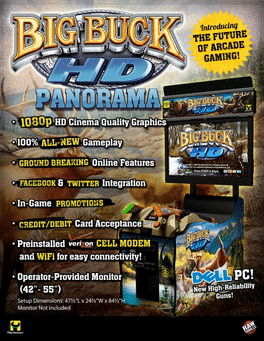
Big Buck HD
2012
The King of Fighters XIII Climax
2012
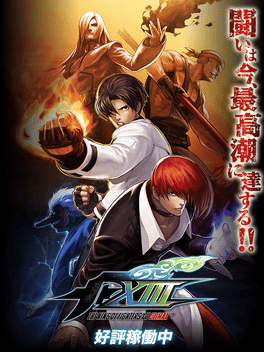
A new version of KOFXIII, including the characters introduced on the console ports, as well as new revisions, was released in Japanese arcades on April 26, 2012, under the name The King of Fighters XIII Climax.Card de Renketsu! Densha de GO!
2012
Card de Renketsu! Densha de GO! is a train simulator arcade game by Taito released on April 19, 2012 for the 15th anniversary of the Densha de GO! series. For the first time in the series, the player uses cards to compose his train.Tekken Tag Tournament 2 Unlimited
2012
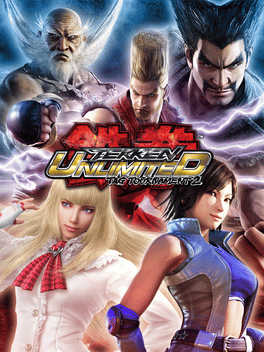
This upgrade features not only 2vs2 battles, but also 1vs1, and as an entirely new addition, 1vs2 battlesDance Evolution Arcade
2012
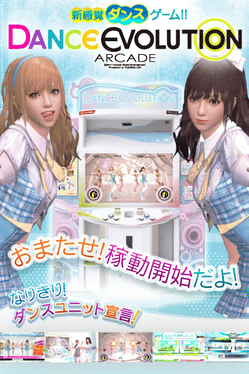
Dance Evolution Arcade was released only in Japan as an arcade port of the title know as DanceMasters in North America. It featured a total of 76 songs plus others 19 added during its lifespan and later removed. The game's servers were shut down in 2016, but an offline version of the game is still available to be played with and additional new song.Monster Retsuden Oreca Battle
2012
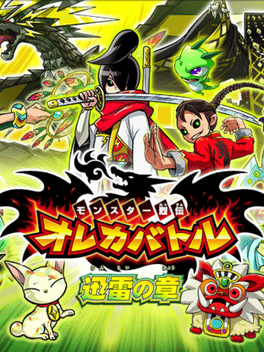
A trading card arcade game that utilizes various Konami characters.Yu-Gi-Oh! 5D's Duel Terminal 6
2012
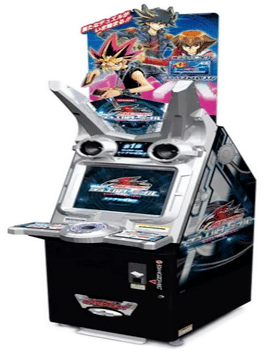
The Duel Terminal was designed by Konami to assist in introducing the then new Yu-Gi-Oh! 5D's anime to new and existing players. The Duel Terminal itself looks like a traditional arcade machine and has a variety of game modes, using cards from the Yu-Gi-Oh! Official Card Game. Players can either use a Deck chosen by the system, or the Duelist can use his/her own cards.Sound Voltex Booth
2012
Sound Voltex Booth
2012
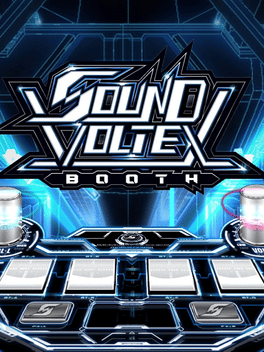
A new rhythm arcade game by Konami that features a unique control booth and user-made content.