New Wii Games - Page 431

Xevious Arrangement
1995
Galaga Arrangement
1995
Galaga Arrangement
1995
Galaga Arrangement is the 6th edition in the Galaga sub-series. It is a fixed shooter arcade game featured in the 1995 arcade cabinet Namco Classic Collection Vol. 1.Citadel
1995
Namco Classic Collection Vol. 1
1995
An arcade-exclusive compilation featuring four classic Namco games: Galaga, Xevious, Super Xevious and Mappy. It also adds brand-new "Arrangement" versions with updated graphics, audio and gameplay.Slugfest
1995
Slugfest
1995
10 levels for DOOMII! These are high quality levels, not just a bunch of boxy rooms with mismatched and unaligned textures. The levels include new sounds, new graphics, and all - new music!The Raiden Project
1995
The Raiden Project
1995
star 6The Raiden Project features two vertically scrolling arcade shooters on one disc: Raiden and Raiden II. Raiden takes place in 2090, a time when Earth is under attack by hordes of alien "exobiological beings, a race of technologically advanced creatures from a distant galaxy." To combat this threat, the world's top scientists, engineers and otherwise brilliant people have replicated a super high-altitude fighter/bomber from the remains of a downed alien vessel. This new ship is called Raiden (aka Lightning Thunderbolt), and you are its pilot.Blade Force
1995
Blade Force
1995
In the year 2110, in the city of Meggagrid, once known as Los Angeles, you meet Dr. Grubert, a very prominent inventor who has been crippled by an explosion perpetrated by a crime family known as The Pitt Family. He gives a suit known as the Helipak Flight Suit to fight back and take down the criminals in the city and apprehend The Pitt Family and bring peace back to the city. With an arsenal of nine different weapons and twenty power-ups, the player flies around seven levels of the city with six degrees of freedom.Wolfenstein 3D
1995
The Mansion of Innsmouth
1995
The Mansion of Innsmouth is an Action game, developed by Betop and published by I'Max, which was released in Japan in 1995. Loosely based on the H.P Lovecraft novel "The Shadow over Innsmouth". On the cover and in the manual, the name is incorrectly rendered as "Insmouse". In 2026, the game was announced to be part of Nintendo Classics - Virtual Boy, under the new localized title.Aero Fighters 3
1995
Aero Fighters 3
1995
star 7When enemy forces wipe out the jets of the Aero Fighters, they must scramble using heavily-modified World War II warplanes in the third installment of the comical Aero Fighters series.Kolibri
1995
William Shatner's TekWar
1995
star 4.6William Shatner's TekWar is a 1995 first-person shooter video game derived from the TekWar series of novels created by William Shatner and ghost-written by science-fiction author Ron Goulart.Zombie Raid
1995
Zombie Raid
1995
Zombie Raid is a screen scrolling light gun shooter, horror-themed game released for the arcade by American Sammy. Welcome to the extraordinary world of Zombie Raid. Players use specially designed sawed-off shotguns with pump action reload to fight their way through the graveyard, through castles and dungeons and even through the mad scientist's laboratory. Battle all kinds of ghastly creatures, like zombies and other frightful beings. You may feel like you're lost in a horror movie! A myriad of secrets have been programmed into the game for added dimension. Can you discover how to get extra life? Can you find a way to escape the forces? Can you defeat the evil? The challenges are endless.Exector
1995
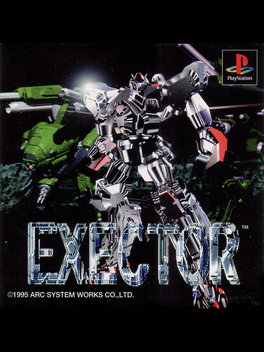
Exector
1995
Exector is an action–shooter mech-based video game developed and published by Arc System Works for the PlayStation. It was released exclusively in Japan in 1995 and was the first original title by Arc System Works sold to the general public. In 2017 it was later digitally reissued as a PSOne Classic on PlayStation Portable (PSP), PlayStation 3, and PlayStation Vita.Iron Angel of the Apocalypse: The Return
1995
Tetsujin returns in this sequel to Iron Angel of the Apocalypse. The story picks up shortly after the events of the previous game. After his showdown with the Scientist and the Android, Tetsujin finds himself disembodied. A mysterious corporation known as SCR gives you a new body, but their plans for your are mysterious. The format of this game is mostly similar to the first. This is a first person shooter that relies heavily on video cutscenes to tell a story. The graphics engine has been improved greatly, giving this game a much faster pace than it's predecessor. Whereas the original used a combination of live actors and CG, this one uses CG to depict the humans as well.Blue Lightning
1995
Blue Lightning
1995
Blue Lightning is a combat flight simulation video game developed by Attention to Detail and published by Atari Corporation exclusively for the Atari Jaguar CD on September 21, 1995. It is a remake of Epyx's 1989 Atari Lynx title of the same name and was, alongside Vid Grid, one of the pack-in games for the peripheral when it launched. Assuming the role of a rookie aircraft pilot from the Blue Lightning squadron, players take control of multiple military aircraft on various missions in order to stop General Drako, who betrayed the United Nations and slowly gained control of many armed forces through corruption to expand his organized crime empire on all over the world. Originally advertised as a sequel to the Atari Lynx original, Blue Lightning had a troubled development cycle and went through various changes before release. Similarly with Cybermorph, an early game for the Jaguar created by its main developer, Blue Lightning received divisive reviews when it launched. While it received praise for its soundtrack,Magic Carpet 2: The Netherworlds
1995
star 8.4Magic Carpet 2: The Netherworlds was the follow-up of the successful yet underrated game, Magic Carpet. It fixed many of the design complaints present in the first Magic Carpet. The basic concept of the game remains the same as Magic Carpet, with the player being able to build a castle, collect mana, destroy creatures for their mana and battle rival sorcerers. It featured the addition of night-time levels, and underground levels, which not only helped alleviate the repetitiveness of the preceding game, but also accompanied the storyline progression, which was mapped out before each level. Underground levels, however, do not have rival wizards. There are also several secret entrances to reach hidden levels, where the player can gain more spells and experience. Also unlike its predecessor, the game proceeded by completing various missions such as reaching checkpoints and destroying specific buildings/monsters, rather than just simple accumulation of mana.Doom
1995
Doom
1995
star 8.6The Super Nintendo version of Doom was published by Williams Entertainment on September 1, 1995, near the end of the system's life cycle. This is the first SNES title rated M for mature, and one of only three rated as such (the others being Mortal Kombat 3 and Ultimate Mortal Kombat 3, coincidentally also published by Williams Entertainment, Inc.). The cartridge features a Super FX 2 chip, and Doom was one of few SNES games to feature a colored cartridge; the NTSC release was available in a red casing. The game does not use the Doom engine, but features a custom engine, known as the Reality engine, programmed by Randy Linden.Trauma
1995
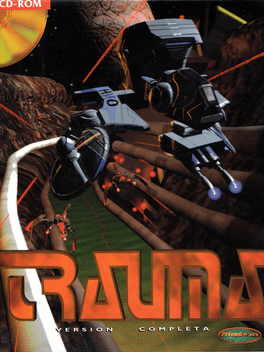
Trauma
1995
Once inside one of the teams, you will notice that you also can choose different pilots and spaceships, thorough which you will have to face lots of explosions and swarms of enemies that bombard you nonstop (by air or land) from the very first level, but in order to make things easy, you will also dispose with the help that a great array of weapons and power-ups will offer you through the diverse levels, all that with the company of speedy techno melodies which will remind you to the best times of Epic Megagames.Surgical Strike
1995
Surgical Strike
1995
Surgical Strike is an on-rails action shooter game that takes place against a full motion video backdrop depicting chaotic, war-ravaged cityscapes. You are to pilot the hovercraft, fire either bullets or rockets at opportune moments, and issue turn directives at key junctures. Miss a cue and another precious military hovercraft will be toast and you'll be chewed out by your superior officer and peers alike.