Most Popular Sport Games - Page 261

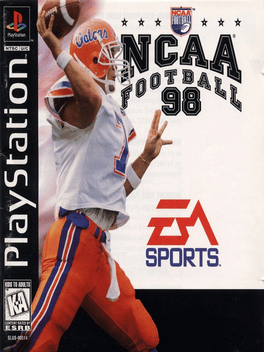
NCAA Football '98
1997
NCAA Football '98
1997
NCAA FOOTBALL '98 gives those of us who never attended Florida State or Michigan the complete college football experience. Play modes include Exhibition, Tournament, Great Games, Season, Practice, and Dynasty. You get 112 Division I-A teams and their stadiums, so you'll likely find your favorite major college team on the roster. The most exciting feature is a Dynasty mode that allows you to take a college team through multiple seasons. While the game does your recruiting for you, you can specify what types of players you need to bolster your team. If you're having a hard time finding a specific type of player, play, or team, you can take advantage of the Create-A-Player, Create-A-Play, or Create-A-School features. Now you can know the feeling of being in a bowl game playing in front of 10,000 fans, thanks to NCAA FOOTBALL '98.NCAA GameBreaker 99
1998
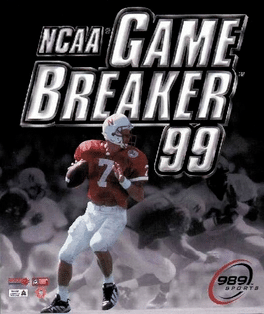
NCAA GameBreaker 99
1998
NCAA GAMEBREAKER '99 continues this series' tradition of realistic college football simulations. You'll get features like the Customize Play option, which lets you design your own plays and really makes the possibilities almost endless. While many other football games neglect the running game, NCAA GAMEBREAKER '99 embraces it with open arms. Don't be surprised to find yourself on a 60-yard sprint to the endzone! As the running game is essential to any successful college program, the emphasis on it in GAMEBREAKER truly makes this the most realistic football sim you're likely to find. Of course, you also get all the standard gameplay modes, fully polygonal and texture-mapped players, and all of the college stadiums and team logos. NCAA GAMEBREAKER '99 can be enjoyed by up to eight players through the use of the Multi-tap.If you're ready to make a run at greatness, then get your hands on NCAA GAMEBREAKER '99.NCAA March Madness '98
1998
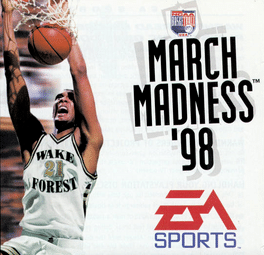
March Madness '98 is a college basketball game. Its features include the NCAA Tournament, 107 division 1A teams, 9 women's teams, team specific fight songs and chants, plus authentic college uniforms and logos. The game also gives you the opportunity to win preseason and conference tournaments. Create your own player from scratch, or customize your own NCAA Tournament with up to 64 teams. The game also has a momentum meter which can go up when a team is doing well temporarily increasing the ability ratings of its players.NCAA March Madness 2001
2001
Playstation?s reigning champion of NCAA Men?s basketball is back and hungry for a repeat. This year?s version is boasting promising new features. Coach Mode is the newest addition to the March Madness stable of gameplay modes. This feature allows masters of the "X's and O's" to work their way up from a small college to "shoecontract-U" where they vie for the NCAA title. In addition, Dynasty Mode and the playbooks have been expanded, for those gamers who want to dabble in the behind the scenes action of college basketball.NFL Full Contact
1996
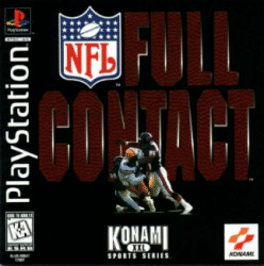
NFL Full Contact
1996
With action that's even rougher than the XFL (believe it), NFL FULL CONTACT has all of the NFL teams, players, and schedules with an extra dose of aggression. Featuring more than 1,500 motion-captured players and stats based on the 1995 regular season, the game lets you pull from an 80-play offensive book. Play a single game or jump directly to the Playoffs, facing off against a randomly selected bracket of teams. Simple controls allow you to see which buttons will get the ball to which receivers, and four different audibles let you change plays at the last second. A realistic PA announcer adds a touch of stadium ambiance, while a password system ensures that your Playoff progress won't be held up by annoyances like work, school, or dinner. Fully flexible camera angles provide detailed coverage, the defensive AI is high, and the action is truly hard-hitting. If you like your football with a little extra oomph, you've come to the right place.NCAA GameBreaker 2000
1999
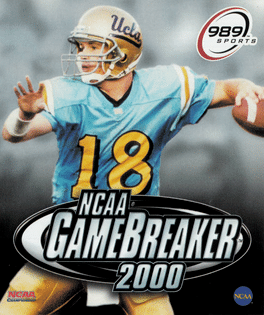
Loaded with a huge number of gameplay modes and extras, GAMEBREAKER 2000 is the ultimate college football simulation. In terms of gameplay you have Scrimmage, Fantasy League, Tournament Season, Bowl Season, and the new Career Mode. In Career Mode, you can take on the role of either the head coach or the offensive or defensive coordinators for any of the Division I-A teams. You start at a small school, but as you accumulate victories you can earn promotions into the bigger and more lucrative programs, where you can ultimately make a run for the National Championship. You can choose from 114 NCAA Division I-A teams, as well as 50 classic teams from the past. The game features a TV-style presentation, with Keith Jackson handling the play-by-play. You also get a Play Editor, where you can customize and create your own plays, and you can also draft players into NFL GAMEDAY 2000.King of Colosseum II
2004
King of Colosseum II
2004
Dedicated to all of the professional wrestling fans around the world, the birth of the strongest in professional wrestling games is finally here. Over 150 real to life licensed wrestlers, over 2800 motion capped moves! This is wrestling at maximum volume, the strongest work. This is the "King of Colosseum II!AFL Premiership 2007
2007
AFL Premiership 2007
2007
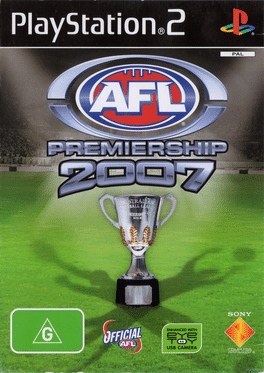
Single match is the quickest way to play a game. On the single match summary screen you can set your favourite team and then randomise the other settings. Such as, home and away teams, stadium, weather, and rules (pre-season or home and away season rules). Mission Mode allows you to take up the challenge and feel the pressure with these historical matches. Each mission has a handicap that a team must overcome; from seemingly impossible score deficits, to slim leads with seconds left on the clock. Career Mode takes you from season to season, including a calendar view of the fixtures, training to guide your players’ development, season stats for all the players in the league, leaderboards for all stats categories, Brownlow, Coleman, Club best and fairest awards, Best on Ground awards for each match.Sega Sports Tennis
2002
Sega Sports Tennis
2002
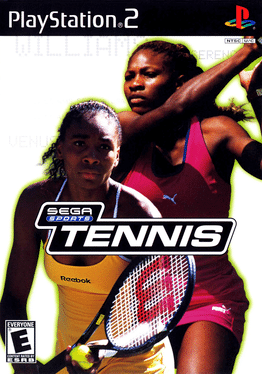
Sega Sports Tennis is a Sports game, developed by Hitmaker and published by Sega, which was released in 2002.Fisherman's Challenge
2003
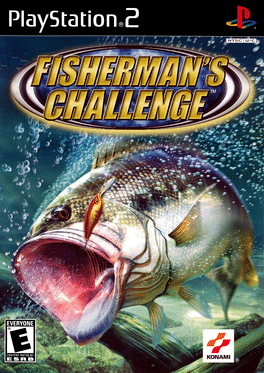
A next-gen upgrade of Fisherman's Bait: A Bass Challenge for the PSOne. This one features five different lakes to fish in, each free-roaming and with seven different types of fish to catch including Catfish, Trout and Bass to name a few. There are a 110 different lures to choose from as well as 100 different rod and reel combinations to choose from. To catch fish the players must hit certain buttons when prompted in order to keep the fish hooked, the larger the fish, the faster and harder the sequences. There is even a Fish Mood Meter that gives the player tips on why the fish aren't biting and how to remedy the situation. There is also a two-player mode, where friends can take on each other head-to-head or against an AI opponent in a series of mini-games along with the obligatory career mode.Alex Ferguson's Player Manager 2001
2000
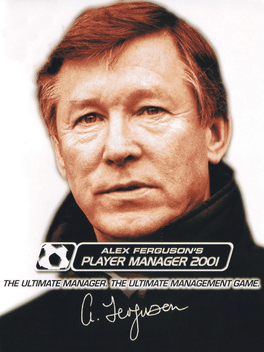
In this tactical football management game, you become the manager of a team in the English, French or Belgian league, with different subdivisions, starting in 2001. Your job includes setting out strategies, planning training sessions, keeping an eye on your players and attracting new talent, taking care of finances, and of course making sure that you win your matches. You will be given specific goals, such as qualifying for the champion's league, or defending the club's reputation. Games do not only include league matches, but friendlies and cup matches as well. The actual games can be watched real-time in 3D, allowing for on-the-fly substitutions and tactical decisions, and a unique feature is you can both manage and play for a club, although there is no way to actually control players or actively participate. All players have different abilities and characteristics, which can be trained to create a well-balanced team. The French version portrays manager Guy Roux (famous of Auxerre), while the UK version has AlexAll Star Pro-Wrestling
2000
The breathtaking realism is the ultimate goal! The warriors of the ring will capture your imagination and come to life. Square has entered the arena of professional wrestling, and it will shock you and bring you into the action!NCAA Gamebreaker 2001
2000
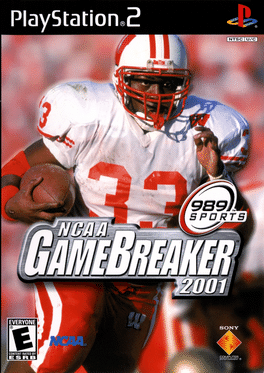
Like previous games in 989 Studios' GameBreaker series, NCAA GameBreaker 2001 is a counterpart to their NFL GameDay series. You start out as a bottom-rung coach at one of the 115 division 1-A college teams and as your performance increases, you obtain promotions and offers from other schools. At the end of the season, you're able to export your players to NFL GameDay. As with the previous games, broadcaster Keith Jackson returns to provide voice commentary.NCAA Gamebreaker 2004
2003
For the first time ever, NCAA GameBreaker 2004 will allow gamers to take their skills online and compete against other college football fans anytime, anywhere. NCAA GameBreaker 2004 further illustrates the realism of college football this year by using the new Practice Mode that gives players the option to sharpen their skills before playing an exhibition or entering season mode. Bringing back the true-to-life college football experience that gamers crave, legendary announcers Keith Jackson and Tim Brandt return to the microphone. With more than 50 new animated mascots, cheerleaders, and sideline personnel, gamers everywhere will feel the spirit and emotion of college football.Outlaw Volleyball: Remixed
2005
No Shoes. No shirts. No mercy. 50 Tour Events Propel your team to the top 10 Extreme Courts From the beach to the Big House Multiplayer Action Including Xbox Live! Do it anywhere, anytime, with anyone. Quick, Intense Gameplay Guaranteed to make your palms sweat. 16 Outrageous Characters With their own playing styles and unique skills Beat Your Opponent Senseless Gain MOMENTUM for turbo moves.Fightbox
2004
Fightbox
2004
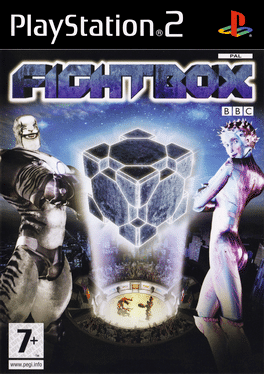
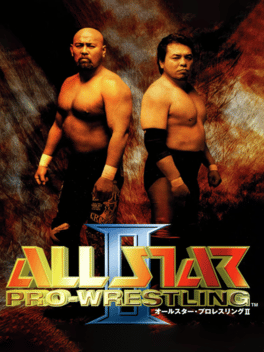
Re-live the FightBox BBC TV experience. Design and build your own virtual athlete to take part in a series events against other warriors and the Sentients, to take the ultimate prize of the Fightbox, and become the 7th Sentient. The retail game features all the arenas from the TV series, plus 4 new arenas, allowing you to replay the TV series in your own home, or playing your own tournaments. After building and training your warrior, you then take part in a series of test - completion of these allows you to upgrade your warriors strength, speed and weapons. The gameplay consists of various gladitorial style events, such as fighting other warriors on moving platforms, or two warriors each trying to collect as many points from the same arena.All Star Pro Wrestling II
2001
For many wrestling, the desire to see "Misawa (NOAH) vs Mutoh (NJPW)", "Akiyama (NOAH) vs Nagata (NJPW)" or "Hashimoto (ZERONE) vs Kobashi (NOAH)" was all but a distant dream that goes beyond the framework of the organization fixtures. But this is the reality in the ring of "ASPW2"! No longer is there walls between the organization, the time to fight is now!Smash Court Tennis Pro Tournament
2002
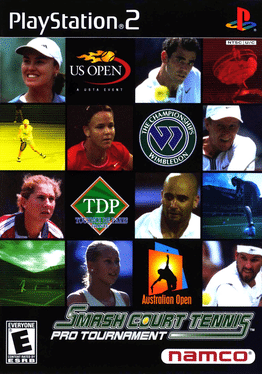
In this officially licensed tennis game from Namco, you can play in all four major tournaments of the tennis season: The Australian Open, Wimbeldon, the French Open and the US Open, with the best players in the world including Andre Agassi, Lleyton Hewitt, Monica Seles and more from the top 8 of both the ATP and WTA tournaments. Single and multiplayer modes are included.Hard Hitter Tennis
2002
Hard Hitter Tennis
2002
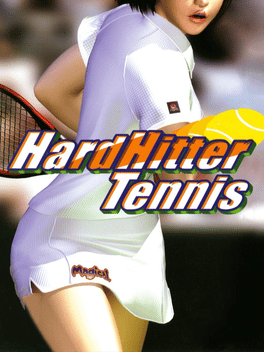
Hard Hitter Tennis challenges you to become the best in the world. Choose one of 14 athletes or make your own, and grow your character's stats over the course of a year. Playing well during the game will increase the mentality meter, giving your player a better chance of making tough shots. The mentality meter can also be expended to make a shot that will be difficult to hit back. Whichever player has won the most money from tournaments by the end of the year is crowned champion.