New Sport Games - Page 265

TV Basketball
1974
TV Basketball
1974
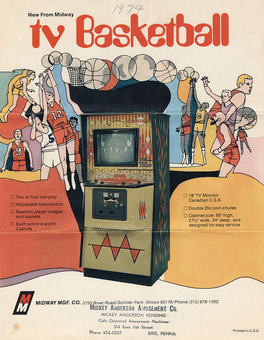
Released in the arcades in april 1974, Basketball was a landmark title, notable for several firsts in video gaming. It was the first basketball video game, the first video game to use sprites, and the first to represent human characters. It is also the first known Japanese-developed game to be released in North America.Football
1973
Football
1973
Football is a text-based football game played against the computer. On each play, the player picks from a menu of options, and the menu depends on whether the player has the ball. On offense, the choices are Run, Pass, Sweep, Screen Pass, Long Pass, Draw Play, Punt and Fieldgoal. On defense, they are Normal, Hold, Blitz, Intercept and Block. The chosen play and a random element together decide the result and the new state of the game. The game has no multiplayer mode.Basketball
1973
Basketball
1973
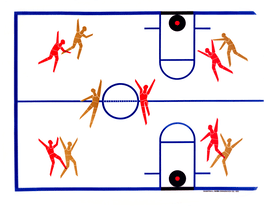
Two players use paddles to knock a ball back and forth on a screen; uses an overlay of a basketball court. This cart has 2 different spots games: bowling and basketball. Be the king of the alley or the court. Bowling is up to 4 players while basketball is 2.Hockey TV
1973
Hockey TV
1973
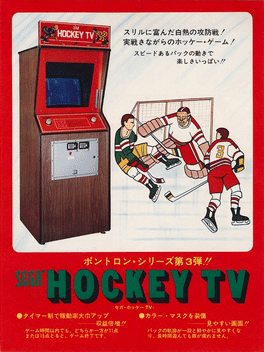
Hockey TV (ホッケーTV) (also referred to as TV Hockey, depending on region) is a discrete logic arcade game released by Sega Enterprises, Ltd. in 1973. It is essentially a Pong clone with two sets of paddles. The game was repackaged in two other form factors shortly after release: Table Hockey in January 1974 and Mini Hockey in February 1974.Crazy Foot
1973
Crazy Foot
1973
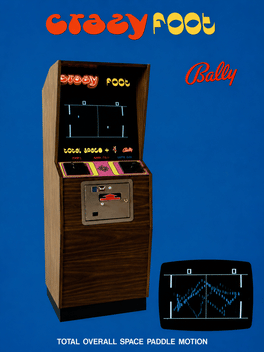
Crazy Foot is a Pong variant with a football theme. Each player must defend their goal from the ball bouncing around the screen. Different from most Pong variants the paddles can be moved in 2 axes instead of just one using joysticks. The ball gradually accelerates during play. Settings for the game include the number of balls (11 or 15), timer, speed accelerator and goal size.Davis Cup
1973
Davis Cup
1973
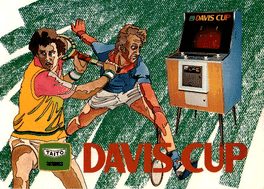
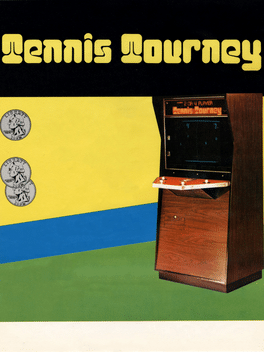
Taito's fifth game and the second developed in house. The game is another ball-and-paddle variation, like three of Taito's previous four releases, but with the added functionality of four players being able to play doubles. This was an important innovation during the 1973-1974 Pong craze first introduced in Allied Leisure's Tennis Tourney.Pong-Tron II
1973
Super Soccer
1973
Soccer
1973
Soccer
1973
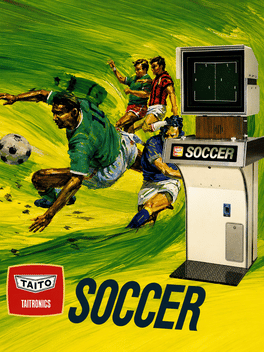
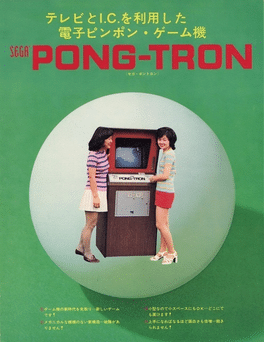
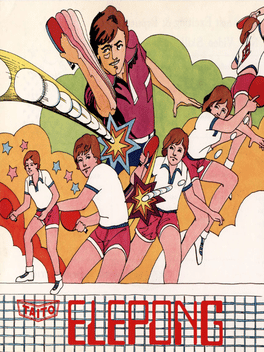
Soccer is Taito's third ever video game release and the first developed internally. The game was designed by the highly influential Tomohiro Nishikado, who would later go on to create Space Invaders. Soccer is a ball-and-paddle game like Pong, but with a green background to simulate a playfield, allowing each player to control both a forward and a goalkeeper. The players can adjust the size of the players, who are represented as paddles on screen. It also has a goal on each side. Soccer is likely to be Japan's first original domestically produced video game, in comparison to Japanese Pong clones released earlier, including Sega's Pong Tron and Taito's Elepong. Since it was exported to Europe in 1973 it may also be the first Japanese video game to be released on the European continent.Pro Hockey
1973
Pong-Tron
1973
Tennis Tourney
1973
Tennis Tourney
1973
Allied Leisure's second game was a four-player version of Paddle Battle. It was the first four-player Pong-style game, predating Atari's own Quadrapong by two months.Elepong
1973
Paddle Battle
1973
Paddle Battle
1973
The first video game produced by Allied Leisure. It is a clone of Atari's pong, and was created by electronics firm Universal Research Laboratories more-or-less copying the board from a Pong machine Allied had purchased from a distrubutor.Volly
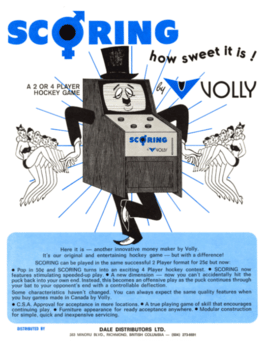
1973
Football
1972
Volleyball
1972
Volleyball
1972
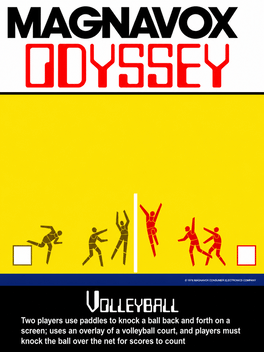
Magnavox Odyssey launch title, sold separately. Two players use paddles to knock a ball back and forth on a screen; uses an overlay of a volleyball court, and players must knock the ball over the net for scores to count. Uses game card number 7.Soccer
1972
Soccer
1972
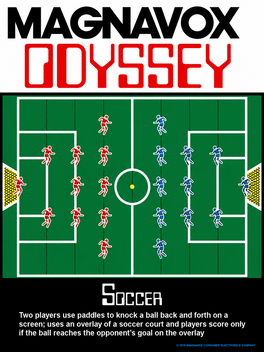
Soccer replaced the game Football in European export versions of the Magnavox Odyssey. It uses a custom screen overlay and two game cards, #3 and #5. The gameplay is a variant of Table Tennis in which the horizontal position of players is fixed (although not enforced by the Odyssey console itself). If a player manages to maneuver the ball around the opponent, the next volley will take place one step closer to the opponent's goal. Once a player has reached a position in the opponent's half of the playing field, a goal can be scored. The game also includes rules for penalty kicks, which require changing the game card.Handball
1972
Hockey
1972