New Games - Page 12810

HR2
1994
HR2
1994
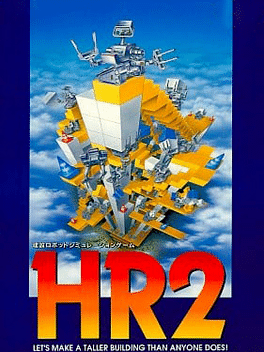
HR2 is a tower building simulator where your goal is to build a highrise building as tall as possible. Your concerns are not with floor designs or business strategies. Instead, in HR2 your role is that of a contractor/engineer commissioned to build the tower. Therefore, your goal is to build the tower with structurally sound design to guarantee that it will not come crashing down once you get to the 10th floor.Full Throttle: All-American Racing
1994
Full Throttle Racing takes in chaotic, violent and no-holds-barred racing across America. The racing takes place on both land and water, with motorbikes and boats featured. There are 6 racers in the game, each with their own short profile, including a guy newly out of jail, a token woman and a token African-American. You can race one or both disciplines, racing either an individual weekend or a full championship. As you play the game you can upgrade your vehicle, with faster engines, better tyres and more nitros. As in Road Rash, throwing your legs out at the other riders is potentially advantageous.Belzerion
1994
Belzerion
1994
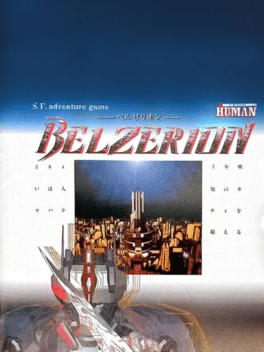
The game takes place in a futuristic sci-fi setting, where the player pilots a giant robot. His main objective is research, through a lot of dialogue and exploration of scenarios, although there are also combat segments between mecha that allow the player to fight with weapons or melee.Magic Knight Rayearth
1994
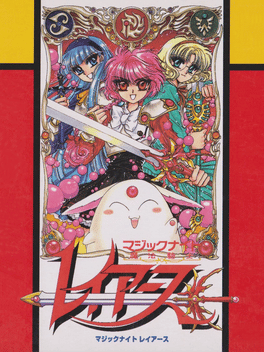
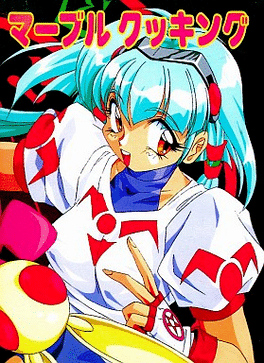
Magic Knight Rayearth (魔法騎士レイアース) is a 1994 RPG by Sega for the Sega Game Gear tying into CLAMP's Magic Knight Rayearth manga. It was followed by Magic Knight Rayearth 2: Making of Magic Knight. The game was packaged with a limited edition red Game Gear console, as well as sold separately.Marble Cooking
1994
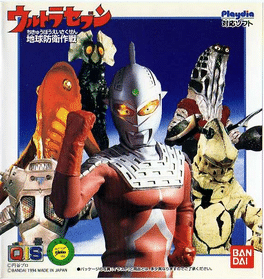
Ultra Seven: Chikyuu Bouei Sakusen
1994
Ultra Seven: Global Defense Tactics (ウルトラセブン ~地球防衛作戦~) is a CD-ROM-based adventure game for the Playdia console. This is a Bandai Playdia game based on the Ultraman series sequel, Ultra Seven.Norimono Banzai!!: Kuruma Daishuugou!!
1994
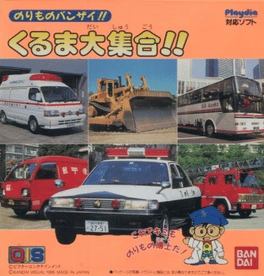
Norimono Banzai!! Kuruma Daishūgō!! (のりものばんざい!! くるま大集合!!) is a CD-ROM-based educational title for the Playdia console. The title roughly translates to "Vehicles Banzai!! Big Car Set!!"Dragon Ball Z Gaiden: Shin Saiya-jin Zetsumetsu Keikaku - Uchou-hen
1994
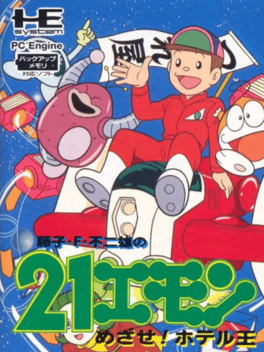
Dragon Ball Z Gaiden: Shin Saiya-jin Zetsumetsu Keikaku - Uchou-hen is the second part of the True Plan to Eradicate the Saiyans series released on Playdia.21 Emon: Mezase! Hotel-Ou
1994
A property-trading board game featuring aliens, robots and other unusual characters.Motor Toon Grand Prix
1994
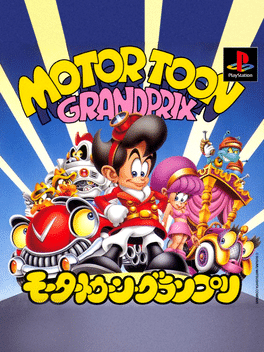
Motor Toon Grand Prix is a racing video game developed and published by Sony Computer Entertainment of Japan (SCEJ). It was released for the PlayStation in Japan on December 16, 1994. The game was designed by Kazunori Yamauchi and a development group within SCEJ that was later formed as Polyphony Digital, the company behind the realistic racing series Gran Turismo. It is notable among other things for its art design which was created by Japanese artist, Susumu Matsushita. The game is commonly confused with Motor Toon Grand Prix 2 which was released under this title in North America since the first game never left Japan.Dossun! Ganseki Battle
1994
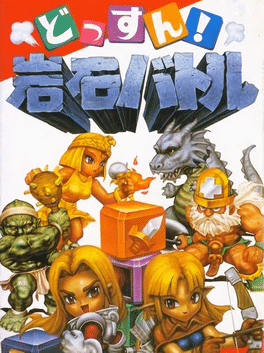
A falling block puzzle game in a pseudo-medieval fantasy setting that pits two characters against each other in an abstract form of combat that is quite similar to games like Columns. Combining at least three matching symbols in a vertical, horizontal or diagonal line does not only clear them off the screen, but also deals damage to an opponent. This means that players do not only have to keep their game area clear, but also pay attention to their characters health bar. Once a block touches the top of the screen or the health bar is diminished the game ends. There are four different icons that have different effects when combined: Books, swords and rocks deal damage to an opponent by attacking with fireballs, dragons or swords. Bottles heal a certain amount of health. Purple blocks have no effect, but clog up the screen nonetheless. Chain reactions result in particularly powerful attacks or place one or more grey blocks inside the opponents area. They can be destroyed just like ordinary blocks, but they always stMickey no Tokyo Disneyland Daibouken
1994
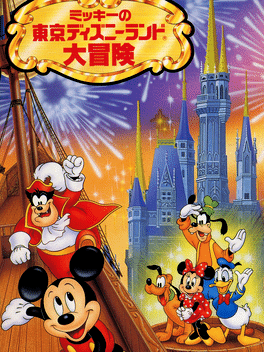
star 6.8Mickey has taken a trip to Tokyo Disneyland. But when he arrives, he finds out from Minnie that his friends have been kidnapped and the park has been hijacked by none other than Pete. Armed with nothing but a combo water/helium backpack and some balloons, Mickey must trek through the different sections of the park to rescue his friends, held captive in some of the park's most iconic attractions, and stop Pete.Super Tetris 3
1994
Super Tetris 3
1994
star 8Super Tetris 3 is yet another version of the famous soviet puzzle game. However, despite what the title may suggest, contained within are actually four different versions of Tetris: Tetris Classic, Familiss, Sparkliss, and Magicaliss. Tetris Classic, of course, is the basic version of the game, which comes with an endless mode and a 25-line "standard" mode. Familiss, as the name might suggest, is a family mode for up to four players simultaneously. Sparkliss, meanwhile, is very similar to Bombliss from Super Tetris 2, only with a medieval fantasy theme and different explosion patterns. Sparkliss includes both a stage mode and a puzzle mode. The most unique mode is Magicaliss, which has never shown up on any other version of Tetris. In Magicaliss, pieces come in three basic colors, and by rotating the piece, the player can choose between them. Creating a line entirely out of one color will clear all blocks on the screen of that color. There are also grey pieces, which can only be cleared by creating a line made entWagyan Paradise
1994
Wagyan Paradise
1994
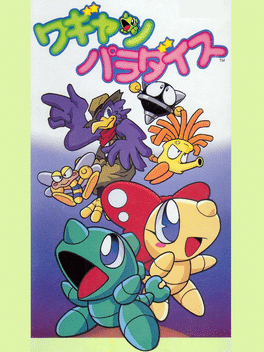
Wagyan Paradise is the third Wagyan Land game for the Super Famicom and the sixth game in the series overall. It features two new "Wagyan" dinosaur protagonists who alternate between stages: Takuto (a green male Wagyan) and Karin (a pink female Wagyan). Wagyan Paradise introduces a brand new array of post-level mini-games, a staple of the series, and adds more story cutscenes which help explain what's going on with the various incidents happening to Takuto's and Karin's island home. It also has a new art style.Ganbare Goemon 3: Shishijuurokubee no Karakuri Manjigatame
1994
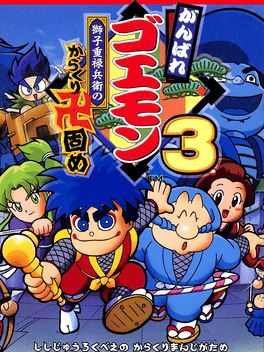
Third title in the Ganbare Goemon series of platform/adventure games which cast you as the heroic Goemon as he attempts to save feudal Japan from all sorts of wacky evildoers. This time around, a time-travelling machine threatens all of Japan and thus Goemon and co. must jump into the future to stop the machine. The game alternates between a top-down world map view in which your characters explore the gameworld and side-scrolling stages in which the main action lies. As in most games of the series there are also loads of mini-games and unique gameplay sequences such as maneuvering Goemon's giant mecha. The game continues the tradition of bizarre humor unique to the series, you can play as either Goemon or any of his 3 companions, Ebisumaru, Sasuke or Yae with each sporting unique weapons and abilities and also with their own dialogue options and cutscenes, which feature sitcom-like pre-recorded laughs for added wackiness.