New Games - Page 11870

Dragonsphere
1994
Dragonsphere
1994
star 6.2Newly-crowned King of Callahach! It's been twenty years since your father saved the world by entrapping the evil Sorcerer Sanwe. Now the spell is waning. Sanwe's malevolent force will soon consume the land, and only you can stop him!Castle Terroretra In Space
1994
Castle Terroretra In Space continues the quest for Billy Brumble. The climatic meeting with The Great Ancient One, highlights the game.Bakushou Yoshimoto ShinkiGeki
1994
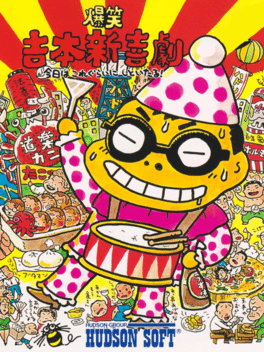
The game is based on the comedy TV show Yoshimoto no Shinkigeki, which in its turn is based on a theatrical comedy show popular in Osaka and its surroundings. The game stars characters that either look like the actors from the TV show and/or resemble characters played by them. The show consists of short episodes which are depictions of comical situations, and are not related to each other story-wise. Same can be applied to the game: there is no real story, just a stretch of hilarious and intentionally impossible situations the protagonists find themselves in.Inherit the Earth: Quest for the Orb
1994
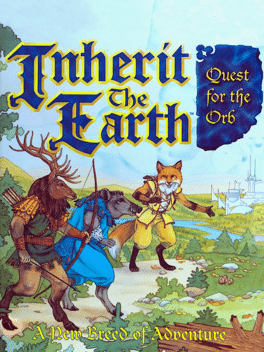
star 7Join Rif the Fox and his companions Okk and Eeah on the adventure of your life! Inherit the Earth will transport you to a world of beauty and intrigue... Earth! The Orb of Storms has been stolen and Rif is accused. You have only days to help Rif get to the bottom of the mystery of the missing Orb. Your journey takes you to the Wild Lands, through hostile territories and ultimately to the ancient ruins of the legendary Humans.Winter Olympic Games
1994
Riddick Bowe Boxing
1994
The King of Dragons
1994
The King of Dragons
1994
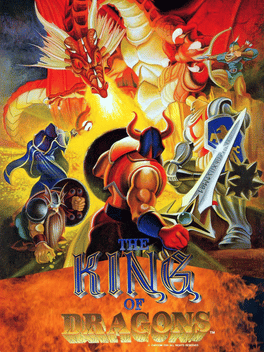
SNES Port of the arcade game with the same name. Changes it was given includes reducing the number of simultaneous players down to two, reducing the sizes of the in game sprites moderately, and it being possible to assign the magic attack and shield defense to different buttons.Bell's Avenue Vol. 2
1994
Pop Up Computer
1994
Pop Up Computer
1994
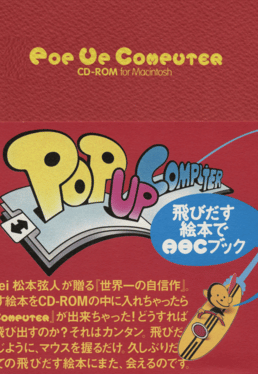
An early, interactive CD-ROM title by Saru Brunei, who would later go on to develop titles such as Jungle Park and Cubivore. Was also slated for release on Apple's short-lived Pippin console, though it's not known if this version released.Prince of Persia
1994
Aggregate
1994
Father World
1994
Father World
1994
A cinematic platformer game akin to Another World or Flashback, with a bit more emphasis on dialog.Gunship
1994
Gunship
1994
Gunship is a helicopter action game developed by Probe Software and published by U.S. Gold for the Sega Mega Drive, based on MicroProse's game series of the same name.. It was only released in PAL regions, although a US release was planned for March 1993.Escape from Ragor: Megrim's Rache
1994
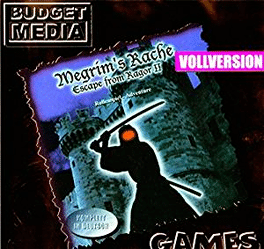
Escape from Ragor is a german fantasy role playing game, a typical dungeon crawler with tile-based movement and real-time combat. You're thrown into the labyrinthine dungeons of Castle Ragor and must now get out, overcoming the traps and obstacles set by its nefarious master, Megrim. Explore the walls of Ragor and find an exit. That will not be easy as your jailer tries to confuse and mislead you, and the dungeons are full of Megrim's minions and dangerous monsters. The game is controlled entirely with the mouse, which is used to interact with the environment, manipulate inventory items and move the character around by clicking the navigational arrows on the interface. You can use items like spells, healing potions and poisons in fights with the enemies. Combat flows in real time and the outcome of any encounter ultimately depends on how fast you click the attack button, located in the centre of the navigational arrows. The simple combat system automatically uses an offensive magic spell if one is selected and theMagic of Endoria
1994
Magic of Endoria
1994
The strategy-game Magic of Endoria takes place in the fantasy kingdom Endoria. Aeons ago the gods of Endoria were disgusted by the badness in the world and morphed themselves into crystal splinters and retreated into the underworld. Who gets all these splinters becomes the master of Endoria. Now two rival arch mages got aware of this myth and go on the search. You are one of them. Of course you have to dig deep into the underground to find them. Your responsibility lies in the building. managing and defending of mines. To achieve this you hire employees with different professions: Craftsmen, researchers, mine workers, hauliers and warriors. These people want to see money for their work and they improve their abilities when they become experienced. During the game you dig new alleys, equip them with traps, research new tools and fight against enemy troops to conquer their alleys. Later you have mutated creatures to your disposal. You spend most of your time on a map with hexagonal fields. There you issue order15 Move Hole Puzzle
1994
15 Move Hole Puzzle
1994
The game simulates the 15 Puzzle, a sliding puzzle that consists of numbered square tiles located on 4x4 board in random order with one tile missing. The object of the puzzle is to place the tiles in order by making sliding moves that use the empty space. This game includes the pictures of naked women (originally found in Playboy magazine) in background of the board. When tile is placed in order, it is converted in part of picture, but it still can be moved. There are 8 levels in the game, and certain tiles can't be moved on the board with level increase. The number of moves in counted, and the best scores are stored in hi-score table.SimHealth
1994
SimHealth
1994
SimHealth has a rather serious subject matter: the debate in the summer of 1994 over what kind of health care system the United States should have. The player gets the usual godlike power, being able to choose what proposals to adopt and even what assumptions should be in the underlying mathematical models (an especially good thing, since many of the models turned out to be so very wrong).Der Planer
1994
Der Planer
1994
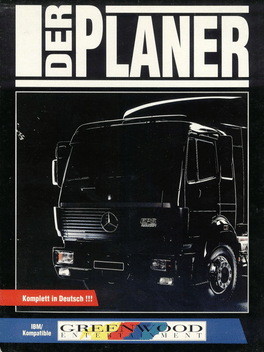
In Der Planer, you are the boss of a forwarding business. You not only have to plan the best and cheapest routes between the different cities, but also need to acquire drivers, trucks (or planes, train space...), get customs papers, and last but not least, make your family happy, too.Adult Film Cameraman
1994
Adult Film Cameraman
1994
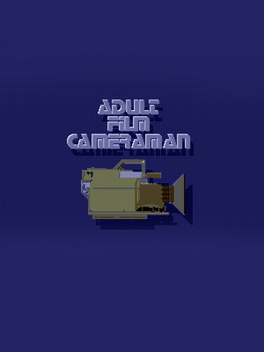
A program coming across as somewhat nonsensical in absence of a certain context, this piece of software puts its operator in the position of the cameraman of an adult film. What this amounts to is viewing one of three softcore pornographic colour still images through a small (viewfinder) window, panning across the image with mouse movements and zooming in or out with the buttons. The player can press R to record so that later on, the game can reproduce the particular combination of camera moves (or: their "adult film") for the enjoyment of the viewer.Risk
1994