Ghost Chaser Densei doesn't take any dramatic departures from the standard scrolling-brawler plot-line. A city twenty minutes in the future must be saved from a terrorist organization, and between salvation and you is a long, straight line full of goons who must be punched. Aside from receiving orders from your boss before each level, and the quick conversation with a boss or rare NPC, the story won't attempt to get in the way of beat-downs.
There are three playable characters in Ghost Chaser Densei: the martial artist Makai, the mace wielding cat-girl Iyo, and the autonomous robot Belva. Each has unique moves as well as the basic abilities of attacking, jumping, blocking, throwing, and using a special if attack and jump are pressed together. Unlike most brawlers these special moves deplete a recharging special bar, not your health. Makai can throw fireballs and do a flying kick in midair, Iyo can triangle jump and preform a spinning piledriver, and Belva can double jump and preform a grapple special. Characters a
In Blackthorne, players take on the role of Kyle Blackthorne, a lethal commando equipped with brute strength, animal cunning, and a mysterious past that he has just begun to remember. Thrown onto the futuristic planet of Tuul, Blackthorne must contend with a world overrun by mutant monsters and goblin hordes in a valiant attempt to liberate the Androthi people.
In Idol Project, the player takes a role of a young man named Takashi, who works for a company called Mobius, an agency whose goal is to turn young Japanese girls into famous singers.
NEC Avenue's Strider Hiryuu is a port of the coin-op for the PC Engine. This port is infamous for its protracted development, as it was originally announced as a HuCard for the PC Engine SuperGrafx in 1990 before undergoing various format changes, ultimately being released as a CD-ROM game for the Arcade Card add-on in late 1994. Its most noticeable changes are new animated cutscenes, arranged Red Book-quality soundtrack, and an optional bonus mission between the first and second stages, set in a desert. Otherwise, the game plays similar to the coin-op. The new cutscenes appear to have inspired the later Strider 2, as both games use similar wireframe maps for their stage introductions.
Mazinger Z is an Action game, developed by Eleven (Japan) and published by Banpresto, which was released in Japan in 1994.This is shooting game in which you will be able to pick your character between Mazinger Z, Great Mazinger and Grandizer, each of them with their own strengths and weaknesses... yep, appears that although the name of the game only has one of those robots, you can control one from the 3 of them, or 2 if you will be playing in the usual 2-player game, which requires a friend of yours to spend his own coins.
Honke Hanafuda is a Miscellaneous game, developed by Aisystem Tokyo and published by Imagineer, which was released in Japan in 1994. It was later released as a downloadable game for the Satellaview.
A seminal cyberpunk first-person exploratory adventure game with RPG elements in which, waking up in the Citadel Space Station, a lone hacker has to survive corrupted enemies and collect audio logs and equipment from former station workers in order to shut down SHODAN, the station's artificial intelligence that has killed everyone on board and now intends to destroy the world.
Okamoto Ayako to Match Play Golf (sometimes "Okamoto Ayako to Match Play Golf: Ko Olina Golf Club in Hawaii") is a 1994 golf simulator exclusive to the Japanese Super Famicom. It features the likeness and is endorsed by professional golfer and LPGA (Ladies Professional Golf Association) champion Ayako Okamoto, and is one of a handful of sports games to be endorsed by a female athlete. The game uses the real-life golf course of Ko Olina Golf Club in Hawaii. Ko Olina hosted the LPGA Hawaiian Open between 1990-95, when this game was developed.
Okamoto Ayako to Match Play Golf is a much more serious simulation-style golf game. The player has to select their direction and golf club (though the game will automatically select suitable defaults) and accurately hit the power meter to get the most out of each shot.
Kirby's Dream Course is a 1994 miniature golf video game developed by HAL Laboratory and Nintendo EAD and published by Nintendo for the Super Nintendo Entertainment System (SNES).
This edutainment encyclopedia contains a variety of information about dolphins and other cetaceans. All of the content is presented in a multimedia format, combining still images, high-quality animations and video, and voiceovers. Side A, "Who are the dolphins?", pairs informational content with minigames and quizzes. Players can either choose to browse the disc at their leisure, or they can take a guided tour that walks through the disc's contents in a set order. The tour opens with an introduction to the experts who consulted in the creation of the game, then walks players through dolphin physiology, communication, and social structures. Before continuing the tour, players are then led into an intermission that allows players to play the minigame Hi Dolphin!; watch a video of dolphins in action; and browse a photo gallery. Hi Dolphin! is a simple timing game in which tap a button in time with on-screen prompts, and are rewarded with cute and funny dolphin animations. The tour then continues with sections on dolph
A vertical-scrolling shoot 'em up and game creation engine, released for the Super Famicom in 1994. It is the first in Athena's series of shoot 'em up creators and features a sequel of their 1983 Arcade shoot 'em up Daioh as a sample game.
Ta-chan is the king of jungle. He was abandoned in savanna, and has been raised by a chimpanzee, Etekichi. He has a dearest wife, Jane who used to be a top model in New York, but now she looks…Anyway, to protect animals from poachers, Ta-chan is fighting against them with his disciple, Pedro, and a master of Chinese martial arts, Ryo.
World Championship Soccer II is an update of the first game with improved graphics. It contains the teams from the previous game, but adds the 1994 World Cup teams to use in exhibition and tournament play. It also features eight teams from the 1986 and 1990 World Cups, more formations and strategy options, and a four-way play option so four people can play together.
Leading Jockey is a horse racing game for the Super Famicom. It focuses more on the racing aspect than the simulation/management of one's horses and jockeys, unlike ASCII's Derby Stallion or Hect's Thoroughbred Breeder. The player still has a number of options when setting up a race to appeal to enthusiasts of the sport.
Spider-Man and Venom: Maximum Carnage is a side-scrolling beat 'em up game for the Super NES and Sega Genesis/Mega Drive, developed by Software Creations and published by Acclaim Entertainment and it's subsidiary LJN in 1994. The game, based on a sprawling comic book story arc of the same name, features numerous heroes, including Spider-Man, Venom, and their allies from the Marvel Comics fictional universe like Captain America, Black Cat, Iron Fist, Cloak and Dagger, Deathlok, Morbius and Firestar, all teaming up to battle an onslaught of villains led by Carnage, including Shriek, Doppelganger, Demogoblin and Carrion.
Both the Genesis/Mega Drive and Super NES versions come in a red cartridge. They were later released in the normal cartridge colors (black for Genesis, gray for Super NES).
The game was followed up by a sequel called Venom/Spider-Man: Separation Anxiety.
Universal Studios Orlando used Maximum Carnage as the theme for a haunted house at Halloween Horror Nights in 2002.
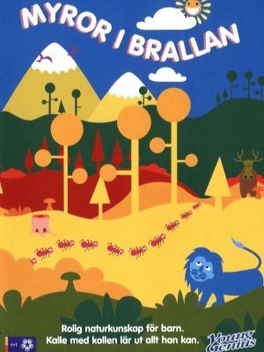
Gus and the Cyberbuds: Sing, Play & Paint-A-Long is an educational music game for children between three and eight. It features six songs (Animal Shenanigans, Down by the Bay, Imagination, The Ants Go Marching, Old MacDonald's Farm and I Am A Fine Musician) with three game modes:
Sing: The song is played and is accompanied by an animation. The lyrics are also shown, karaoke-style, so the player can sing along.
Play: The player can add a variety of icons (e.g. animals, trees, etc.) to the background. When playing the song, those icons stay on the screen.
Paint: The player can use simple painting tools to paint over the background while the song is optionally playing in the background.