New Games - Page 11572

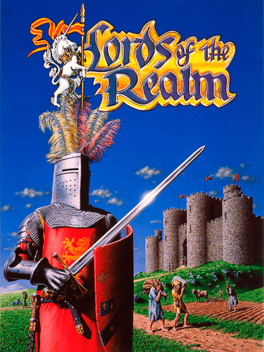
Lords of the Realm
1994
Lords of the Realm
1994
star 7.4The year is 1268, the English throne lies empty, and power-hungry lords are ready to wage war for newfound power. Your people now look to you to lead them to glory and prosperity. Manage your lands, strike bargains, betray alliances and ultimately destroy your rivals in this classic combination of turn-based and real-time strategy, and become the undisputed Lord of the realm! You begin as the ruler of a small county, but lead wisely and keep your people secure and thriving, and soon you’ll broaden your horizons. Manage your farms, make trade negotiations, build castles, flatter and deceive your opponents and then march your armies into the lands of your rival nobles. Unify the land under your rule, and prove you have what it takes to be King.Liberation: Captive II
1994
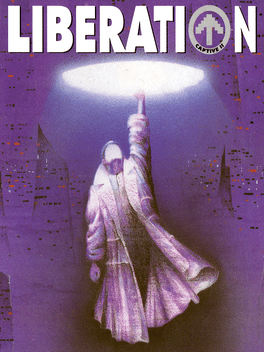
Liberation is the sequel to Captive, where the main character from the original is now a free man. However, your character is drawn into action once again after a political assassination and a corporate cover-up by BioCorp, one of the ruling multinational companies. With aid from your four droids you are able to search the city for victims, those used in the cover-ups, of BioCorp. With each minor victory your intent becomes clearer - to persuade the Emperor in regaining control over the corporate hegemony. Liberation is set in a large futuristic city and is a free-range, open-ended RPG. As in its predecessor, you can buy better weapons, from swords to laser-rifles and enhance your droids with new equipment, e.g. numerous head-slots which plug in and give droids different abilities, ultimately driving you closer to the Emperor.Kid Chaos
1994
Kid Chaos
1994
Kid Chaos (also known as Kid Vicious) is a side-scrolling platform video game that Magnetic Fields developed, and Ocean Software published, for the Amiga and Amiga CD32 in 1994K240
1994
K240
1994
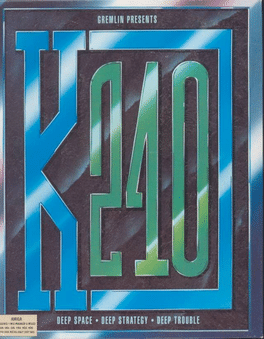
A space-based resource management game, loosely a sequel to the earlier Utopia. You start building your community on an asteroid, whose natural resources must be mined and put to use. You must use generators to power the mines and their auxilliary buildings such as storage facilities, which must be maintained. All of this costs money, but the mined resources can be sold or used. Problems you face include pollution, collisions with other asteroids, worker discontent and alien unrest. Battles against the aliens indigenous to the area must be fought, making building and maintaining a space fleet a priority.HeroQuest II: Legacy of Sorasil
1994
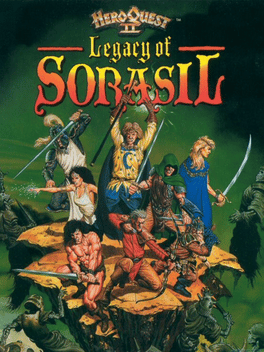
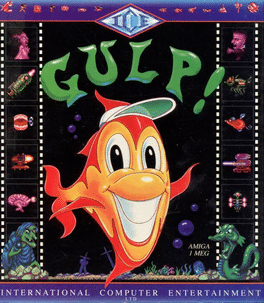
The isometric role-playing game engine of the original Hero Quest license is reused in this sequel, set in the evil-infested land of Rhia. There are now 9 large missions to take on, with a largely linear progression in the order these are played. You can choose a team of 4 from 8 character classes, adding rangers, mystics, elves and clerics to the original game's 4. The exact abilities of these can be customized before you start. The game is controlled using action icons at the bottom of a screen to set the basic instructions to move, fight, open doors, search for keys and so on. Characters can move individually, allowing for diverse strategies based on the specific strengths and weaknesses of these characters.Gulp!
1994
Eye of the Storm
1994
Embryo
1994
Darkmere: The Nightmare's Begun
1994
Darkmere: The Nightmare's Begun is an action-adventure game developed by Zero Hour Software and published by Core Design in 1994. Viewed isometrically, Darkmere sets you as Ebryn, the son of the former King of Darkmere, a barren cursed land, with the aim of discovering what happened. The area is besieged by problems, including orcs running riot, and racial tension between different species. It is Zero Hour's only title to date. Core Design went on to publish a less-well received pseudo-sequel to Darkmere in 1994 called Dragonstone, on Amiga and Amiga CD32.Zeppelin: Giants of the Sky
1994
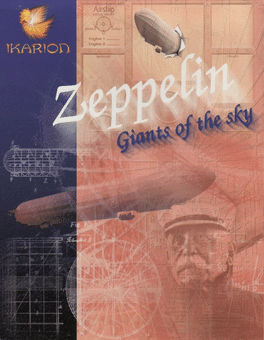
Zeppelins were the sky's biggest aircrafts ever. So - have you ever thought about managing a fleet of them? In Zeppelin this is just your job. Invest in new technologies, build airships for several nations, find new flight routes and win the race with competing companies. You can participate in flying competitions, take on special missions (such as time critical assignments), speculate at the stock-market, etc. The game also contains precise historical material; political and economical developments strongly influence the storyline.Reunion
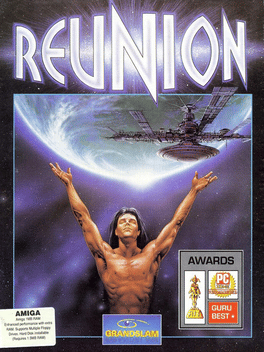
1994
HardBall 4
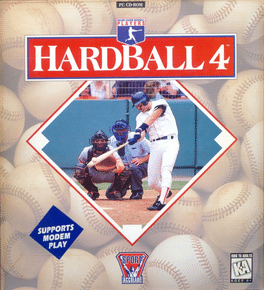
1994
Ecstatica
1994
Ecstatica
1994
star 8.5Help to free Ecstatica in this terrifing graphic adventure with a fully explorable 3D environment, stunning animation, and ground breaking ellipsoid technology graphics. So lock your doors and check under your bed. Ecstatica is a nightmare like none you've experienced before.Battle Bugs
1994
Battle Bugs
1994
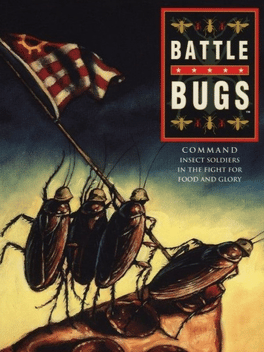
In 1994, Sierra On-Line, Inc. publishes Battle Bugs, a real-time game for the DOS system. A very unique real-time strategy game. It's only semi-real-time, because it's possible to pause the action at any moment. The player commands 22 different insects in a long campaign (56 missions) against the computer-AI or a human opponent.Aces of the Deep
1994
Aces of the Deep
1994
Take command of one of seven German U-Boats during WWII and hunt down and destroy allied convoys. This is never an easy task since their escorts and aircraft are waiting to ruin your day. The level of realism, and with it the difficulty, can be set by enabling or disabling ten options, e.g. unlimited ammo, clear sight or even invulnerability. Campaigns can be started in one of several time slots, allowing you to play for the entire war if you wish. During these campaigns you gain medals and promotions which includes the command of better submarines. You can also choose to play a single mission where you can set certain variables, e.g. number of ships or weather conditions. Specific missions aren't required because the engine "rolls up" convoys and targets, meaning every time you play the missions will change. The type and location of these missions depend on the historical time and the used submarine. The submarine consists of several rooms where you can access the functions and instruments you'll need, e.g. theSuper Stardust
1994
Super Stardust
1994
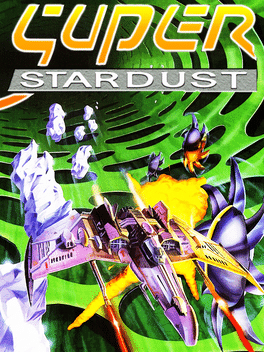
Not only Super Stardust did equal its predecessor in every conceivable way, it added more flair, features, gameplay, special effects, colors and animations. Advertised as “the first true arcade shoot-em-up for home platforms”, the game was a critical and commercial success, receiving rave reviews, and was released on Amiga, Amiga CD32 and, in 1996, also on PC. To this day it’s still considered one of the most technically impressive Amiga and PC games ever made. Players controlled their trusty starship, which they could upgrade with five different weapons, missiles and shields. Super Stardust 96, the latest incarnation of the game, featured five different worlds (all connected via 3D hyperspace tunnels) and 30 levels chock-full of asteroids, enemies and bosses. A true arcade-quality experience for PC!Base Jumpers
1994
Base Jumpers
1994
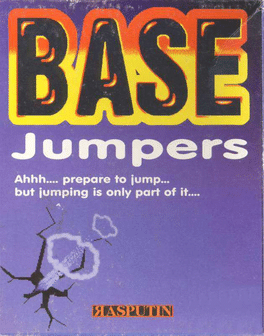
Base Jumpers was the second release by Aaron and Adam Fothergill's Shadow Software outfit for publisher Rasputin and was very simple in concept. In a 2D platform gaming style, players run up to the top of towers, trying to combine 3 letter pickups to collect plain daft bonuses (there were something like 500 different 3 letter combinations) and then jump off the building and base jump down the outside. The last player to avoid the sticky out bits of the building and successfully open their parachute before becoming pavement art wins the round.Noctropolis
1994