New Games - Page 11430

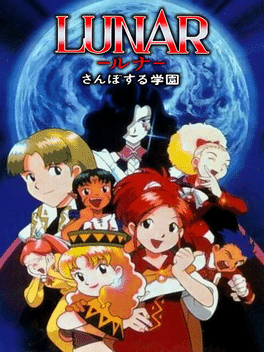
Lunar: Sanposuru Gakuen
1996
This is a side-story, set in the same world as the famous Lunar RPGs: Silver Star and Eternal Blue. The town of Burg is populated by harvesters, and you take control of two girls, Ellie and Lena. One day, they are sent to the island of Ien where they should study magic, and there begins their adventure. The game is a traditional Japanese-style RPG. You navigate your party through a top-down world, visiting towns and hostile areas. Enemy encounters are random, the battles are turn-based and are viewed from first-person perspective. Whilst not officially released in English, there is now a completed fan-translation of this game.Lunar Magic School
1996
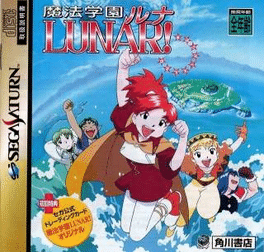
Lunar Magic School
1996
This is a side-story, set in the same world as the famous Lunar RPGs: Silver Star and Eternal Blue. The town of Burg is populated by harvesters, and you take control of two girls, Ellie and Lena. One day, they are sent to the island of Ien where they should study magic, and there begins their adventure. The game is a traditional Japanese-style RPG. You navigate your party through a top-down world, visiting towns and hostile areas. Enemy encounters are random, the battles are turn-based and are viewed from first-person perspective.Wing Commander IV: The Price of Freedom
1996
star 7.5Wing Commander 4 is one of the greatest space sims of all time, and some even consider it the greatest one of all. It is one of those games that did everything right. This is one of the few games that actually successfully manages to integrate a lot of FMV into the action, mostly because it uses trained film actors and directors. The combat is straightforward, fluid, and entertaining. The characters are as believable and memorable as they come. The orchestrated music -- just perfect. Finally, its enthralling story is both deep and plausible -- a combination that is often lost in modern games. There is simply no reason not to play this game and, once you do start playing, you will find it hard to think of a reason why you should stop.Tenchi Muyo! Mimiri Onsen: Yukemuri no Tabi
1996
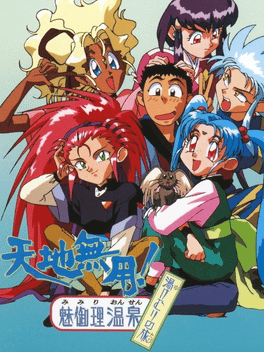
Tenchi Muyō! Mimiri Onsen: Yukemuri no Tabi is an adventure game based on the Tenchi Muyo anime series. The game is fully-voiced, not including even a dialogue display or subtitles, and progresses as is standard for Japanese adventure games. In each scene, the player can inspect various parts of the scene, move between locations, and talk to each of Tenchi's companions, with the story generally progressing after all relevant options have been exhausted. There are ten different endings depending on the player's choices and who they decide to talk to.Phobos: Relive The Nightmare
1996
This is a nine-level WAD file with new graphics, music, and sound FX. The levels are very detailed, and are designed to mimic the "style" of the original shareware Doom. This is an attempt at bringing back the "classic", realistic look of the Doom 1 levels. The story is the same as Doom 1 - Knee Deep in the Dead. You must fight your way through the Phobos moon base to the anomaly that monsters are pouring through. Check out the additional notes at the end of this file for more level info.PD Ultraman Link
1996
PD Ultraman Link
1996
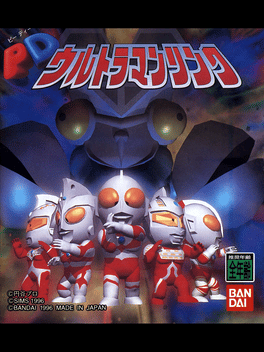
PD Ultraman Link is a falling-block puzzle game featuring the Japanese superhero Ultraman and many of his allies and foes. Blocks of various colors fall into the well in pairs; each block has two connections, and connecting three or more blocks together regardless of color will cause them to disappear. Any blocks above the ones removed will fall into the now-open space, potentially creating chain combos which will send garbage blocks that must be cleared twice to the opponent. Additionally, connecting four blocks of the same color will clear all blocks of that color from the board, while connecting four each of a different color together will clear all the garbage blocks on the screen by one stage. If the blocks stack past the line at the top of the well, that player loses the match. The game includes a single-player story mode, as well as a free battle mode against the computer or another player. There are 10 different characters to choose from: five Ultra Heroes and five aliens.Shogi Saikyou II: Jissen Taikyoku-hen
1996
Shogi Saikyou II: Jissen Taikyoku-hen is a Miscellaneous game, published by Magical Company (Mahou), which was released in Japan in 1996.Tokimeki Memorial: Densetsu no Ki no Shita de
1996
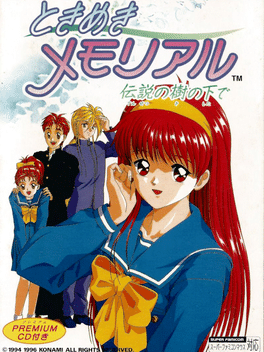
Tokimeki Memorial is a dating sim by Konami and the first game in the Tokimeki Memorial series. The first game in the series is particularly notable for its "bomb" feature, where neglected, infrequently-dated girls would eventually become angry and gossip to their friends, severely reducing love meters across the board. In the middle of the game, when the number of known girls was high, these "bombs" became the primary concern of the player, forcing careful planning and strategies like round-robin dating. Although the feature was still present in the later games, it was considerably reduced in importance and the difficulty in avoiding it. In 1996, it was ported to the Super Famicom as Tokimeki Memorial: Densetsu no Ki no Shita de, and although drastically reduced in graphic and sound quality (the only voice clips were available during loading), included an exclusive CD with a radio drama and new arrangement of the ending theme, "Futari no Toki", this time sung by the majority of the girls, instead of just ShioriNamco Museum Vol. 2
1996
Namco Museum Vol. 2
1996
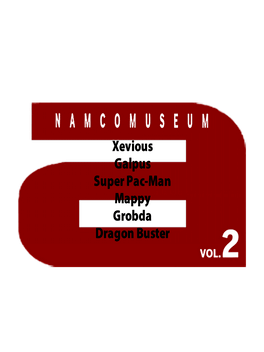
star 6.8The second in Namco's Museum series brings together the following games: Super Pac-Man, Xevious, Mappy, Grobda, Dragon Buster, Gaplus There are also some extras in the museum section, including never before seen pictures and text of the development of each title.Bahamut Lagoon
1996
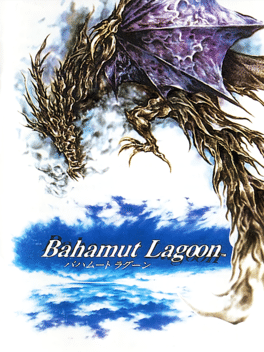
Bahamut Lagoon
1996
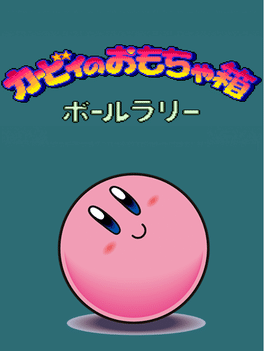
star 8.8Bahamut Lagoon combines RPG mechanics with squad-based combat. Characters have HP, MP (SP for fighter characters), EXP, equipment, stats and class-specific, SP-draining special elemental abilities very much like traditional console RPGs. The player can explore his surroundings, talk to people and visit shops when not in battle, though to a limited degree as there is no world map and no way to leave the current area. The game's core is its turn-based battles fought on a 2d grid. Characters are assembled into parties of four and the player allowed a maximum of six parties, which are usually well outnumbered. The two opposing sides act in alternating turns so that each party can move once and/or attack once a turn. Attacks are divided into distant and close-up combat. In the former, a party uses a special ability (e.g. casting fireballs, throwing lightning, healing allies) of one of its members at a distance. The range and possible area of effect damage vary per ability. If the attacking party has two or more charactKirby no Omochabako: Ball Rally
1996
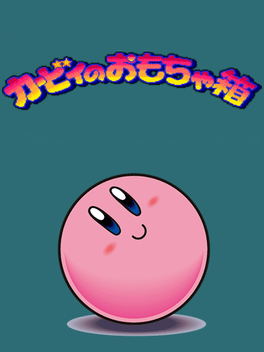
In Kirby's Toy Box - Ball Rally, the player's goal is to guide Kirby through an obstacle course. He/she can do this using proper timing and the A Button; when A is pressed, some green platforms extend while others retract. Spherical Kirbys are released from the top-most door one by one. They can't stop rolling, so the player must extend the right platforms to guide the Kirbys safely over spikes. As more Kirbys join the playing field, it becomes increasingly difficult to guide them all to the exit. The player scores points by getting a Kirby to the exit. There are 50 Kirbys altogether. Like every other sub-game in Kirby's Toy Box, this game could only be downloaded by the Satellaview during the brief period it was broadcast.Kirby no Omochabako: Pachinko
1996
This game is like a pachinko machine; the goal is to launch the spherical Kirbys the player is given into the pockets of the machine. The player is given two minutes to fire an unlimited number of Kirbys, and he/she is given control of the power put into each shot. Ten points are awarded whenever a Kirby lands in a pocket. If a shot lands directly atop the big Kirby in the center, the player will temporarily win a chance to earn more points; the big Kirby will raise his arms and give 100 points to each shot that hits him in one of three locations. When time is up, the game ends. Like every other sub-game in Kirby's Toy Box, this game could only be downloaded by the Satellaview during the brief period it was broadcast.Kirby no Omochabako: Arrange Ball
1996
In Kirby's Toy Box - Arranging Balls, the player is given the goal of launching spherical Kirbys into the nine holes occupied by Mr. Frostys. The player is given a certain number of Kirbys to launch, and the game ends when he/she runs out of Kirbys to shoot. The player can choose how much power to put into each shot. Points are awarded if the player lands three Kirbys in a row—the more rows the player completes, the more points he/she will earn. Like every other sub-game in Kirby's Toy Box, this game could only be downloaded by the Satellaview during the brief period it was broadcast.Kirby no Omochabako: Cannonball
1996
In Kirby's Toy Box - Cannonball, the player controls a giant robotic Rick, which can shoot spherical Kirbys out from its head. The game is a simplified take on the same concept used by numerous other games based around lobbing parabolic projectiles at opponents over hills with destructible terrain, such as Scorched Earth and the |Worms series. A large hill divides the screen into two halves, with Player 1 on the left; the right side is occupied by another robot hamster, which is controlled by a CPU or a second player. The goal of the game is defeat the opponent robot by hitting it with enough Kirbys. Each robot can move its head to change the direction and angle of the Kirbys it fires. They can also walk slowly forward and backward. The robots can blast tiny holes in the hill by shooting it with Kirbys. When one robot is defeated, the game ends with surviving robot being the winner. There are multiple stages to play on, but the only difference between them is the scenery. Clouds will stop any Kirby that hits them,Kirby no Omochabako: Guru-guru Ball
1996
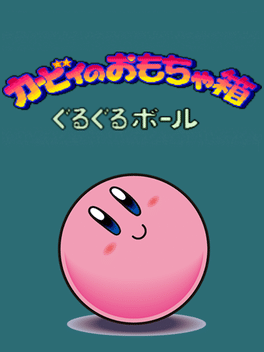
In this game, the player fires spherical Kirbys through a spiral tube, which is designed to look like Efreeti. This tube has holes in it, which a speedy Kirby will pass right over. The point is to fire the Kirbys with just the right amount of power to pass over certain holes but slow down and fall into another hole. Different holes give different numbers of points, so the goal of the player is to shoot his/her Kirbys into the highest-scoring hole as much as possible. When the player runs out of Kirbys, the game ends. Like every other sub-game in Kirby's Toy Box, this game could only be downloaded by the Satellaview during the brief period it was broadcast.Kirby no Omochabako: Pinball
1996
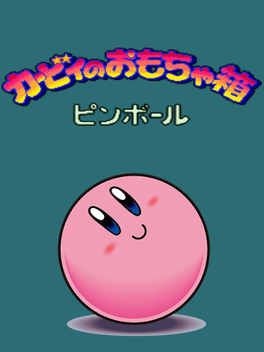
This game is a simple game of pinball, where the player has to launch Kirby into the enemies on the stage to earn points. The hero first has to be shot out of a cannon at whatever power level the player chooses. If Kirby falls down the drain three times, the game ends. As with Kirby's Toy Box - Baseball, the game could be played over and over during the brief period it was broadcast, but could not be played after that time, unless it had already been saved onto. Enemies in this game include King Dedede, Mr. Frosty, Kracko, Co-Kracko, Bounder, Waddle Dee, Crack-Tweet, and Elieel. Like every other sub-game in Kirby's Toy Box, this game could only be downloaded by the Satellaview during the brief period it was broadcast.Bubble Memories: The Story of Bubble Bobble III
1996
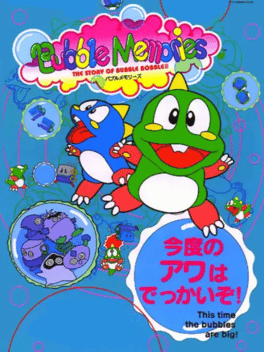
The sequel to Bubble Symphony, although it strangely shares its subtitle with Parasol Stars.Armageddon
1996
Armageddon
1996
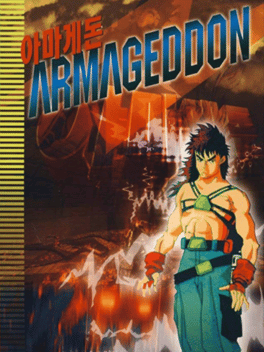
Armageddon is an action game created to tie into the 1996 animated movie of the same name. You can switch between first and third-person viewpoints while piloting a space craft with the goal to drive back the invaders. The ship goes forward automatically and needs to avoid obstacles and destroy enemies in space. In first-person mode, you move the ship to line-up the reticule and shoot incoming objects such as asteroids or enemies. In third-person view, you have a bit more control as you can move the reticule. Occasionally power-ups will appear giving numerous abilities like electro bombs.. LG originally announced a PC port of the game as well, but never followed up on the promise.BS Dragon Quest: Dai-1-wa
1996
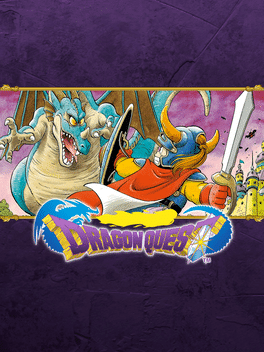
The first episode of BS Dragon Quest. BS Dragon Quest is a version of Dragon Quest released for the Super Famicom add-on peripheral Satellaview, via broadcast, in Japan. It was divided in chapters, that could be playable only for an hour, and consisted of four one-hour scenarios which players would download on a weekly schedule. Players were tasked with leveling their character, collecting medals and completing scenario-specific conditions with special events designed to occur under specific conditions in real-time. It was compatible with the SoundLink add-on.BS Dragon Quest
1996
BS Dragon Quest
1996
BS Dragon Quest is a version of Dragon Quest released for the Super Famicom add-on peripheral Satellaview, via broadcast, in Japan. It was divided in chapters, that could be playable only for an hour, and consisted of four one-hour scenarios which players would download on a weekly schedule. It consists of four stories: "導入 (Introduction)", "ダンジョン特集 (Dungeons Collection)", "フィールド特集 (Field Collection)", "フィナーレ (Finale)". Players were tasked with leveling their character, collecting medals and completing scenario-specific conditions with special events designed to occur under specific conditions in real-time. It was compatible with the SoundLink add-on.