New Games - Page 11069

Silent Bomber
1999
Silent Bomber
1999
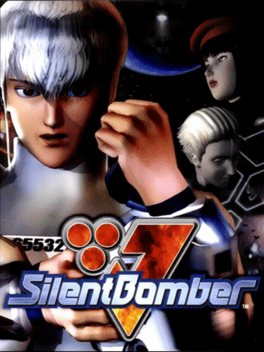
star 7.2Silent Bomber is an old school style game which takes place in the future. You play as a character named Jutah Fate, a genetically engineered man created by the government. You're an expert at using bombs. You start out being able to set only a few bombs at a time, but eventually you can increase the number by collecting E-Chips. It's a fast paced game of blowing things up before they blow you up.Nocturne
1999
Nocturne
1999
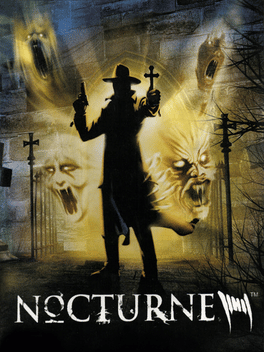
star 8.1Nocturne is a survival horror adventure video game set in the late 1920s and early 1930s – the Prohibition and Great Depression era. The player takes the part of The Stranger an operative of a fictional American Government secret organization known as "Spookhouse", which was created by President Theodore Roosevelt to fight monsters. He investigates four strange cases and saves people from classic monsters such as werewolves, zombies, and vampires.Tomba! 2: The Evil Swine Return
1999
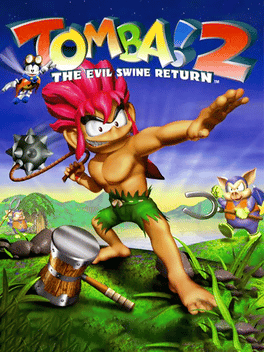
star 7.4Tomba! 2: The Evil Swine Return is a side-scrolling platformer in which the titular character, Tomba, moves on predetermined linear paths until he reaches an intersection point where a flashing arrow appears over his head. At that point Tomba can move in either direction the arrow points. Some areas in the game enable the player to explore them in a top-down view, allowing Tomba to move around freely. The main goal of the game is to complete all 137 objectives (133 make the regular ones, while the other four are obtained from a Tomba 1 save file) which range from retrieving a fishing hook for a fisherman to helping Santa Claus find his "sack". Completing a task earns the player "Adventure Points", which can be used to unlock specific boxes scattered around the game's world. As the game progresses, Tomba can obtain suits that give him special abilities. For example, the flying squirrel suit allows Tomba to glide long distances while the pig suit allows Tomba to communicate with friendly pigs. Scattered throughout thDark Mountain II
1999
Dark Mountain II
1999
Sequel to "Dark Mountain" (darkmtn.wad). This is a very large level with more detail in many places than the original Heretic engine can handle.Rezerwowe Psy
1999
Rezerwowe Psy
1999
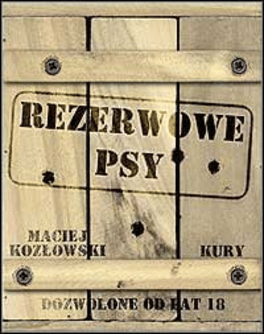
A tactical strategy game similar in gameplay to Jagged Alliance. The player controls a contemporary team of mercenaries who are not only characterised by a set of skills or equipment, but also personal traits, what makes each of them a memorable individual. The game content was intended to start a scandal. In addition to violence of close combat between cold blooded mercenaries, mobsters and corrupted policemen, expect vulgar language, adult themes (including prostitution or homosexual sex acts - that's how your team "blows off the steam", apart from taking drugs and drinking alcohol to excess). Game creators wanted to laugh up or at least parody everything: ranging from pop culture to church and politicians. No wonder the box screams "18 or older". The game was packed in a military style stencilled wooden box.Disney's Beauty and the Beast: A Board Game Adventure
1999
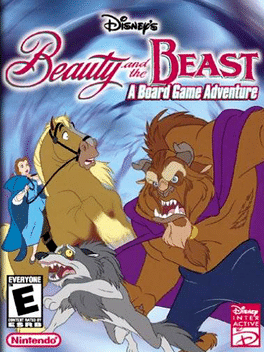
Disney's Beauty and the Beast: A Board Game Adventure is a game for the Game Boy Color. There are two modes of play. In the first you play on a big game board, where each square represents a Disney character. When you land on a square you play a mini-game against or inspired by him or her. For instance if you land on the square showing the inventor father you will have to play a game where his new log chopping device cuts firewood and he has to bounce it across the screen on a spring. These mini-games range from 2D platform game segments to memory or reflex games. There are a total of seven boards to play on. You can play with up to four players.The Land Before Time: Toddler Time
1999
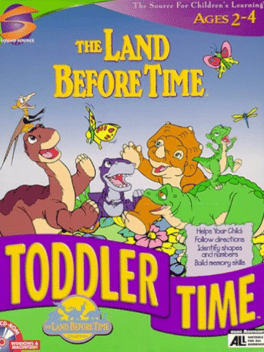
The Land Before Time: Toddler Time is an educational game for Windows-based PCs intended for children ages 2-4. It was released by Sound Source Interactive in North America in October 1999. It features a series of five minigames, each with three difficulty settings featuring characters from the series. In their review of the title, Discovery Educational declared that "we found the label of 'toddler' for this software to be somewhat of a misnomer. Most toddler software titles require very little mouse/keyboard skills and feature very basic concepts", saying that the game was more appropriate for players over 3 years old, and that "children in the upper end of the suggested age group will find a fair amount to do".Daemonus
1999
Kids Tetris
1999
Kids Tetris
1999
Kids Tetris is a variation of the classic Russian puzzle game geared towards children. The main characters of the game are the Minos, the pieces that make up the Tetris board. There are four locations where you can play Tetris: the circus, the fire station, the laboratory, and the haunted house. Each board requires a certain amount of lines to be cleared to win Tetris. Since the game is a variation for children, the blocks start out small and fall down slowly. As the game progresses, the pieces become more complex and they fall down faster. After you win, there are many toys and stage props that you can play with in the activity center. You can also print out coloring pages based on the game and a certificate for each stage you play. The game supports both single player and multiplayer. The game is playable with the on-screen mouse controls or the keyboard.Everest
1999
Chutes and Ladders
1999
Chutes and Ladders
1999
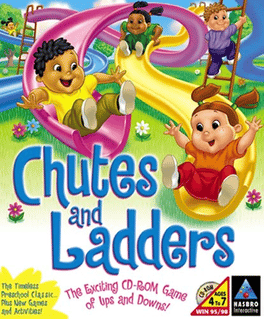
Chutes and Ladders is an adaptation of the classic children's board game of moving up and down. Players proceed along a board advancing closer to the finish when they land on a ladder space and falling back when they land on a chute space. The PC version is a kid friendly interpretation designed for 4-6 year olds.I Spy Junior
1999
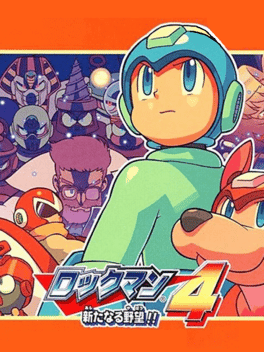
Rockman Complete Works: Rockman 4 - Aratanaru Yabou!!
1999
Rockman Complete Works: Rockman 4 - Aratanaru Yabou!! is an expanded port of Mega Man 4 (NES),Yakouchuu GB
1999
Super Scattergories
1999
Super Scattergories
1999
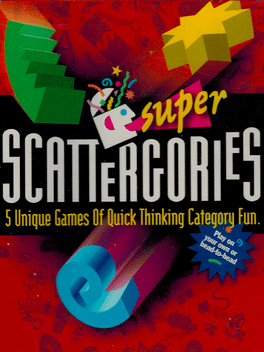
The classic category game is back and better than ever! Now you can test yourself or challenge your friends and family with four all new brain-teasing games, plus the original Scattergories. Put on your thinking cap and use your quick wits to go for that perfect score!Grand Theft Auto 2
1999
Grand Theft Auto 2
1999
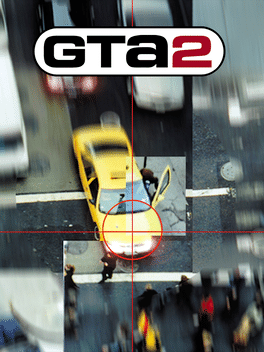
star 7.3The PSX port of Grand Theft Auto 2 is an open world action-adventure video game. It is the sequel to Grand Theft Auto, part of the Grand Theft Auto series. The open world design lets players freely roam Anywhere City, the setting of the game.Yakouchuu II: Satsujin Kouro
1999
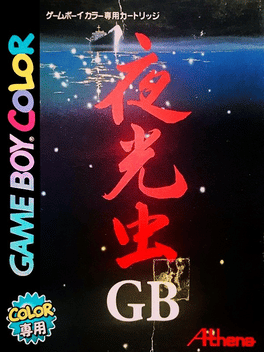
Yakouchuu II: Satsujin Kouro is an adventure game for the Nintendo 64 released only in Japan in 1999. Sequel to the Super Famicom game Yakouchuu, released in 1995. Yakouchuu GB was also released in 1999 for the Game Boy Color.Simple 1500 Series Vol. 3: The Gomoku Narabe
1999
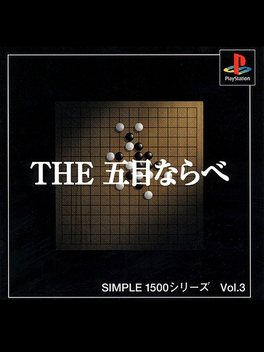
A Japanese exclusive Go game which was the third volume in the Simple 1500 Series. The game is played by two players who alternately place black and white stones on the vacant intersections of a grid of 19×19 lines. Once placed on the board, stones cannot be moved. If they are surrounded by the opponent's stones, they are captured and removed from the board. The object of the game is to surround a larger portion of the board than the opponent. When a game concludes, the controlled points are counted along with captured stones or your own stones (depending on the rule-set) and a predetermined compensation ("komi") to determine who has more points.UEFA Striker
1999