Most Popular Games - Page 421

Beatbuddy: Tale of the Guardians
2013
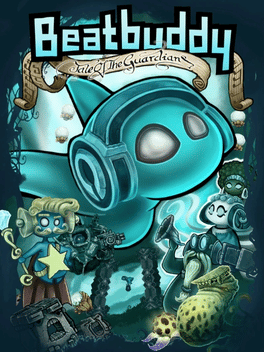
star 6.8Awakened from his slumber, Beatbuddy journeys through lush hand-painted environments on a quest to save his companions and his own immortality. Beatbuddy interacts with the living breathing environment that pulses to the beat of an original soundtrack, aiding him as he unlocks new paths and solves puzzles.The First Templar
2011
The First Templar
2011
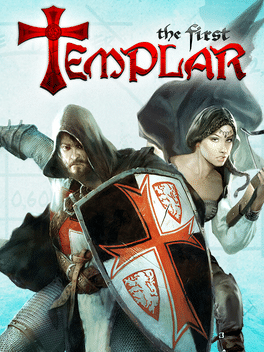
star 6.3The First Templar follows the story of two main characters – a French Templar, and his companion, a noble lady who has been proclaimed a heretic. Taking control over these two unlikely allies, the player must uncover the mysteries behind the Templar Order, play a role in a grand conspiracy, and discover the secret of the Holy Grail. The heroes face powerful opponents at every turn, including Sacracen, King Philip the IV of France and the Inquisition.Beowulf: The Game
2007
Beowulf: The Game
2007
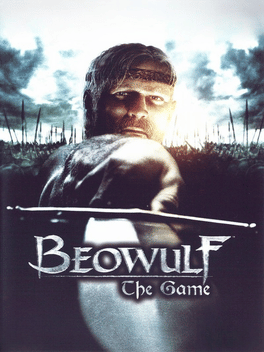
star 5.7Beowulf: The Game is a hack and slash game for TOD and consoles, based on Robert Zemeckis' version of the poem Beowulf. The game was announced by Ubisoft on 22 May 2007 during its Ubidays event in Paris.[5] It was released on November 13, 2007 in the United States. The characters are voiced by the original actors who starred in the film.Space Channel 5: Part 2
2002
star 7.7Hey there, SpaceCats – meet Ulala, the grooviest reporter in the galaxy! She’s got attitude, and she’s got moves. Help her get the scoop on an unidentified Dance Troupe that has captured thousands of people and is forcing them to dance!Disciples: Sacred Lands
1999
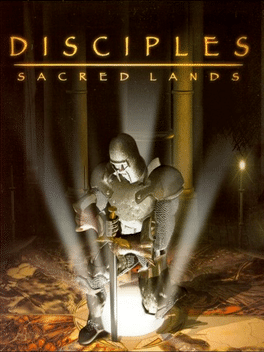
star 8.3Disciples: Sacred Lands is a turn-based PC strategy game published by Strategy First in 1999. Set in a fantasy world known as the Sacred Lands, it depicts a battle for dominance between four races of the world of Nevendaar: The Empire (humans), the Mountain Clans (dwarves) the Legions of the Damned (demons), and the Undead Hordes (undead).Diner Dash
2004
Diner Dash
2004
PlayStation 3 Wii PC (Microsoft Windows) Mac PlayStation Portable Xbox 360 Nintendo DS Legacy Mobile Devicestar 7.5Diner Dash, a popular PC action-puzzle game, has landed on the WiiWare service. Guide Flo, an office worker-turned-restaurateur, as she builds up her empire over four unique diners. Go online to face players in head-to-head. If you feel up to the challenge, join up with a friend or another player online for a Team Dash game where your team will take on six other players to see whose diner is the best in town. (Broadband Internet access is required for online play.) Players take direct control of Flo as she runs around to seat patrons, take orders, deliver food, take payment and bus tables as efficiently as possible within the time allowed. Players who are fond of traditional control schemes may also use a point-and-click style with hotkeys to aid Flo in her quest for customer satisfaction, which is reflected in a heart meter that empties as customers lose patience. If the meter empties completely, then the customer will leave the restaurant.Digimon: Battle Spirit 2
2002
star 8.3It is a sequel to Digimon: Battle Spirit. You can battle with the characters from the Digimon Frontier anime series. Developed by Dimps.Van Helsing
2004
Van Helsing
2004
star 5.8Van Helsing is a third-person shooter for the PlayStation 2, Xbox, Game Boy Advance and Mobile phone, which is based on the 2004 action/horror film of the same name by Stephen Sommers. Starting off with the killing of Mr. Hyde in Paris, one must use the character of Van Helsing to hunt down Dracula in Transylvania. The character of Carl is completely missing from the video game but to reasonable accuracy, the characters of Anna Valerious, Velkan Valerious, Igor, Dracula and his three brides are portrayed as in the movie.PaRappa the Rapper 2
2001
PaRappa the Rapper 2
2001
star 7.1THE ORIGINAL RAP STAR'S BACK IN THE HOUSE! See if you have enough rhythm to keep the beat with everyone's favorite rappin' puppy. Parappa the Rapper returns with all new levels and songs to keep your head bobbin' & PlayStation 2 bumpin'.MotoGP 2
2003
MotoGP 2
2003
star 7.9MotoGP returns with challenging tracks, different gameplay modes, and online play. In MotoGP 2, you'll race against the top 20 riders in the world at speeds of 180mph around turns and corners with your knee inches from the ground. It's up to you to find the perfect combination of rider and bike to suit your style. Races take place on 16 tracks in all weather conditions. Challenge yourself to master these obstacles in all six single-player game modes and in online multiplayer matches for up to 16 players.Futurama
2003
Futurama
2003
star 5.7Futurama begins when Professor Farnsworth sells his delivery ship to Mom, an evil businesswoman, giving her ownership of more than 50 percent of Earth. Now, with Mom threatening to enslave humanity, it's up to you to travel back in time to stop the deal from taking place. You can play as Fry, Bender, Leela, and Dr. Zoidberg, each with unique fighting skills and weapons. With each character, you must master their power-ups and complete their tasks to emerge victorious against Mom and her death bot troopers.CSI: Crime Scene Investigation
2003
star 7.6What do a murdered woman, a slain police officer, and a mysterious arson case have in common? Enter the gritty world of CSI and search for the answer with Grissom, Catherine, and the entire Crime Scene Investigation team. As a new recruit, you'll have to learn how to use all of the investigator tools, including cotton swabs, rubber gloves, and plaster molds.Buffy the Vampire Slayer
2002
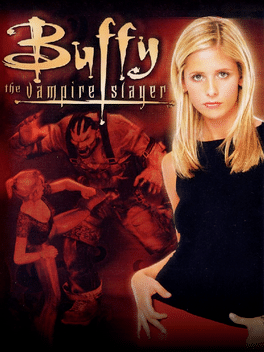
star 6.6Buffy Summers makes her console debut in a third-person action game set within the not-so-peaceful town of Sunnydale, CA. As the 17-year-old Chosen One, Buffy must use her heightened strength and agility to defeat vampires, zombies, and other demons attracted to the town's dangerous proximity to a Hellmouth. Based on the UPN television series known for its unusual blend of action, suspense, comedy, and drama, the game takes place around the timeframe of the show's first and second seasons.Circus Atari
1979
Circus Atari
1979
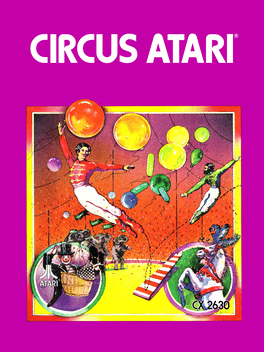
star 5.53 rows of triangular balloons move along the top part of the screen, each overlaid with blue, green, and yellow (colors used in the original version), counting from the top row. A clown appears from the edge of the screen where there is a jumping board, and the player must move the seesaw located at the bottom of the screen so that the clown can bounce back off the seesaw once he jumps off from his starting position. If the player successfully gets the clown onto the seesaw, the clown on the other side shoots off into the air towards the 3 rows of balloons on the top of the screen. The clown may not have enough speed to reach the balloons if the first clown does not land squarely on the seesaw. Clowns bounce off of balloons, walls, and jumping boards, but will pass directly through multiple balloons if they are moving quickly enough. They will only bounce off the jumping boards when they are heading downwards, and will pass straight through the boards while moving upwards.Bump 'n' Jump
1982
Bump 'n' Jump
1982
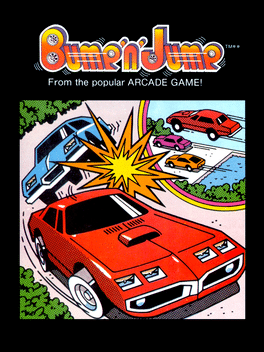
ColecoVision Arcade Atari 2600 PlayStation 3 Sharp X1 Intellivision Sharp MZ-2200 PlayStation Portablestar 6.6Bump 'n' Jump is an overhead-view vehicular combat game developed by Data East and originally released in Japan as "Burnin' Rubber". The arcade version was available as both a dedicated board and as part of Data East's DECO Cassette System. It was distributed in North America by Bally Midway. The goal is to drive to the end of a level while bumping enemy vehicles into the sides of the track and jumping over large obstacles such as bodies of water. The arcade game was a commercial success in Japan and North America. The game was ported to the Atari 2600, Intellivision, ColecoVision, Nintendo Entertainment System, and Sharp X1. The Famicom version of Burnin' Rubber was published as "Buggy Popper" in Japan in 1986.Forced
2013
Forced
2013
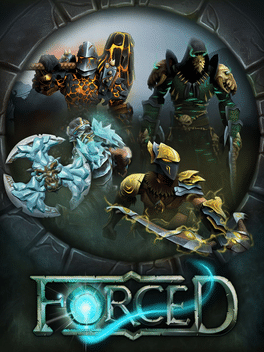
star 8.1Players are cast as slaves in a fantasy gladiator arena, condemned to fight as gladiators to win their freedom. With the help of Balfus, a Spirit Mentor, they are able to fight their way through the challenges and Guardians at the end of each area and gain freedom for them and their kin.The Sims 2: FreeTime
2008
The Sims 2: FreeTime
2008
star 6Now your Sims can rediscover the joys of leisure time in The Sims 2: FreeTime, the seventh expansion pack for the The Sims 2! Awaken your Sims' true passions in life as they discover and excel at all-new activities. Whether they're tossing a football with the family, practicing ballet, restoring cars with friends, or building train sets, your Sims now have more ways to build skills, enhance friendships, and make their lives more successful. Craft new, unique items for your Sims to use in their daily lives including clothing, pottery, and more. Your Sims will even unlock secret rewards by mastering their hobbies and advancing all-new careers. Explore a wide variety of new hobbies that will change your Sims' lives!Moonstone: A Hard Days Knight
1991
star 7.3Moonstone: A Hard Days Knight, is a video game developed and published by Mindscape in 1991. It was released on the Amiga and one year later converted to MS-DOS with alternate sound and music. The title is a play on A Hard Day's Night. Moonstone's gameplay blends several different genres, including strategy, real time fighting and role-playing video games. It allows up to four players to participate in a basic turn based Role Playing Game with real time combat for any encounters. It is also notable as one of the goriest games of its time, with some exceptionally bloody fight and death scenes.PixelJunk Monsters
2007
PixelJunk Monsters
2007
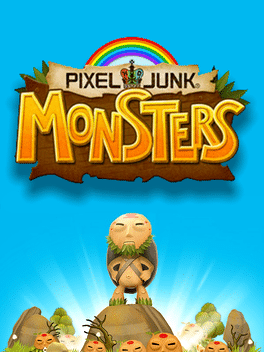
star 6.6Tikiman the Forest Defender is in trouble. Hordes of monsters are sweeping through his realm, hoping to chow down on his offspring – and it’s up to you to defend them. By placing weapon towers at strategic points around the landscape, you can destroy the invaders and save the little ones. Collect treasure along the way to build up your arsenal and pay for new towers – countless waves of monsters are out to get the Tiki babies, so you need to be prepared to fight hard!Dracula: Origin
2008
Dracula: Origin
2008
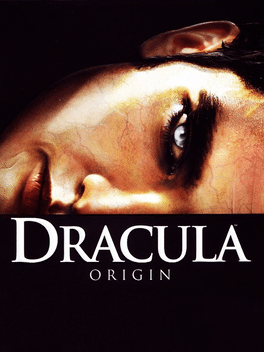
star 6.8Dracula: Origin reveals the dark origins of the Dracula curse. Once the ardent defender of Christendom, Dracula loses his faith in God when he is abandoned by his one true love after she marries. Dracula then makes a pact with the Prince of Darkness, and becomes a vampire.