Most Popular Arcade Games - Page 149

Cliff Hanger
1983
Cliff Hanger
1983
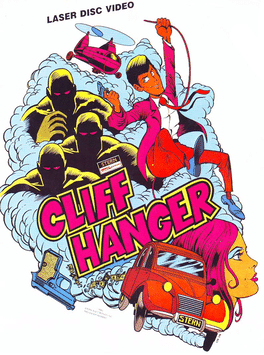
Cliff Hanger is a laserdisc video game that was released by Stern Electronics in 1983. It is an interactive movie which requires the player to press a button or move the joystick in a particular direction when prompted by the game to progress the storyline. The game uses animation from two Lupin III films, most prominently The Castle of Cagliostro, as well as The Mystery of Mamo.Ollie King
2004
Ollie King
2004
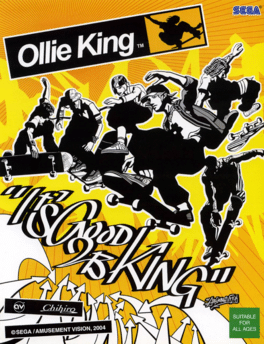
Brought to you by the makers of the Jet Set Radio games, Ollie King is an arcade skateboarding game released in 2003.TX-1
1983
Bouncer
1984
M.A.C.H. 3
1983
M.A.C.H. 3
1983
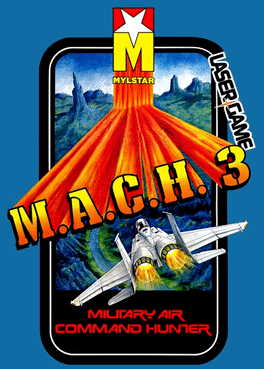
There are two modes of play: fighter or bomber. You fly along moving a computer generated airplane and shoot at computer drawn target boxes superimposed over real laser disk images filmed over some desert and other real objects. You have a gun and a bomb button.Dissidia Final Fantasy Arcade
2015
The RPG/fighting game phenomenon from Square Enix returns with an all-new 3-on-3 battle style and evolved visuals in this original arcade fighter. The initial game roster featured 14 heroes representing the main entries from the series, with villains and additional heroes added in subsequent updates. The game was later adapted for PlayStation 4 as Dissidia Final Fantasy NT.Star Rider
1983
Star Rider
1983
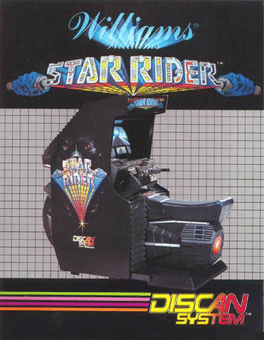
Star Rider is a futuristic motorcycle racing game that used pre-rendered 3D graphics stored on LaserDisc.Snake Pit
1984
Bega's Battle
1983
Bega's Battle
1983
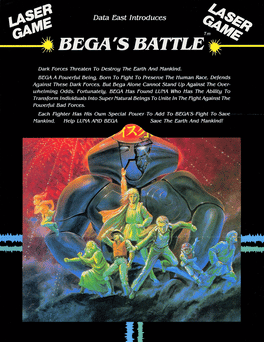
Data East used footage from the film Harmagedon to create a laserdisc video game titled Bega's Battle. It was released in June 1983. In the game, the player to take on the role of the robot Bega (Vega) whose goal was to stop the invasion forces of the alien Varga (Genma), while also rescuing his three friends who had been kidnapped by them. Even among laserdisc games Bega's Battle has become somewhat rare because many of the machines were converted into Cobra Command machines as part of a discount deal offered by Data East in exchange for the internals of the Bega's Battle arcade cabinet. Similar to Astron Belt, the game used the footage mainly for backgrounds, while the actual gameplay was a shooting game with sprites laid over the video. Bega's Battle also used brief full-motion video cut scenes to develop a story between the game's shooting stages. Years later, this would become the standard approach to video game storytelling. Bega's Battle also featured a branching storyline. The Twin Galaxies world record foChanges
1982
Changes
1982
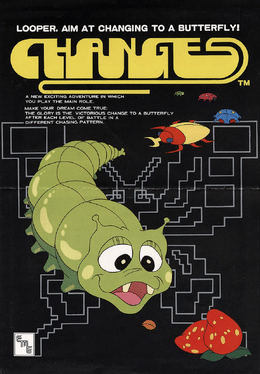
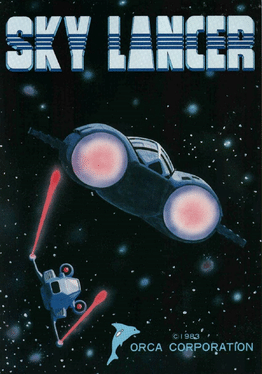
This maze game is quite similar to "Pac-Man". The player controls a caterpillar that crawls along the branches of a maze-like tree eating nuts and strawberries while avoiding deadly bugs and a hungry bird. The caterpillar changes into a butterfly after everything has been eaten.Sky Lancer
1983
Beezer
1982
Beezer
1982
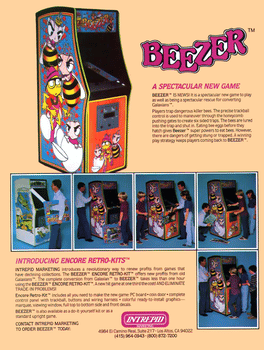
Players trap dangerous killer bees. The precise trackball control is used to maneuver through the honeycomb pushing gates to create six sided traps. The bees are lured into the trap and shut in. Eating bee eggs before they hatch gives Beezer super powers to eat bees. However, there are dangers of getting stung or trapped. A winning play strategy keeps players coming back to Beezer.Leprechaun
1982
Leprechaun
1982
The player controls a sleuth running through a forest, trying to get a Leprechaun's pot of gold. The pot of gold is randomly placed on the screen. When the pot of gold is touched, the player is taken to the next level. The Leprechaun chases the sleuth through the forest, trying to catch him. If he is caught the player loses a life and starts over from the beginning of the level. After all lives are lost, the game ends. Should the Leprechaun reach the pot of gold first, it is then relocated to another place on the screen. By touching the trees, the player's score increases, as does the value of the pot of gold. Every time the Leprechaun touches a tree, the pot's value decreases though the player's score remains the same. After each level and after every 30 seconds the Leprechaun's speed increases.Wacko
1983
Mad Planets
1983
Mad Planets
1983
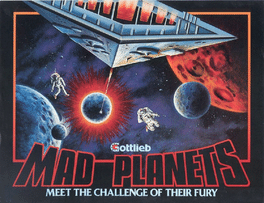
If planets form, you must destroy orbiting moons before you can destroy the planet. The planet will become a Mad Planet when all the moons that orbit that planet are destroyed. Once it has become mad, you will be hunted and the longer you let the planet hunt you, the faster it moves. Bonus screens are all spacemen with the comet killing you as the end to the bonus round.Domino Man
1983
Domino Man
1983
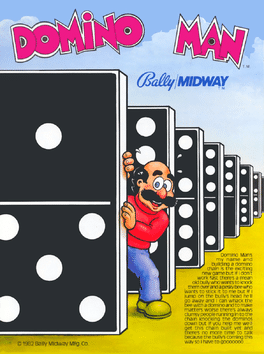
In Domino Man, you play as the titular character. The goal is to fill all the empty trail, as indicated by the black spots on the screen, with dominoes. Once the dominoes are all lined up, the stage is complete. However, there are many obstacles that can topple all of your dominoes. Some of these enemies include shoppers, caddies in golf carts, and a large bully. In addition, there is a giant bee that constantly follows you around, but can't knock over the dominoes. Touching any of the aforementioned enemies results in the loss of a life of the player. However, some of these enemies can be dispatched by pushing them out of the way, or dispatched by other means.Spectar
1980
Spectar
1980
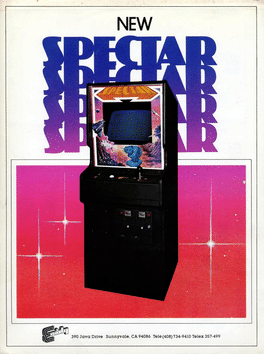
Spectar, released by Exidy in 1980, is the follow-up of Targ. Gameplay is apparently unchanged, you control a vehicle called Whummel into a 9x9 grid maze, chasing down, and being chased by, the alien invaders. Targs have evolved into the more dangerous Rammers, and Spectars appears more often, shooting at player's ship. You use a 4 way joystick to guide your vehicle in the maze, and a pushbutton to shoot at enemies. Up to two players can alternate in gameplay. The most noticeable difference from his predecessor is that to complete a level you must now collect all the gems in the maze, in a Pacman-like game. Rammers and Spectars continue to appear from flashing pods, so you cannot rest and plan your course easily, or you will be overwhelmed by the alien force. Graphic is highly improved compared to his predecessor: the maze now has barricades that must be avoided or can be used as a shielding against the enemies, and has ten environement settings, changing from the "square-block town" of Targ to a city, a forest,The Adventures of Robby Roto
1981
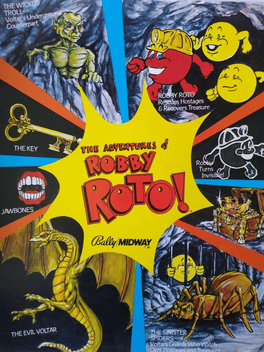
Robby Roto is a game that Bally/Midway originally released on its Astrocade-based hardware back in 1981. Other games that ran on this hardware include Gorf, Wizard of Wor, and Professor Pac-Man. The author of Robby Roto is Jamie Fenton, who acquired the rights to the game after it did not do well in the marketplace.Star Fire
1979
Star Fire
1979
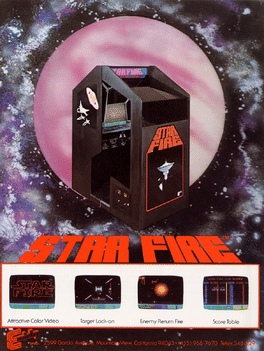
Star Fire is an early color game programmed by David Rolfe with graphics designed by Ted Michon and Susan Ogg. It was released by Exidy in 1979. Star Fire is a first-person space shooter where your mission is to seek out and destroy enemy spacecraft while avoiding incoming missiles. If a number of elements of Star Fire seem similar to Star Wars, your eyes are not deceiving you. Star Fire was originally designed as a Star Wars game, with the eventual hope that either a license would be purchased or that they would change enough of the elements to avoid any legal entanglements. Originally, the authors had hoped that Midway would pick up the game for distribution, but they passed and instead Exidy purchased the game and released it. Star Fire was the first game to come in an environmental cabinet, designed by Michael Cooper-Hart. Even more importantly from a historical perspective, Star Fire was the first game to keep a high score list where the player could enter his or her initials. Prior games had tracked the conSpace Firebird
1980
Space Firebird
1980
Space Firebird is a 1980 arcade game published by Gremlin Industries, Inc. It is a "slide and shoot" shooter, similar to titles such as Galaga.