New Legacy Computer Games - Page 2

Bouncing Ball
1953
Bouncing Ball
1953
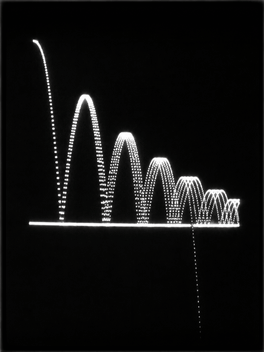
The first known game incorporating graphics that updated in real time, rather than only when the player made a move, was a simulation of a bouncing ball created by Massachusetts Institute of Technology (MIT) student Oliver Aberth for the Whirlwind I computer. He began creating the simulation in February 1951, before the computer was completed in April. It allowed users to adjust the frequency of the bounces with a knob, and sometime between late 1951 and 1953 he made it into a game by adding a hole in the floor for players to aim for.Draughts
1952
Draughts
1952
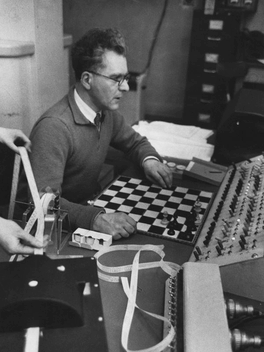
A game of draughts (a.k.a. checkers) written for the Ferranti Mark 1 computer by Christopher Strachey at the University of Manchester between 1951 and 1952. In the summer of 1952, the program was able to "play a complete game of Draughts at a reasonable speed".Mate-in-Two
1951
Mate-in-Two
1951
Robot Chess is an early chess game in which the user can play against an AI. The AI is only powerful enough to compute "mate-in-two" problems and thus the game didn't represent a full game of chess. Players would enter moves of the Ferranti Mark 1 and the computer would print out the response move. The simulation ignores some chess rules such as en passant, promotion and castling.Bertie the Brain
1950