Most Popular Game Boy Games - Page 52

Carpenter Genzo: Robot Empire
1994
The second Hammerin' Harry platformer for Game Boy sees Harry blast off into space and fight robots.Medarot Kabuto Version
1997
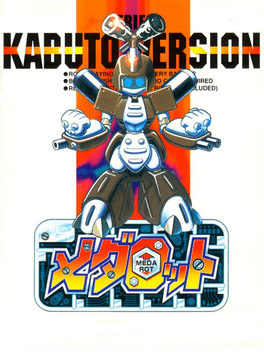
Medarot (also referred to as Medarot 1) is an RPG that was released in 1997 for the Nintendo Game Boy, and the original game that started the Medarot franchise. It follows Hikaru Agata on his quest to compete in Robottle tournaments and defeat the evil Roborobo Gang. Like the other creature-collecting games of the time, Medarot 1 was released in two versions: Kabuto (Rhinoceros beetle), where the player's starting Medarot is Metal Beetle, and Kuwagata (Stag beetle), where the player starts with Head Scissors. Along with the starting Medarots, there are some Medarots and Medals that can only be obtained in a specific version. No English versions of the game were released. Medarot 1 is a monochrome Game Boy game with only basic palette support when played on a Game Boy Color. However, it has a border and more advanced colors when played on a Super Game Boy. A "director's cut" edition of the game titled Medarot Perfect Edition was released for Bandai's Japan-only Wonderswan system in 1999. It had two versions and wMedarot Kuwagata Version
1997
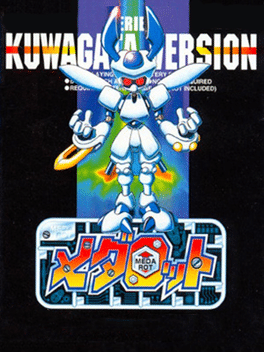
Medarot (also referred to as Medarot 1) is an RPG that was released in 1997 for the Nintendo Game Boy, and the original game that started the Medarot franchise. It follows Hikaru Agata on his quest to compete in Robottle tournaments and defeat the evil Roborobo Gang. Like the other creature-collecting games of the time, Medarot 1 was released in two versions: Kabuto (Rhinoceros beetle), where the player's starting Medarot is Metal Beetle, and Kuwagata (Stag beetle), where the player starts with Head Scissors. Along with the starting Medarots, there are some Medarots and Medals that can only be obtained in a specific version. No English versions of the game were released. Medarot 1 is a monochrome Game Boy game with only basic palette support when played on a Game Boy Color. However, it has a border and more advanced colors when played on a Super Game Boy. A "director's cut" edition of the game titled Medarot Perfect Edition was released for Bandai's Japan-only Wonderswan system in 1999. It had two versions and wElevator Action
1991
Elevator Action
1991
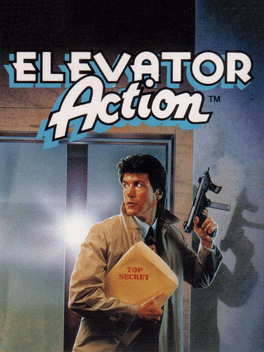
You are Agent 17 (codename: "Otto"). Your mission is to secure all top secret documents from a security building and escape in the getaway car, located in the basement of the building. Gameboy version of the Arcade game "Elevator Action".Super Pika Land
2000
Super Pika Land
2000
The point of this hack is to make an already great platform game better by making it star Pokémon! You now play Pikachu, and almost all of the enemies, items and backgrounds have been changed too.Megami Tensei Gaiden: Last Bible II
1993
Megami Tensei Gaiden: Last Bible II is a role-playing video game series developed by Multimedia Intelligence Transfer, Sega, and Menue, and published by Atlus and Sega for multiple platforms. Players explore the game world and fight monsters in menu-based battles; players can also attempt to recruit monsters to their party, and can fuse two allied monsters into a single new one to try to get stronger monsters.Megami Tensei Gaiden: Last Bible
1992
Megami Tensei Gaiden: Last Bible is a role-playing game for the Game Boy and the first entry in the Last Bible series, created as a spin-off of Megami Tensei. It follows a young seeker of the power known as Gaia who travels with two companions to investigate beasts that have begun appearing from the sky and attacking people. Gameplay consists of exploring fields and towns, managing equipment and magic, and fighting command-based battles. The party can include the protagonist, two human companions, and up to three recruited beasts. During encounters, beasts can be negotiated with and recruited as allies, while recruited beasts can be fused to create new creatures. Human characters gain experience and levels, and the player can improve selected attributes as they progress.Dirty Racing
1993
Dirty Racing
1993
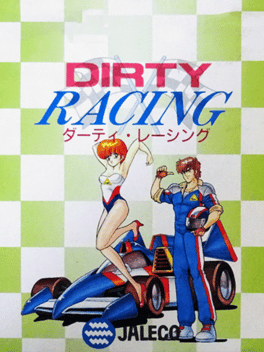
Dirty Racing is a top-down racing game, developed by Gremlin Interactive and published by Jaleco Entertainment, which was released exclusively in Japan in 1993. After a race, you are awarded money based on what place you qualified in, which can be used to purchase nitrous, upgrade, or repair your car in a manner similar to Tradewest's Super Off Road. You then move around a board game-like map to choose your next race. Despite the game being Japanese exclusive, the entire game's text is in English. The game also shares another similarity with Super Off Road, that being scantily clad women who are shown when a race is finished.Ayakashi no Shiro
1990
Ayakashi no Shiro
1990
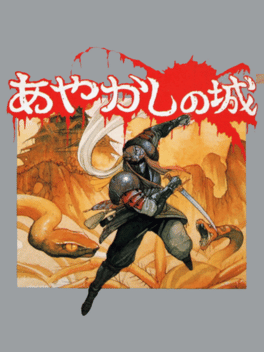
Ayakashi no Shiro is a Role-Playing game, published by Seta Corporation, which was released in Japan in 1990. Ayakashi no Shiro is a turn-based dungeon crawl. Players move the protagonist through first-person dungeons where randomly occurring battles happen. When combat begins, the player is given several options through a menu system to fight the enemies.3-choume no Tama: Tama and Friends - 3-choume Obake Panic!!
1994
The third game of the Tama and Friends series on the game boy. This is a puzzle/adventure game where you solve puzzles while exploring a small town.Captain Tsubasa VS
1992
Captain Tsubasa VS
1992
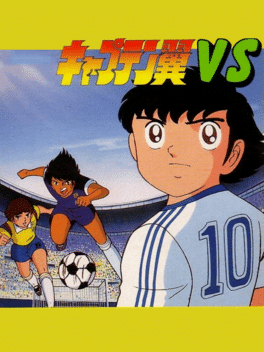
Captain Tsubasa VS is a soccer RPG/Strategy hybrid that plays out in a cinematic perspective. The game is based on the popular Japanese manga/anime of the same name and was released exclusively to Japan. As the game's title states, the game has a versus mode, which allows two Game Boys to be linked for 2-player versus play. Captain Tsubasa VS is a prequel to the first Famicom game and plays identical to other Captain Tsubasa games published by Tecmo.Chachamaru Boukenki 3: Abyss no Tou
1991
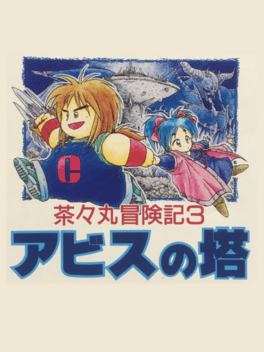
Chachamaru Boukenki 3: Abyss no Tou is a Role-Playing game, published by Human Entertainment, which was released exclusively in Japan in 1991. Interestingly, the main character was modeled after a developer at Human that later would appear as referee in a Fire Pro Wrestling for Super Famicom.Cult Jump
1993
Cult Jump
1993
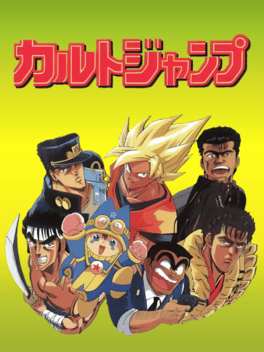
Cult Jump is an adventure trivia video game developed by Sun L and published by Bandai Co. for the Game Boy. A crossover game exclusive to Japan, it was released on September 10, 1993 and features many popular characters from seven series in Weekly Shonen Jump. The king of the JUMP world has been imprisoned in a castle far away. It is up to the reader of Shonen Jump to use all of his knowledge of their published works to beat opponents and rescue the king. Altogether, there are 50 long stages where the player needs to answer the questions posed by the opponents to survive and move on. A password will be displayed after beating each of these stages.Wizardry Gaiden III: Scripture of the Dark
1993
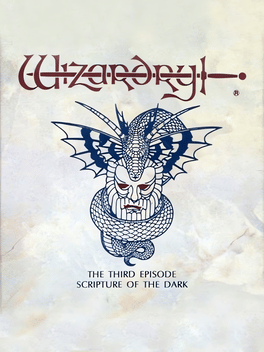
Wizardry Gaiden III: Scripture of the Dark is a Role-Playing game, developed by Sir-Tech Software Inc. and published by ASCII Entertainment, which was released in Japan in 1993. While the first two Gaiden games, Wizardry Gaiden: Suffering of the Queen and Wizardry Gaiden II: Curse of the Ancient Emperor, stuck fairly close to each-other and to Wizardry V: Heart of the Maelstrom, Scripture of the Dark started introducing more radical changes to the formula. This was mostly in the form of incorporating elements of Wizardry VI: Bane of the Cosmic Forge, but retaining the core gameplay derived from Wizardry V.Kininkou Maroku Oni
1990
Kininkou Maroku Oni
1990
Kininkou Maroku Oni is a Role-Playing game, developed by WinkySoft and published by Banpresto, which was released in Japan in 1990.Gamera: Daikaijuu Kuuchuu Kessen
1995
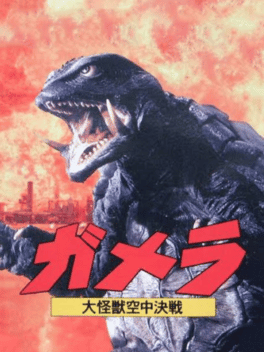
A Gamera game for the original Game Boy. It was released to coincide with the movie of the same title, in 1995. The game is essentially a turn-based battler, in a similar vein to the Pokemon games for the same console. Its battle system is similar to that of an RPG game, but other than that, the similarities end there. Most of the attacks rely on Button Combos, but the game provides a list of combos for the more inexperienced player. Gamera's enemies are Gyaos, Guiron and Viras. Eventually, the game's final battle pits Gamera against a clone of himself. The game's language is in Japanese, but an English fan translation does exist.Penta Dragon
1992
Penta Dragon
1992
Penta Dragon is a shooter developed by Japan Art Media and published by Yanoman Corporation for the Game Boy platform. Players take control of Sara, the mythical snake child. Sara is the child of a human and a dragon. When Sara was born she was given one of her mothers magical eyes, but the time has now come for her to set out and recover the other one.Super Bikkuriman: Densetsu no Sekiban
1993
Battle between humans and super demons. Humans can use a cyber-update force to create mecha-like armour. Human forces has lost to super demons, only few humans flee. One of them - Phoenix, a little boy, wich one become a savior after finding a pieces of stone.Super Robot Taisen
1991
Super Robot Taisen
1991
The first game of the series, which only features sentient robots from the Universal Century Gundam series, Mazinger series and Getter Robo series. It is one of the only independent games in the series to feature a multiplayer mode; it is not done again until the release of Super Robot Wars XO. Unlike future games, the goal is to capture the enemy army's "tower," and Spirit Commands can only be used by the unit that is designated the team's "hero." The final boss of the game was the main villain from Great Mazinger vs. Getter Robo, Gilgilgan.Taiyou no Yuusha Fighbird GB
1991
Taiyou no Yusha Fighbird is technically a vertically scrolling shoot'em'up game by design, though the in-game representation differs a bit from normal as you take control of a mech that can fire off energy blades. It is based off a TV show, and is one of two Fighbird games ever released, the other being another shmup game for the Famicom.