Most Popular Playstation 3 Games - Page 423

Gourmania
2012
Gourmania
2012
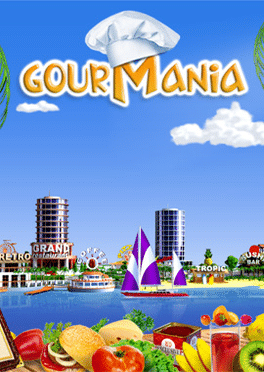
Slice and dice your way to the top in a city-wide showdown! Do you have the skills to win a cook off among the top chefs at a glamorous resort ? Begin your journey at a fast food joint, finding the ingredients for the sandwiches your customers want and the processing of their orders before time runs out. Before the big showdown, you'll save a Sushi Bar, a Pizza Parlour and more from shutting down, making you the most sought after chef in town! Just make sure to purchase the upgrades that will give you an edge. Full of seek-and-find and slice-and-dice fun, Gourmania is your ticket to the big leagues!Corrypt
2012
Corrypt
2012
Corrypt is an intricate and mysterious puzzle game. Explore a strange world, meet the weird creatures who live there, and solve the fiendish problems that trouble them.Deadtime Stories
2010
Deadtime Stories
2010
Uncover the shadowy history of New Orleans in Deadtime Stories, and experience the chilling account of a misguided voodoo queen. The occupants of Edward Blackgate's invitation-only cemetery all have ghastly tales to tell. His first guest speaker is one of its most fascinating residents, Jessie Bodeen. A voodoo priestess who lived in New Orleans circa the 1800s, the infamous socialite Delphine LaLaurie called upon her to do her bidding. While Jessie used her talents to heal the sick and protect the weak, she could not resist the tantalizing amount placed before her, and that unfortunately was her mistake. Follow in the footsteps of this unsettling real-life ghost story to reveal her tragic story. Explore 26 eerie locations, from the dark Cajun swamp to the rich French Quarter, searching for hidden objects, unique plants, and casting potent spells. Free trapped spirits, solve riddles, and unlock fragments hidden in the paranormal world to reveal her haunting demise. Be warned, this is not for the faint of heartMadstone
2008
Madstone
2008
MadStone is a puzzle game in which players must break apart blocks to help special gems (called MadStones) drop down to a pool at the bottom of the screen through their own weight and gravity. Players use the D-pad on the Wii Remote to move an onscreen cursor to select which blocks to break, and can also cause an earthquake that breaks up random blocks by shaking the Wii Remote. The game also features a versus mode against the computer or a second player in addition to the single player arcade mode.Sudoku Challenge!
2008
Sudoku Challenge!
2008
Now’s your chance to play the brain-busting puzzle game taking the world by storm.Jewel Quest Trilogy
2011
Jewel Quest Trilogy
2011
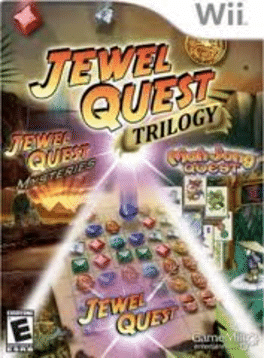
All three Jewel Quest games come to the Wii courtesy of Game Mill. Also, one of them is actually a mahjong game.Santa Claus is Comin' to Town
2011
Experience the magic of Santa Claus is Comin’ to Town® for the first time ever in a video game! Watch Kris grow and see all the magical things that happen to him on his journey. You’ll encounter some of your favorite characters from the movie such as Winter Warlock, Jessica and Tanta Kringle. Bring cheer to the children of Sombertown by delivering toys to them and collect letters from the animals in the Mountain of the Whispering Winds. Santa Claus is Comin’ to Town is a family friendly game. There are 25 levels to enjoy for hours of fun. Play as Kris Kringle or have a second player join as Topper the Penguin. Collect magic snowflakes, collect letters from children, make toys and lots more on your path to become Santa Claus! Features • Collect letters, snowflakes and hidden stockings • Receive magical powers from the Winter Warlock • Get help from Topper the penguin in Multiplayer mode • Discover unlockable contentBound High
Originally developed by Japan System Supply, Nintendo liked the game idea of Bound High! and took over the project later. The game was, besides Dragon Hopper, going to be one of the games, which should have saved the system with a relaunch, but it was delayed again and again until it was cancelled because of the lack of success of the Virtual Boy. At this time, the game already was completely finished. In Bound High!, Chalvo, the bouncing robot, travels through space In full 3d-D motion in pursuit of alien invaders that threaten the peaceful inhabitants of Earth. Angling from above, players control rolled up Chalvo, who must destroy all enemies on the playfield by landing on them and throwing them down from the playfield. Falling off the playfield himself, Chalvo will loose a life. The playfield is in space, or high above the earth, and is made of many little squares, which are composed differently from level to level, once big plain areas, once many small, scattered blocks. Bouncing over the platforms can be quitHello Kitty no Magical Museum
1999
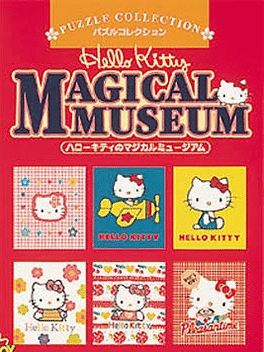
Hello Kitty no Magical Museum is a Puzzle game, developed by Atelier Double and published by Imagineer, which was released in Japan in 1999.Where in Space Is Carmen Sandiego?
1993
Where in Space Is Carmen Sandiego? is a game to teach astronomy. The player flies in a rocket ship throughout the solar system, interrogating various alien lifeforms in order to solve the theft of an important part of the solar system (e.g. Saturn's rings). There was only a limited amount of fuel available for travel. So if the player didn't ask the right questions on the right planets, or followed the wrong clues, the criminal(s) would get away, leaving the player to start over again with another crime. This version is somewhat similar to Where in the World Is Carmen Sandiego?Paganitzu Part 2: The Silver Dagger
1991
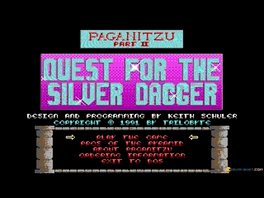
Paganitzu is a tile-based, CGA/EGA computer game created by Keith Schuler and published by Apogee Software in October, 1991. It is the sequel to Chagunitzu. The game is a 2D puzzle game comparable to Chip's Challenge. It requires the player to solve various puzzles to complete the game. Paganitzu was published in three parts. Part 1: "Romancing the Rose", Part 2: "The Silver Dagger" and Part 3: "Jewel of the Yucatan".Paganitzu Part 3: Jewel of the Yucatan
1991
Paganitzu is a tile-based, CGA/EGA computer game created by Keith Schuler and published by Apogee Software in October, 1991. It is the sequel to Chagunitzu. The game is a 2D puzzle game comparable to Chip's Challenge. It requires the player to solve various puzzles to complete the game. Paganitzu was published in three parts. Part 1: "Romancing the Rose", Part 2: "The Silver Dagger" and Part 3: "Jewel of the Yucatan".Zen Puzzle Garden
2003
Zen Puzzle Garden
2003
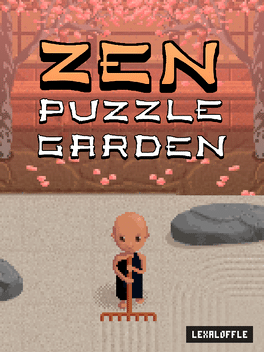
Zen Puzzle Garden is a geometric puzzle game set in Japanese rock gardens. The goal of each puzzle is to rake all of the sand without turning corners or breaking raked lines. Play through 64 carefully designed puzzles set across 4 seasons, or design and share your own gardens with the built-in editor.Chocolate Castle
2007
Chocolate Castle
2007
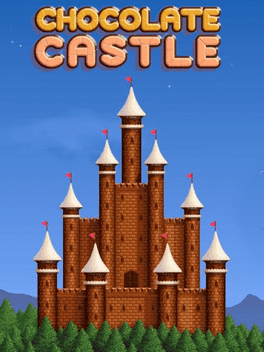
Chocolate Castle is a puzzle game for Mac & PC. It was released in 2007 by Lexaloffle.Ilomilo Plus
2012
Ilomilo Plus
2012
ilomilo plus is the Windows 8 version of the XBLA title, ilomilo, beefed up with additional fun levels, two exciting new chapters and three new challenging cubes. ilomilo is a puzzle game where the player controls two fellows named ilo and milo. \ The two friends always seem to get separated from each other in the surrealistic and ever changing world they inhabit, and the goal of each level is to reunite them. ilomilo presents puzzles where the player will have to use a great deal of three dimensional thinking to succeed. The world of ilomilo is made of cubes, and ilo and milo can walk any side of the cubes, as well as move cubes around. The player controls both ilo and milo, and will have to make them cooperate to unite them. ilomilo also allows players to control one character each, and play through the game cooperativelyPaganitzu Part 1: Romancing the Rose
1991
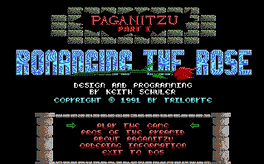
Paganitzu is a tile-based, CGA/EGA computer game created by Keith Schuler and published by Apogee Software in October, 1991. It is the sequel to Chagunitzu. The game is a 2D puzzle game comparable to Chip's Challenge. It requires the player to solve various puzzles to complete the game. Paganitzu was published in three parts. Part 1: "Romancing the Rose", Part 2: "The Silver Dagger" and Part 3: "Jewel of the Yucatan".Super Munchers
1991
Super Munchers
1991
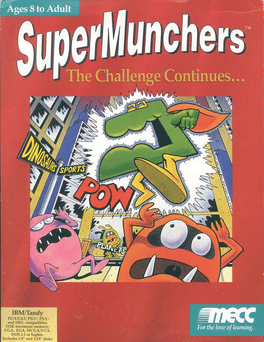
Super Munchers is a trivia action game. The player moves their muncher around a grid and eats words that fit a given clue or category. Incorrect words and a variety of critters get in the way.Paku Paku
2011
Paku Paku
2011
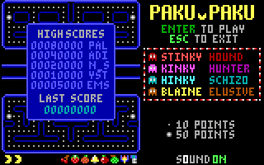
Paku Paku is a Pac-Man inspired game developed for DOS and Commodore 64 in 2011. The DOS version is capable of running on the very first IBM computers.