New Games - Page 13885

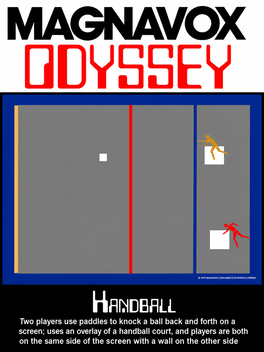
Handball
1972
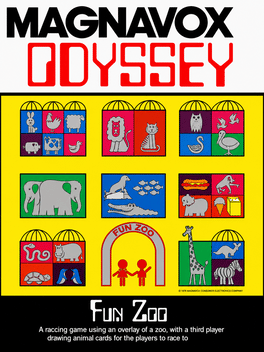
Fun Zoo
1972
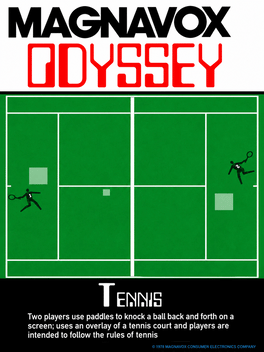
Tennis
1972
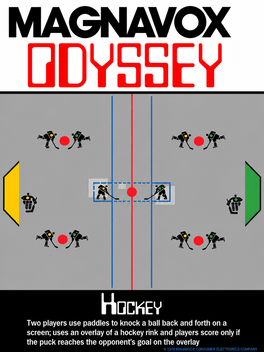
Hockey
1972
Cat and Mouse
1972
Cat and Mouse
1972
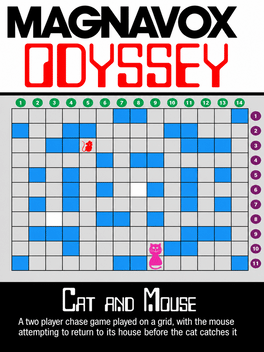
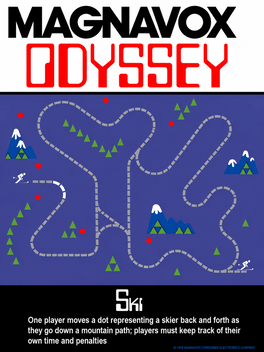
Cat and Mouse is one of the 12 original games that were shipped with the Magnavox Odyssey system. It runs on Cartridge No.4 and uses stick on numbers. In Cat and Mouse, two players chase each other in a maze, taking turns. At any one time, one will play the Mouse who's objective is to reach his home, while the other player plays the Cat who tries to catch the Mouse before that happens.Ski
1972
States
1972
States
1972
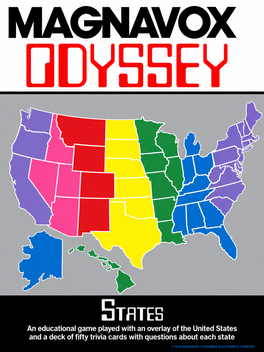
States is one of the 12 original games that were shipped with the Magnavox Odyssey system. It runs on Cartridge No.6 and uses 50 state cards with a study map.Roulette
1972
Haunted House
1972
Haunted House
1972
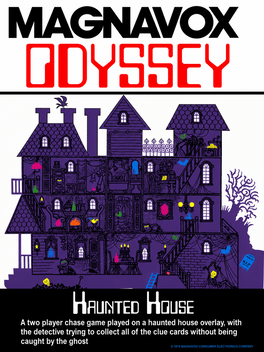
Haunted House is one of the 12 original games that were shipped with the Magnavox Odyssey system. It runs on Cartridge No.4 and uses clue cards with an overlay.Simon Says
1972
Simon Says
1972
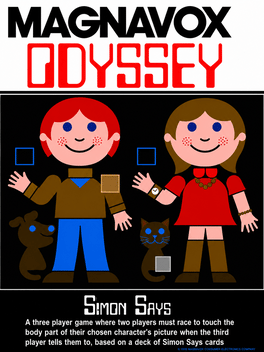
Simon Says is one of the 12 original games that was shipped with the Magnavox Odyssey system. It runs on Cartridge No.2 and uses cards with an overlay. In Simon Says, one player holds a deck of cards (provided with the game) with depictions of several body parts and must then indicate them to the other players by saying something like "Simon says... touch your right hand". The other players will then rush to the specified place as quickly as possible, the winner being the one to touch the most body parts before his/her opponent.Empire
1972
Empire
1972
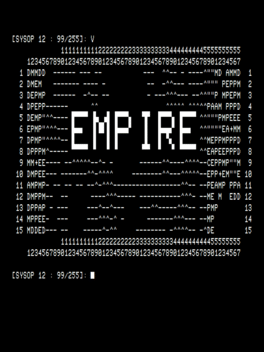
Empire is a 4X wargame created in 1972 by Peter Langston, taking its name from a Reed College board game of the same name. It was initially created by Langston in BASIC on an HP2000 minicomputer at Evergreen State College. When the host computer was retired, the source code to the game was lost. Subsequently, two other authors each independently wrote a new version of the game, both named Empire. In the decades since, numerous other versions of Empire have been developed for a wide variety of platforms. The game is turn-based, with players giving orders at their convenience, and in some versions then executed simultaneously by the game server at set intervals ranging from a few hours to once per day. The game world consists of "sectors", which may be designated as agricultural, industrial, etc. There are dozens of unit types requiring a variety of raw and manufactured materials for their creation. "Blitz" games may last a few hours, typical games a few months, and some larger games up to a year.Pong
1972
Pong
1972
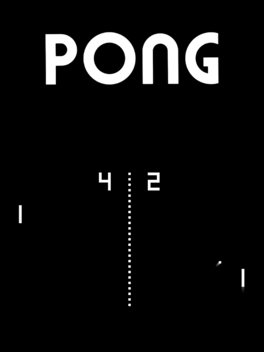
star 7.8Pong is a table tennis-themed twitch arcade video game with simple two-dimensional graphics. It was the first sports arcade video game and one of the earliest arcade video games in history, helping to establish the video game industry along with the Magnavox Odyssey. Soon after its release, several companies began producing games that closely mimicked its gameplay.Analogic
1972
Analogic
1972
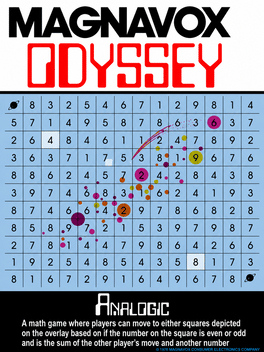
Analogic is one of the 12 original games that were shipped with the Magnavox Odyssey system. It runs on Cartridge No.3 and uses play-chips with an overlay. A math game where players can move to either squares depicted on the overlay based on if the number on the square is even or odd and is the sum of the other player's move and another number Analogic is a brain teaser played on a galactic map made of numbered squares. One player starts in planet ODD while the other starts in planet EVEN and the objective is to be the first to reach the opponent's planet. The ODD player is only allowed to move to a square if it's number summed with EVEN's current square totals an ODD number, and vice-versa.Baseball
1972
Play Ball
1972
Play Ball
1972
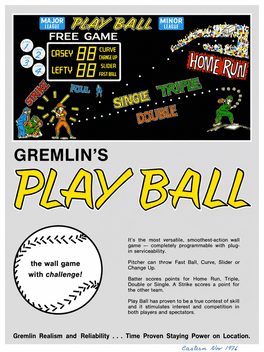
Play Ball was produced by Gremlin in 1972. From flyer: "It's the most versatile, smoothest-action wall game - completely programmable with plug-in serviceability. Pitcher can throw Fast Ball, Curve, Slider or Change Up. Better scores points for Home Run, Triple, Double or Single. A Strike scores a point for the other team. Play Ball has proven to be a true contest of skill and it simulates interest and competition in both players and spectators. "Killer Shark
1972
Killer Shark
1972
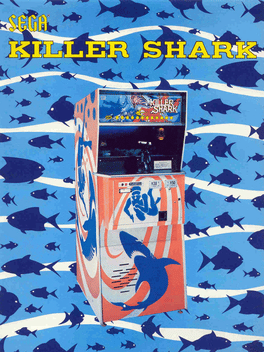
Killer Shark is a first-person light-gun shooter arcade game that was published by Sega in 1972. The objective of the game is for the player is to repeatedly shoot the approaching sharks. The arcade received moderate success, but gained considerable notoriety after it was featured in the 1975 movie Jaws, seen being played by a gamer at a local beachside arcade in the community of Amity Island. This bit of levity left a major impression on audiences and made Killer Shark the first, and most famous shark arcade game ever.Submarine
1972
Submarine
1972
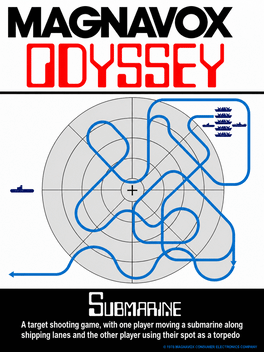
Submarine is one of the 12 original games that were shipped with the Magnavox Odyssey system. It runs on Cartridge No.5. One player controls a group of ships and must follow a path in the screen overlay, while a second player controls the submarine and must try to sink those ships. Players change roles and the one to sink the most ships is the winner.Freeway Crossing Program
1971
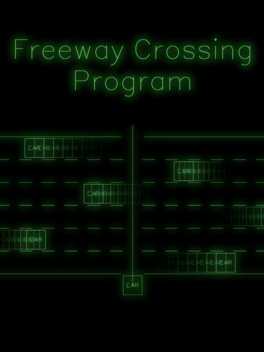
A simple reaction test game designed by student Michael Irrgang for the IMLAC PDS-1 in 1971. It was made for use in a psychological study at the University of Washington by Dr. Earl Hunt.Baseball
1971
Baseball
1971
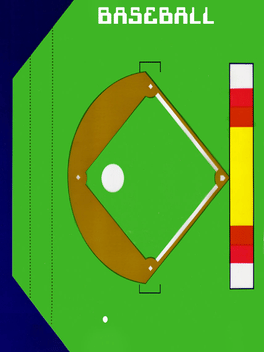
Baseball is a baseball sports game that was created on a PDP-10 mainframe computer at Pomona College in 1971 by student Don Daglow. The game (actually spelled BASBAL due to the 6-character file name length restrictions) continued to be enhanced periodically through 1976. The program is documented at the Baseball Hall of Fame in Cooperstown, New York. It was the first interactive Baseball simulation game, allowing players to manage the game as it unfolded. At the start of each inning the batter's and pitcher's names were listed, and the player in the field could enter a number to choose whether to pitch to the batter, walk him intentionally, warm up a reliever or change the pitcher. In a later version the options for a pitchout and for a visit to the mound were added. The player controlling the batter could choose to put in a pinch hitter. If runners were on base the player could direct them to try to steal. Once the players had entered the desired orders, the game would print out the result of the at-bat, update tThe Oregon Trail
1971
The Oregon Trail
1971
star 8.1The Oregon Trail is a computer game originally developed by Don Rawitsch, Bill Heinemann, and Paul Dillenberger in 1971 and produced by the Minnesota Educational Computing Consortium (MECC) in 1974. The original game was designed to teach school children about the realities of 19th-century pioneer life on the Oregon Trail. The player assumes the role of a wagon leader guiding his or her party of settlers from Independence, Missouri, to Oregon's Willamette Valley on the Oregon Trail via a covered wagon in 1848.