Most Popular Games - Page 175

Paper Mario: Color Splash
2016
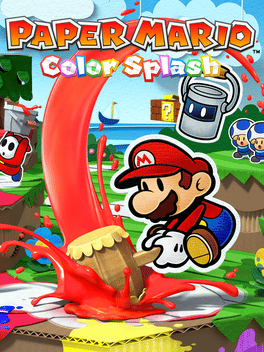
star 6.9A mystery is afoot on Prism Island - and only Paper Mario can solve it by restoring the island's vanishing colors with his new Paint Hammer and the powerful Battle Cards up his sleeve. These fresh layers of strategy, along with the hilarious action adventure gameplay the series is known for, make this one of the most colorful Paper Mario action-adventure games ever.Devil Daggers
2016
Devil Daggers
2016
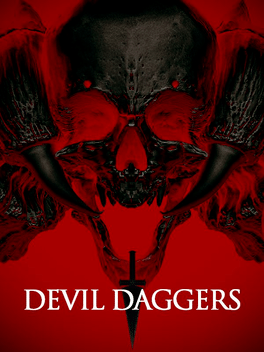
star 7.7Inspired by 1990s FPS and arcade games, Devil Daggers is a fast-paced shooter that places you in an abyssal arena to face endless legions of demons. Armed with versatile magic daggers and a fluid movement system, fight to survive as long as you can. Compete for precious seconds with Steam Friends or on global leaderboards. Your spirit and skill will be tested.Manifold Garden
2019
Manifold Garden
2019
star 8.2Manifold Garden is a game that reimagines physics and space. Explore a world of beautiful Escher-esque architecture where the laws of physics are different. Geometry repeats infinitely in every direction and falling down leads you back to where you started. Manipulate gravity to change your perspective and see the world in new ways. Master the rules of the universe and restore a barren world with vegetation and life. Key Features - An expansive and visually striking world filled with mind-bending puzzles. - Manipulate gravity to gain new perspectives and walk on any visible surface. - Experience space in new ways as you explore infinitely repeating Escher-esque architecture.Black Mirror II: Reigning Evil
2009
star 7.5Black Mirror II: Reigning Evil is a third-person point-and-click horror adventure game developed by Cranberry Production. The game is a sequel to The Black Mirror. Black Mirror II takes place in the 1990s, twelve years after the original game. The concept for the game was created by King Art Games. It was initially released in 2010 in the UK and then released in North America in 2011, only a few months prior to its sequel, Black Mirror III: Final Fear. The game is a sequel to The Black Mirror. Black Mirror II takes place in the 1990s, twelve years after the original game.The Elder Scrolls: Legends
2017
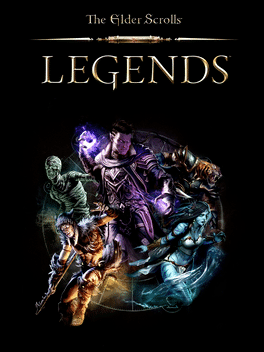
star 7.3The Elder Scrolls: Legends is a strategy card game that explores the series' characters, creatures, deities, and lore. Whether you have 10 minutes or five hours, Legends provides a variety of gameplay modes and challenges that are easy-to-learn but difficult to master. Built with all levels of players in mind, Legends offers accessible gameplay for beginners who want to get started quickly, and the game's depth keeps expert players engaged. With a wide variety of deck types and strategies, no two games are ever the same.Penumbra: Requiem
2008
Penumbra: Requiem
2008
star 6.8Puzzle expansion for Penumbra: Black Plague. Requiem is part of Penumbra: Black Plague Gold Edition, included in the Penumbra Collection.Age of Empires III: The Asian Dynasties
2007
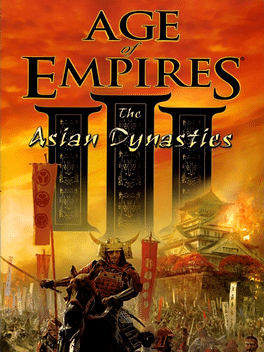
star 8Age of Empires III: The Asian Dynasties is the second expansion pack for the massively popular Age of Empires III. Rule powerful and exotic Japanese, Chinese and Indian civilications of the East. Battle with Samurai, Chinese Banner Armies and devastating war elephant troops and build powerful wonders. Age of Empires III: The Asian Dynasties is the second expansion pack for the real-time strategy video game Age of Empires III developed through a collaboration between Ensemble Studios and Big Huge Games, and published by Microsoft Game Studios. The Mac version was ported over, developed and published by Destineer's MacSoft. The game is the second expansion pack following The WarChiefs. The game introduces three new civilizations; China, Japan, and India. It also introduced minor people, campaigns, maps, and game modes.Neverwinter Nights: Hordes of the Underdark
2003
star 8.8Neverwinter Nights: Hordes of the Underdark is the second expansion for the role-playing game Neverwinter Nights. BioWare has created a dark and dangerous world of adventure set in the world of Dungeons & Dragons. Your hands are callused from many years of weapon play, your mind is sharp from hundreds of books studied, your feet are nimble from slipping unseen and unheard past thousands of guards and your faith is unshakable in the gods you worship... but will it be enough for this final terror? Will you stand once more for those who cannot? You are the last hope for the Forgotten Realms, you must face the unstoppable, you must decide the fate of all. You are a hero... but are you a legend? Epic levels, new prestige classes, new creatures, spells, feats, weapons and new tilesets to explore... endless adventure! Neverwinter Nights: Hordes of the Underdark will include a new 20-hour single player campaign, designed for high-level characters and set amidst the famous city of Waterdeep and the foreboding Underdark froBattleborn
2016
Battleborn
2016
star 6.7"Battleborn is a next-gen hero-shooter brought to you by the creators of the award-winning and best-selling Borderlands franchise. In Battleborn’s distant future, the only hope for the last star in a dying universe is a new breed of warriors, who must put aside their differences to drive back an unstoppable menace. Choose from a myriad of powerful heroes and fight together alongside your friends in an intense co-operative campaign, or battle against them in fast-paced competitive multiplayer matches." Console versions of the game allow for split-screen co-op in all game modes.Might & Magic Heroes VII
2015
star 6.7Our story takes place during a war of succession. The Empress’ murder has left a realm in flames with many hungry rivals ready to seize the throne by force. The Duke Ivan then calls together a prestigious council of six trusted advisors to restore order and end the conflict that set ablaze Ashan’s lands. Might & Magic Heroes VII makes a triumphant return bringing you the essence of turn based strategy gaming. Set in a fantasy universe with RPG progression with a strong story narrative, you will embark on a journey that you will never forget!Get Even
2017
Get Even
2017
star 7.1"Take a deep breath..." Try to remember: a girl, a chair, a bomb. Just keep... calm. Follow the voice into the depths of your memory. Relax... and search for the darkest memories in the deepest recesses of your mind. Can you find her? The clock is ticking... And this is just a part of the treatment.Pure
2008
Pure
2008
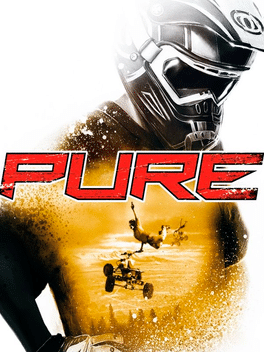
star 7.7Developed by Black Rock Studio, Disney Interactive Studios' award-winning development studio in Brighton, England, Pure takes off-road racing to a new level. Featuring vertigo-inducing massive aerial jumps and spectacular airborne tricks in photo-realistic real-world locations all over the globe, Pure delivers heart-pounding experiences unique to the genre.Lost: Via Domus
2008
Lost: Via Domus
2008
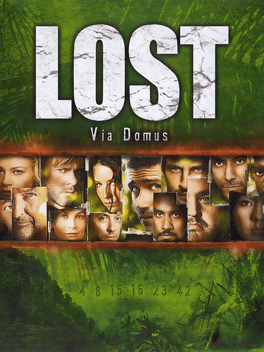
star 5.8In Via Domus, players control Elliott Maslow, another survivor of the Oceanic flight 815 plane crash. The game takes place during the first 70 days after the crash and includes all of the main characters from the show.Virtua Tennis
1999
Virtua Tennis
1999
star 6.8Virtua Tennis is a tennis game in which it is possible to control one of eight licensed players and uncover the secret stars. As well as the traditional arcade mode, you can play in the exhibition mode, with four-player action via doubles play. Once you've mastered those modes, take on the world in the world circuit mode, with unique training games, different challenges and shops to buy clothing, equipment, stages and playing partners.Kingdom Rush Frontiers
2013
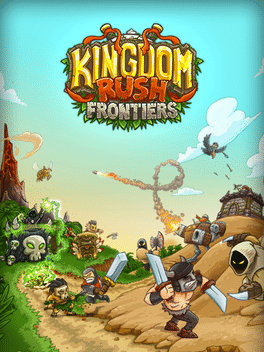
star 7.6Command your troops through an epic (mis)adventure as you defend exotic lands from dragons, man-eating plants, and ghastly denizens of the underworld -all with flashy new towers, levels, heroes, and more goodies to help you crush your foes in this Fantasy Action Tower Defense game!Deus Ex: The Fall
2013
Deus Ex: The Fall
2013
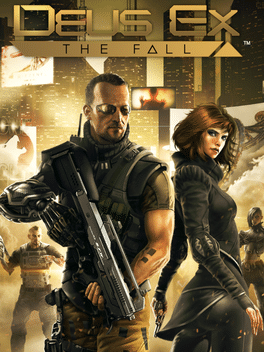
star 5.3This is a port of the original DEUS EX: THE FALL experience, first released on iOS and Android in 2013 – action, stealth, hacking, and social gameplay. A prequel story to Deus Ex: Human Revolution that builds on the DEUS EX universe. Fight for survival in a global conspiracy.FIFA Street
2012
FIFA Street
2012
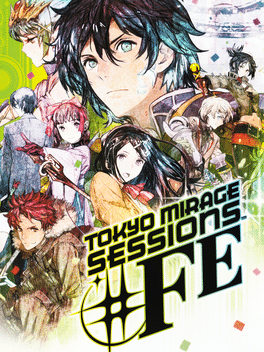
star 6.2FIFA Street is the most authentic street football game ever created, developed by award-winning FIFA creative director Gary Paterson, and inspired by street footballers around the world.Tokyo Mirage Sessions #FE
2015
star 7.8Tokyo Mirage Sessions #FE is a crossover role-playing video game developed by Atlus and Intelligent Systems for the Wii U, based on the two companies' Shin Megami Tensei and Fire Emblem series, respectively.WWE 2K14
2013
WWE 2K14
2013
star 7.42K Sports’ lineup of premier simulation titles expanded with the company’s first release in the flagship WWE videogame franchise, WWE 2K14. Relive the greatest matches and moments from three decades of the greatest spectacle in all of entertainment. Play through more than 45 prolific matches in an unprecedented single-player campaign celebrating 30 years of WrestleMania. Complete objectives to unlock playable characters, additional gear, historical WWE footage, and bonus content on the road to immortality.Second Sight
2004
Second Sight
2004
star 7.6Second Sight is primarily stealth-action, using psychic abilities to stealthily move through levels. Due to it's dark atmosphere, it could be considered a psychological thriller. The game focuses on John Vattic's exploration of his own mind, discovering psychic abilities and a dark history before his amnesia.